
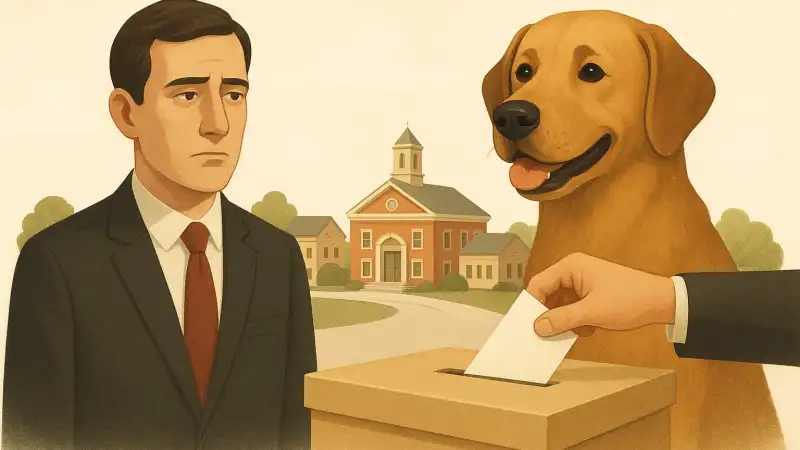
People like to tell the story as if it was a single, tidy moment: one town, one ballot, and a dog beating a human. But there isn’t just one version. Similar “elections” pop up in different places, usually as protests, fundraisers, or publicity stunts. The best-known real example is in Rabbit Hash, Kentucky, where the town has long held elections for an honorary “mayor,” and dogs have won. Another widely cited case is Bosco Ramos, a dog in Sunol, California, who was elected “mayor” in the 1980s in a local, symbolic contest. The mechanism is simple. The rules are loose on purpose, and the joke works because it still looks like democracy.
What kind of election this usually is
When a dog outpolls a human, it is almost never a government election with legal authority. It is usually an honorary title attached to a town festival, a charity drive, or a community association. Rabbit Hash is the clearest template. The “mayor” role there is ceremonial, tied to civic identity and fundraising, not running a city budget.
That distinction matters because it explains why animals can “run” at all. If the position has no statutory power, the organizers can accept any candidate who fits the spirit of the event. Sometimes a human candidate is included to heighten the contrast. Sometimes humans run normal races nearby while the animal race is a separate, parallel thing. The headlines blur those differences.
How a dog ends up with more votes than a person
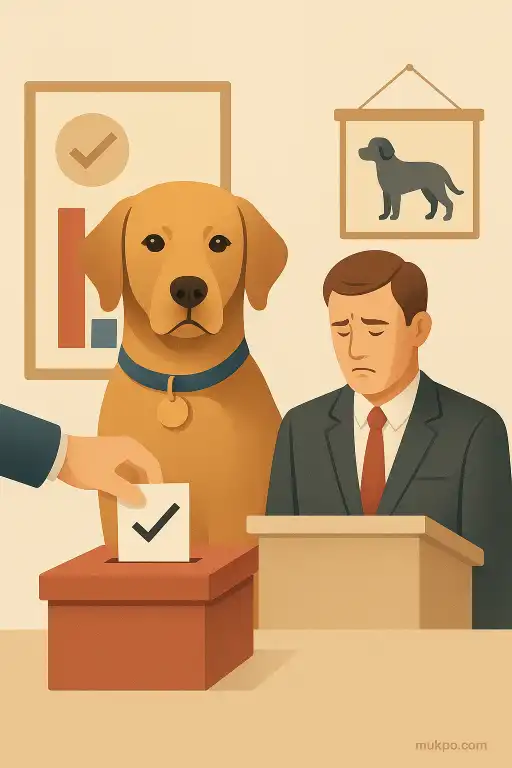
The vote is typically structured like a fundraiser. Instead of one person, one vote, it can be one dollar, one vote, or one purchase, one ballot. That makes it less about persuasion and more about who can mobilize attention. A well-liked dog with an owner who networks hard can rack up votes quickly, especially if the “campaign” is really a friendly competition among locals and visitors.
It also helps that a dog is a safe choice. People who are tired of local arguments can vote for the animal without picking a side. In a symbolic contest, that can be the whole point. The dog becomes a neutral vessel for goodwill, or for a gentle protest, without anyone having to say it out loud.
Rabbit Hash and why the story sticks
Rabbit Hash, Kentucky gets repeated because the setup is unusually durable. The town is tiny, the “mayor” is openly honorary, and the elections have become part of the place’s public image. The event draws outsiders, which matters because visitors can participate, donate, and share the result. A dog winning there doesn’t feel like a one-off prank. It feels like a tradition doing what it always does.
A detail people often overlook is that the vote totals can be shaped by the fundraising format. If votes are tied to donations, the “outpolling” isn’t just about popularity in a room on election day. It is about who can raise more money over a longer window. The word “outpolled” sounds like a standard precinct count, but the mechanics can be closer to a running tally.
Why humans still enter a race they might lose to a dog
A human candidate can make sense in an honorary election because the goal is often participation, not winning office. Being the person who “lost to a dog” is social currency. It gets retold at bars. It gets printed in local papers. It can even help a business or a community group get attention, depending on how the event is organized.
It also gives the election a familiar shape. If every candidate is an animal, it is just a cute competition. Put one earnest human name on the ballot and suddenly it feels like a real civic moment, even if everyone knows it isn’t. The contrast creates the headline, and the headline keeps the tradition alive.
What people misremember when they retell it
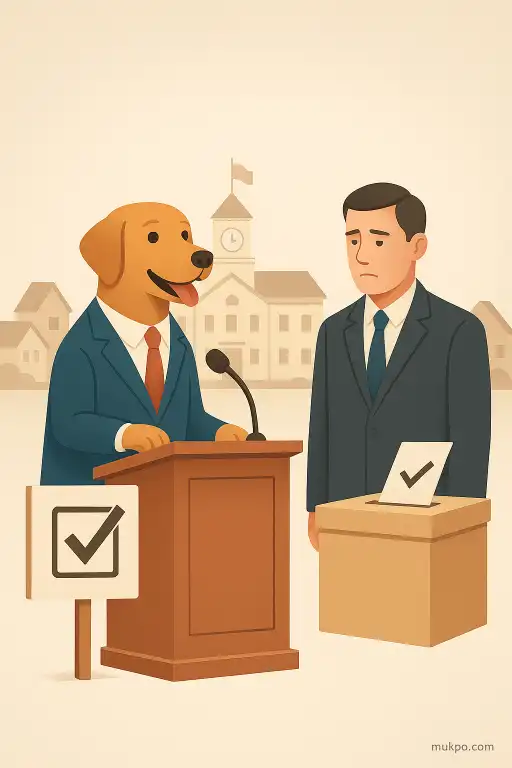
Retellings often imply the town “elected a dog as mayor” the way a municipality elects a mayor. In places like Rabbit Hash or Sunol, the title is symbolic. The dog is not signing ordinances. Nobody is handing over legal authority. That isn’t a letdown. It is the design.
Another common slip is treating it as a freak accident instead of a predictable outcome of the rules. If voting is open, tied to donations, and built around publicity, then a dog is a strong candidate. The surprise is mostly for people who picture a normal polling place with voter rolls and strict eligibility, then try to fit this story into that frame.
Related reads
- The French adventurer who declared himself king of Araucania and Patagonia in the 1860s
- How prairie dogs shape rivers by digging
- The lichen that eats airborne metals in mining towns
- How mantis shrimp detect polarized light
- Why names are harder to recall than faces
- The Paris baker whose 1817 substitution sparked a week of bread riots