
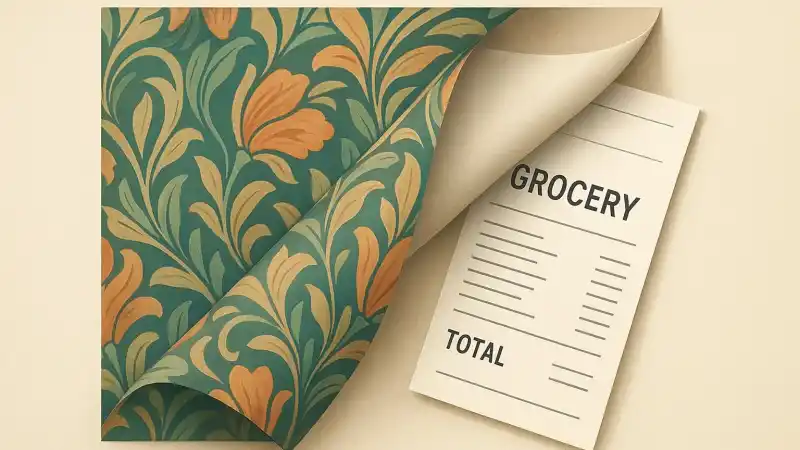
How a receipt ends up behind wallpaper
A lot of houses have small time capsules hiding in plain sight. Someone strips a room down to the studs, and there it is: a paper-thin layer of the past stuck behind old wallpaper. The odd part, in this kind of find, is the modern grocery receipt. Wallpaper that dates to the 1920s shouldn’t be sharing a wall with barcode paper from the 2000s. That contradiction is the whole mechanism. Walls get covered, repaired, skim-coated, papered over, and patched. Each pass can trap whatever was in someone’s hand at the time, whether that’s a 1920s newspaper scrap or a receipt from a quick run to a store.
This isn’t one single famous house or one specific town. It’s a pattern that shows up anywhere wallpaper was common and renovations happened in layers—places like older neighborhoods in London, New York City brownstones, or terrace houses in Melbourne. The exact mix depends on how often a room was updated and how careful (or rushed) the last job was.
The 1920s layer isn’t just decoration
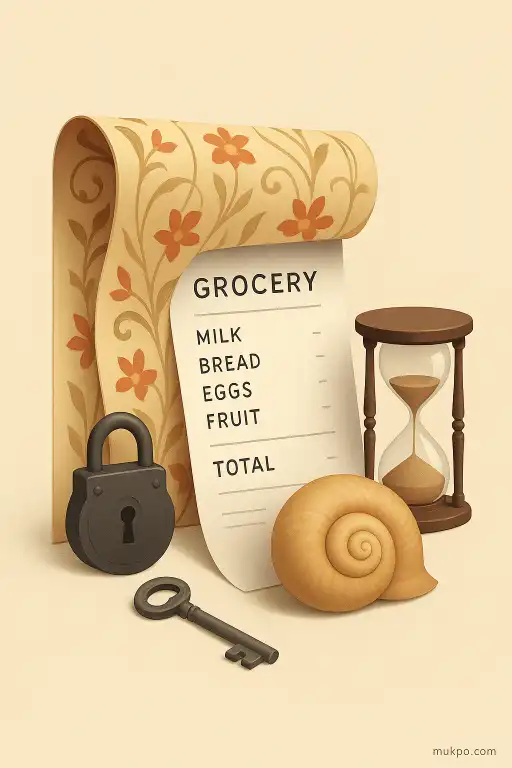
Wallpaper from that era was often hung over imperfect plaster, seams, and previous finishes. People used lining paper, paste, and sometimes whatever was available to smooth a surface. That “whatever” is where secrets start accumulating. Old bills, letters, or local newspaper pages could be used as backing because they were cheap and flat. When the wallpaper comes off decades later, those papers can peel away with it, or stay fused to the wall in fragments.
One detail people usually overlook is how much the paste matters. Wheat-based paste and later synthetic adhesives age differently. Some turn brittle and let layers separate cleanly. Others soak into paper and make it cling like it was laminated. That’s why a wall can keep a crisp-looking scrap from the 1920s while shredding a newer layer into unreadable pulp.
Why a modern receipt is the perfect stowaway
Receipts are small, light, and easy to lose during a messy job. They also tend to be handled at exactly the wrong moment—when someone is buying supplies for a repair, grabbing lunch, or picking up hardware and paint. A person sets the receipt down on a windowsill, it slides behind a radiator cover, or it gets pressed to a tacky patch of paste. Then the wall gets closed back up. Unlike a letter, no one notices it’s missing.
Most grocery receipts since the late 20th century are printed on thermal paper. That’s another overlooked detail. Thermal ink fades with heat, light, and time, sometimes turning blank within a few years. When one survives behind wallpaper, it can look strangely “new” because it was kept in the dark, at a fairly stable temperature, and out of contact with skin oils. The flip side is that it can still vanish fast once it’s exposed again.
What those layers can accidentally reveal
The older layer tends to talk about the building itself. A 1920s pattern can hint at when a room was last finished in a coordinated way, especially if trim paint lines match the paper edges. It can also reveal small shifts in layout. Wallpaper seams that end abruptly can mark where a doorway was widened, a picture rail was removed, or a chimney breast was boxed in. None of that requires a dramatic story. It’s just how houses get altered to fit the next decade’s needs.
The receipt, meanwhile, is often a snapshot of a single ordinary day. Item names and store brands can date it more precisely than people expect. Prices can place it within an inflation range, but that varies by region and store. Even the formatting can matter: older receipts may list fewer details, while later ones include loyalty prompts, partial card numbers, and standardized tax lines. That’s a different kind of history than wallpaper patterns, and it sits awkwardly beside it.
Why the “century of secrets” is usually mundane
When people imagine secrets in walls, they jump to hidden money or dramatic notes. The more common “secrets” are maintenance shortcuts. A cracked plaster corner covered with lining paper. A damp stain sealed under primer. A child’s pencil marks papered over rather than scrubbed. Layers accumulate because removing the previous one is slow, dusty, and sometimes risky if the substrate is fragile. Covering it is faster.
That’s why a wall can hold two times at once without anyone intending it. The 1920s layer is the long, continuous background of a home being lived in. The modern receipt is a tiny interruption from a particular errand. Put together, they don’t form a neat narrative. They just show how easily the everyday gets sealed into place when a room is put back together and life moves on.
Related reads
- Why basalt columns form hexagons
- The museum gallery where labels kept switching between exhibits
- Why compliments stick: the brain’s unexpected bias
- When a medieval abbey traded relics for grain to survive a siege
- A neighborhood that replaced street names with emoji for a month
- Why familiar places trigger sudden vivid memories