
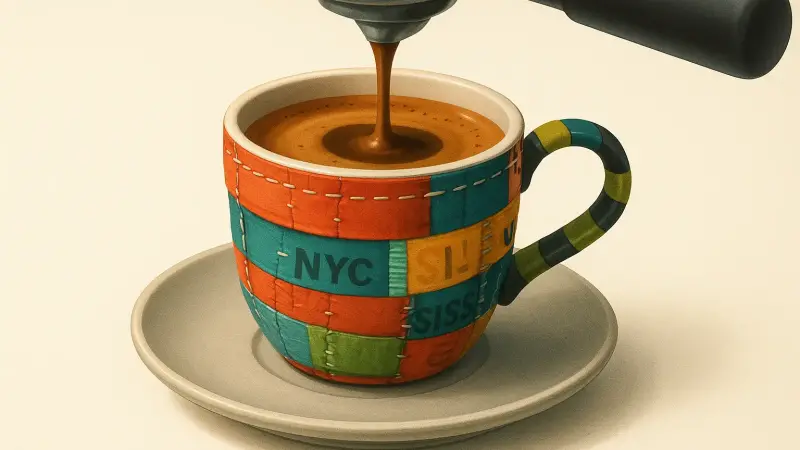
What people mean by “espresso in cups made from wristbands”
You hear “cups stitched from old concert wristbands” and the first question is whether anyone is actually drinking out of fabric. There isn’t one famous café that’s definitively known for this, and details vary depending on who’s telling the story. You’ll see it floated as a pop-up idea in places with heavy live-music scenes—Berlin, Austin, Tokyo—because wristbands pile up fast at festivals and venues. The core mechanism is usually the same, though: the wristbands aren’t meant to be the liquid-holding surface. They’re turned into an outer sleeve, or a rigid cup gets wrapped, latticed, or “caged” in bands that have been stitched together.
That distinction matters because espresso is hot, acidic, and oily. Fabric alone can’t handle that for long without soaking, staining, or growing odors. So when people describe it as brewing “in” the wristband cup, they often mean the espresso is pulled into a normal demitasse, then nested into a wristband-built shell that you hold.
How the cups get made, step by step, without turning into mush
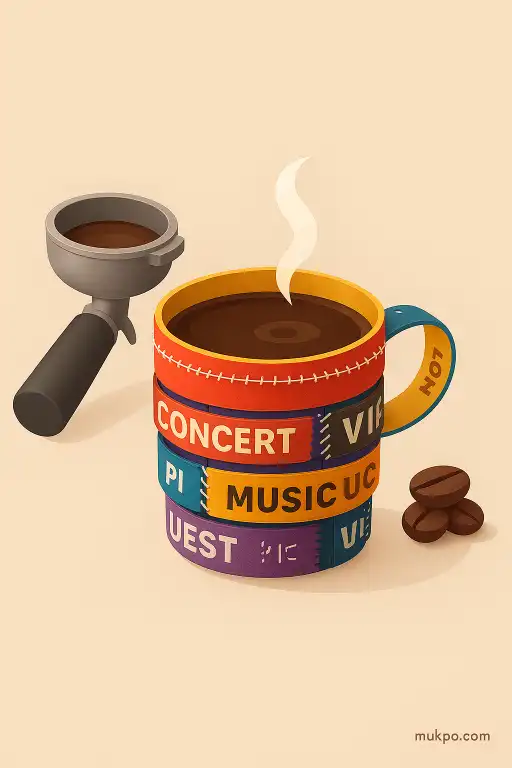
Concert wristbands come in a few common types: paper/Tyvek with adhesive, woven fabric with a plastic slider, and vinyl or silicone. Each behaves differently. Woven bands stitch well but fray at cut edges. Tyvek doesn’t fray much but hates heat and tends to crease into permanent white stress lines. Vinyl wipes clean but is hard to stitch without tearing unless you punch holes first. If a café actually built a reusable sleeve from them, they’d sort by material, then cut and stitch bands into panels the way you’d assemble a patchwork.
The overlooked detail is the closure hardware. Those little one-way plastic sliders and adhesive ends aren’t just annoying leftovers. They create pressure points that make a sleeve wobble or scratch the cup. Most workable builds remove them, or bury them in a seam so the inside stays smooth. A stiffener layer is also common in anything that needs to stand up on its own, because wristbands are narrow and want to curl.
What “brewing into it” looks like behind the bar
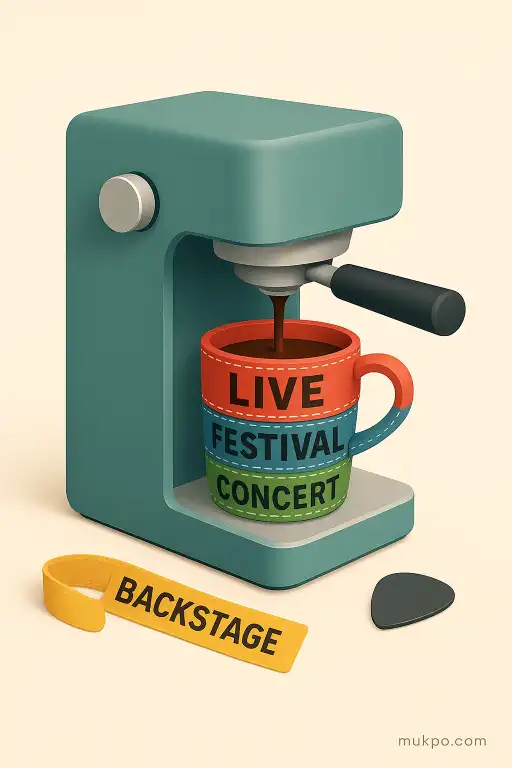
Espresso is brewed under pressure straight into a small cup. If the cup is a composite setup, the barista still needs a stable rim, a predictable height, and a shape that fits the machine’s clearance. That’s why the wristband part usually can’t be the inner cup. It’s either a sleeve around a demitasse, or a decorative jacket around a small steel insert that can take heat, be sanitized, and survive knocks.
A situational example is the rush after a show. People come in with wristbands still on, and the café has a bin or wall display where bands are collected for future sleeves. The espresso workflow can’t slow down to accommodate a fussy cup. So the “special cup” gets treated like a reusable accessory: it’s grabbed quickly, slipped on, served, and returned for washing. The brewing step stays standard so the bar doesn’t jam up.
Why wristbands are appealing as a material at all
Wristbands are weirdly durable for how disposable they are. They’re designed to survive sweat, rain, crowd contact, and a night of being tugged. They’re also standardized in size. That makes them easier to stitch into consistent strips than, say, random T-shirts. They carry dates, venue names, sponsor logos, and color codes, which means the finished sleeve reads like a timeline of nights out, even if you don’t know any of the events.
There’s also a practical reason cafés like sleeves: espresso cups are small and get too hot to hold if they’re thick-walled ceramic or metal. A wristband sleeve adds grip and insulation without changing the cup that touches the coffee. It’s a way to add texture and story while keeping the beverage-contact part boring, which is usually what health inspectors want.
The parts that get complicated fast
Sanitation and smell are the big constraints. Wristbands come off wrists. They’ve been in bathrooms, in spilled beer, in rain. Even if they look clean, they’re porous. If a café truly accepts used bands, they need a cleaning protocol that won’t dissolve printing or adhesives, and they need to decide whether the sleeve is washable or sealed. Some materials can be heat-sanitized. Others warp or delaminate. This is where stories get fuzzy, because the “cool cup” is easy to describe and harder to run as a repeatable system.
The other complication is rights and branding. Wristbands often display festival names and sponsor marks. Turning those into a product can drift into permission questions, especially if the café sells the sleeves. Some places would avoid that by using blank wristbands, trimming away logos, or treating the sleeve as a one-off art object that isn’t marketed with the band names intact.
Related reads
- The beach where certain shells sing when the tide goes out
- The Cold War diplomat who ran an art forgery ring out of a consulate pouch
- Why an entire block unintentionally matched paint after a single storm
- The streetlight turned time capsule: decades of lost items stuck in its base
- How morning light recalibrates your mood and sleep
- A 1920s wallpaper hiding a modern grocery receipt and a century of secrets