
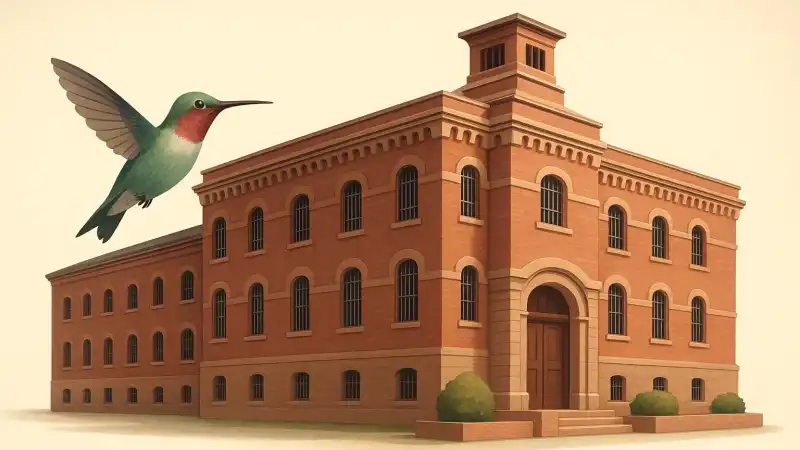
Sleeping in a room built to keep someone in
Most hotel rooms try to make you forget the building existed before you arrived. A prison-hotel can’t do that. The core mechanism is simple: a 19th-century jail gets converted into a boutique property, and the old cells become guest rooms. It isn’t one single place, either. You can see it at Malmaison Oxford in England, at Hotel Katajanokka in Helsinki, and at the Liberty Hotel in Boston (built in a former jail that opened in 1851). The experience varies a lot by site, but the basic idea stays the same: you sleep where a locked door used to be the whole point.
How a cell becomes a guest room
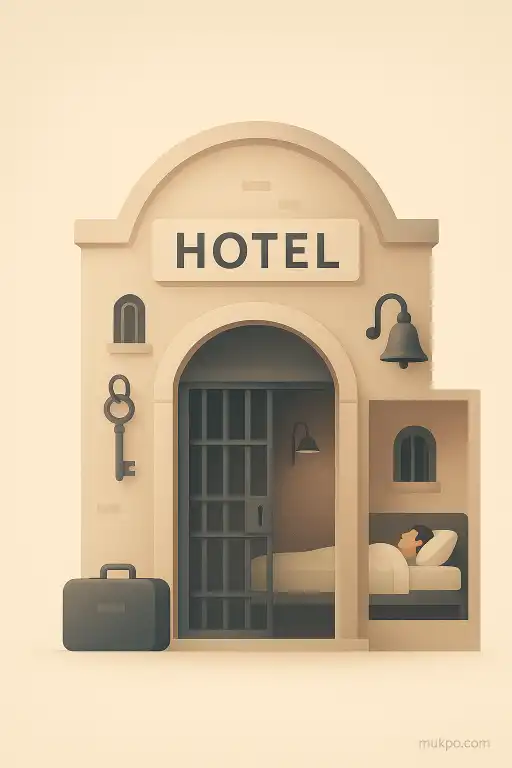
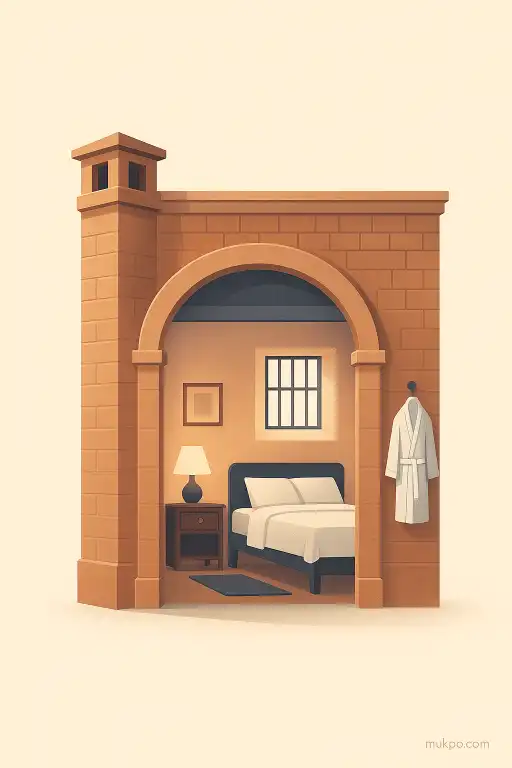
The biggest constraint is size. Many 19th-century cells were narrow and short on daylight, because they were designed for control, not comfort. When they’re turned into rooms, designers work around the fixed walls and the original doorways. Often the bed ends up oriented along the longest wall because there is no other way to make it fit. Plumbing is another major change. Bathrooms have to be cut in carefully, sometimes by combining two cells or by adding a small “pod” that doesn’t require tearing through thick masonry.
One overlooked detail is sound. Old prisons tend to have hard surfaces and long corridors that carry footsteps and voices. Hotels usually fight that with carpet and soft furnishings, but heritage rules can limit how much gets covered. So a building can look quiet in photos and still feel acoustically “alive” at night, especially around former landings and stairwells where sound bounces.
What gets preserved, and what gets erased
Most conversions pick a few prison features to keep because guests expect a trace of the past. That might be barred windows, ironwork, the cell door, or the numbering on the frame. Other parts are intentionally softened. Harsh lighting becomes warm lighting. Institutional paint becomes textured walls. Sometimes the most uncomfortable elements are removed first, like multiple locking points, interior grilles, or the more claustrophobic partitions.
How much history you actually see can depend on the building’s listing status and the operator’s tone. Some places include plaques, small displays, or a short note in the room about the site’s earlier use. Others keep it mostly aesthetic, because leaning too hard into punishment makes the “boutique” part feel uneasy. It’s also not always clear what is original versus recreated. Bars and doors may be restored, but hardware can be replaced for safety and fire regulations while keeping the same look.
Why people pay for it
Part of the draw is simply the layout. Prisons often sit close to city centers, and the architecture is dramatic. Thick stone walls and high ceilings read as “historic” in a way that newer hotels can’t copy. There’s also the controlled novelty of it. Guests get the story without the danger. They can shut the door on the concept whenever they want, because the building no longer functions as a place of coercion.
There’s also a practical appeal for operators. A prison already has many small rooms connected by corridors, which maps neatly onto the hotel model. The challenge is that those rooms don’t meet modern expectations by default, so pricing tends to reflect the work needed to add comfort while keeping the building intact. That’s why these properties often position themselves as “boutique” rather than standard: the quirks are treated as features.
The discomfort that never fully goes away
Even when the room is nicely finished, the original purpose can still show through in small moments. A window that sits too high to look out of easily. A door that feels heavier than a normal hotel door. Corridors that funnel you in a straight line. Those details aren’t decoration. They’re remnants of a system built around restriction, and the body notices them even if you don’t think about it consciously.
Then there’s the ethical edge. Some former prisons held people for ordinary crimes. Others held debtors or political prisoners, depending on country and period. Hotels handle that unevenly. Sometimes the past is acknowledged directly. Sometimes it’s kept vague. You can feel the difference in how the building is presented, especially in the public spaces—whether the old watch points and gates are treated as museum objects, design motifs, or something to hurry past.
Related reads
- A bakery that once stamped local advertisements directly onto loaves of bread
- Why small talk can feel draining even when you’re enjoying it
- The tiny breathing rhythm that can quiet a sudden panic spell
- Why people speed up their speech when they’re trying to impress
- Villages where residents race souped-up lawnmowers for a day of chaotic fun
- Tiny houses carved inside walnut shells that collectors pay a surprising sum for