
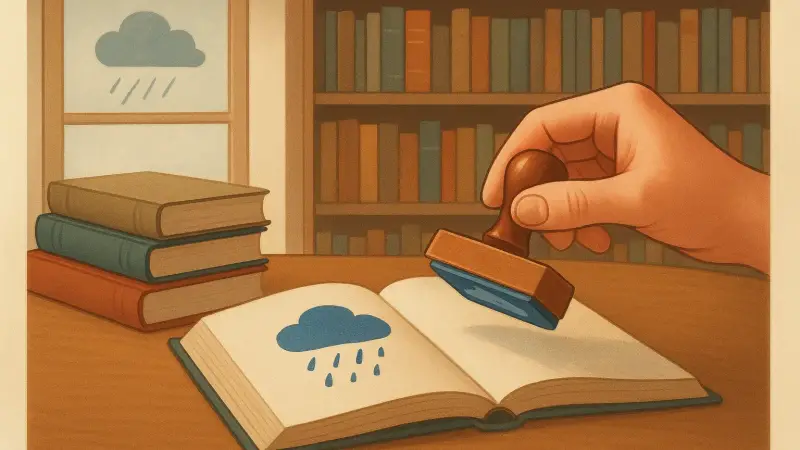
What the stamp is actually recording
Most library date stamps only tell you when a book moved through a desk. Some libraries and reading programs have experimented with an extra stamp that marks the weather at the moment the book was checked out, returned, or read at an event. It isn’t one single famous “weather-stamping library” with a universally agreed origin. Variations show up in different places and times, including small public libraries in the United States, community library events in the UK, and occasional pop-up projects in Japan. The core mechanism is simple: a stamp (or sticker) pairs the normal date with a weather label—“rain,” “snow,” “sunny,” sometimes a temperature—based on local conditions that day.
A concrete version looks like this: a borrower returns a novel on a wet afternoon, and the return slip gets “RAIN” next to the date. A month later, another reader checks out the same copy during a cold snap and leaves with “SNOW” in the back pocket. The book starts carrying a tiny timeline of atmosphere, not just circulation.
Where the weather information comes from
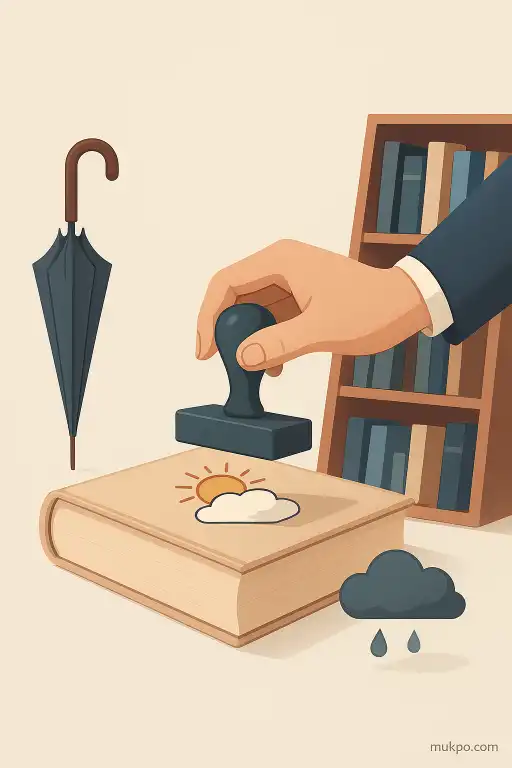
Libraries that do this usually pick between three sources. The simplest is observational: staff stamp what it feels like outside right then. That’s fast and human, but it can be subjective. Drizzle becomes “rain.” A bright winter day becomes “sunny” even if it’s freezing. A second option is to use an official reading, like a local weather station report or an app, which makes the stamp feel more “true” but adds a small layer of checking and deciding which station counts.
The overlooked detail is timing. Weather changes quickly, and libraries don’t operate on a single moment. A book returned at 10 a.m. might get stamped with the morning’s fog even if the afternoon turns clear. Some places solve this by limiting weather stamping to a defined event window—say, a Saturday storytime—so the weather label refers to a shared moment rather than the whole day.
How it gets added to the book without wrecking it
Most books already have a few acceptable “sacrificial” surfaces in library practice: the due-date slip, an inside cover label, or a removable insert. Weather stamping tends to land there, because stamping directly on paper stock can bleed through thin pages, and stamping on glossy endpapers can smear. When libraries want it to feel collectible, they’ll use a separate card inside the book pocket, the same way older systems tracked borrowers.
Design choices matter more than people expect. A stamp that just says “SUN” or “RAIN” is easy, but many projects add icons for quick scanning. Some include the location name, but many don’t, because copies move between branches. If a book is transferred across a county system, the stamp history can quietly stop matching the geography unless the library standardizes where “local weather” is defined.
Why librarians bother with a detail that seems unnecessary
Part of the appeal is that it turns circulation into something readable. Library records are usually private and digital. The weather stamp creates a public, low-stakes trace that feels personal without naming anyone. It also gives staff a small, repeatable ritual at the desk. Patrons notice it because it’s unusual, and that sparks conversation that isn’t about fines, holds, or policies.
It also fits into programming. A library can run a “read through the seasons” display where books show real-weather stamps from earlier borrowers, not curated marketing copy. A kid returning a book during the first snow of the year gets a tangible marker of that day. Adults often react differently: they flip through older stamps looking for patterns, like a winter that seemed longer than they remembered.
What the stamps end up meaning over time
After dozens of loans, the weather marks turn into a strange secondary index. A travel book might show mostly “sunny” because it circulates in summer. A thick classic might cluster in “rain” and “snow” because people pick it up when they’re stuck inside. None of that proves anything scientific, but it does create an accidental portrait of reading habits as they intersect with daylight, temperature, and mood.
The practice also bumps into cataloging reality. If the weather stamp becomes popular, people start asking whether it should be tracked, like an edition note. Libraries almost never go that far, because it would turn a charming physical detail into more staff work. So the stamp stays informal. It lives in the back of the book where only the curious look, quietly accumulating until a copy is repaired, rebound, or withdrawn and the little weather history disappears.
Related reads
- How smiling can actually lower your stress levels
- Why some people prefer messy desks and others thrive on order
- How tiny annoyances hijack your focus all day
- A cliff that resonates a clear low note only at sunrise
- A roadside diner where the jukebox plays songs recorded by customers the same day
- An abandoned phone booth that still connects callers to a single mysterious number