

How rooftop chimes end up quieter than a horn
A car horn is made to cut through everything. So it’s surprising how quickly people stop using it when there’s another sound that “answers back.” There isn’t one single confirmed neighborhood that has formally replaced honking with rooftop chimes as a policy, and stories like this float around without one clean origin point. But the core mechanism is easy to picture: small wind chimes or tuned chimes are mounted on roofs, balconies, or eaves, and the street picks up a constant, gentle layer of sound. In places already used to intentional street sound—think Kyoto’s seasonal wind chimes in Japan or the call-and-response rhythms of some Mediterranean courtyards—the idea feels less far-fetched, even if the “ban the horn with chimes” version varies or is unclear.
The social trick: replace the signal, not the driver
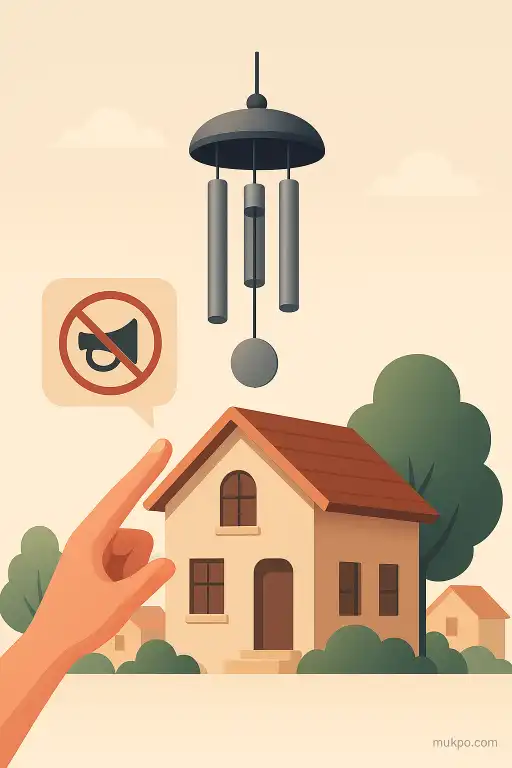
Honking is partly communication and partly emotion. It’s a public signal that says, “Pay attention,” but also “I’m annoyed.” A neighborhood full of chimes doesn’t physically prevent horns. It changes the emotional temperature of the street. When the background sound is soft and continuous, a horn feels sharper and more out of place. People notice it more, not less, and that can create the weird outcome where drivers become self-conscious faster.
There’s also a practical signaling angle. If residents are used to listening for subtle cues—footsteps in a narrow lane, a bicycle bell, a delivery cart—then the street already runs on low-volume awareness. Adding chimes reinforces that culture. The horn stops being the default “I exist” message and becomes the last-resort “something is wrong” message.
Where the chimes would have to be placed to matter
For this to work at all, the chimes can’t be one charming decoration on one house. They’d need to be distributed along the street, and not just at ground level. Rooftops and upper balconies matter because sound carries down and across, and wind is stronger up high. A line of chimes on the third and fourth floors can create a consistent bed of sound that follows you as you move down the block.
A specific detail people usually overlook is wind direction. A street that runs like a tunnel between buildings can channel gusts. That means the chimes might ring intensely at one intersection and stay almost silent half a block away. If the goal is a steady effect, residents would end up learning which corners “activate” the street and which corners don’t, and they’d adjust placement without ever writing it down like a plan.
What it changes about attention and timing
Horns often happen at the same moments: the instant the light turns green, the second someone hesitates, the moment a pedestrian steps off a curb. A chime layer doesn’t erase those moments. It stretches them. People wait a beat longer. That sounds small, but street friction is often about timing and escalation. When the first “nudge” isn’t a blast of sound, the second nudge may never come.
Chimes also shift attention toward the near field. A horn is designed to reach far. Chimes are local. They make you more aware of the immediate block—windows open, kids nearby, someone working from home, a café setting out chairs. Drivers may not think that through consciously. But they tend to feel watched, because the sound implies presence above them, not just traffic around them.
Why the same setup could annoy people instead
There’s a reason this kind of story is hard to pin to one verified place. The same chimes that calm one street can become noise pollution on another. Volume varies wildly by material and design. Long metal tubes can be loud. Cheap chimes can clatter. And unlike a horn, which is intermittent, chimes can ring for hours during a windy night, when nobody wants sound at all.
Even if the intent is to make the street calmer, the social agreement has to hold. One neighbor replaces gentle chimes with a louder set. Someone takes theirs down after losing sleep. The “quiet street” effect can unravel without any argument, just small private decisions. And then the horn comes back, because the street no longer feels like it’s listening.
Related reads
- The cafe where every receipt prints a stranger’s advice
- The calming effect of repetitive tapping and what it does to your brain
- How loose clothing alters risk taking and mood
- A library that lends power tools, seeds, and sewing machines
- A post office that delivers mail by kayak to floating neighborhoods
- The Victorian spectacle of Barnum’s mermaid hoax that fooled museumgoers and ministers