

How a hidden note survives long enough to be found
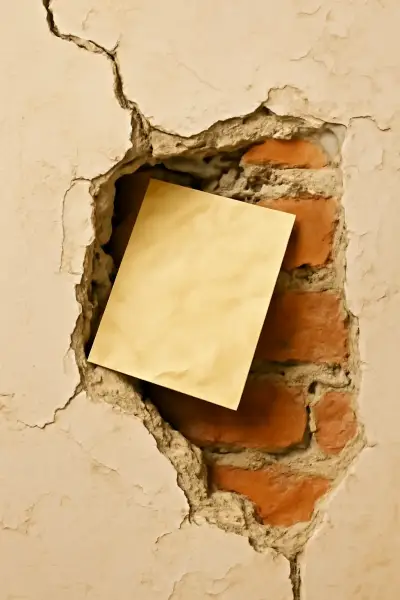
You open a wall and there it is: a scrap of paper that shouldn’t still exist. This isn’t one single famous incident. It’s a type of find that happens anywhere old buildings get opened up. Contractors in the UK post photos of notes found behind skirting boards and under floorboards. Homeowners in the US find messages tucked into plaster during kitchen remodels. In Australia, renovation shows have even filmed “time capsule” discoveries in cavities behind cabinetry. The basic mechanism is simple. Once a wall gets closed, it becomes a calm, dry pocket. It stays undisturbed for decades, which is exactly what paper needs.
Where the paper tends to be, and why
Notes usually show up where someone had a reason to pause during construction. Near a window opening. Around a new electrical box. Above a door header. Inside a stud bay that was accessible before the last sheet went on. If lath-and-plaster is involved, the find can be behind the lath, caught on a nail, or wedged between plaster keys. With drywall, it’s often lying on the bottom plate, where gravity keeps it in place once the cavity is sealed.
A detail people overlook is airflow. Wall cavities aren’t all the same. A note behind an exterior wall that gets cold and damp can turn to pulp. A note in an interior partition near a heat source can dry out and stay readable. Even small gaps matter. Old balloon-framed houses can act like chimneys, moving humid air through cavities and speeding up paper damage, while tight modern insulation can create a surprisingly stable microclimate.
Who leaves these notes, and what they usually say
The writers are often the people you’d least expect to leave a record. Tradespeople. Carpenters. Plasterers. Electricians. Sometimes a homeowner doing their own work. The content varies because the motivation varies. A lot are practical: a date, a crew name, a brand of paint, the location of a junction box, a reminder that a pipe runs “just here.” Others are personal in a plain way. “Worked on this house today.” A current event headline copied from a newspaper. A child’s drawing slipped in because the wall was open and it felt like a once-only chance.
Every so often, the note is meant to be found. That’s when you see careful placement, like a message sealed in a jar, or a signed board facing outward. But plenty are accidental. A folded receipt falls out of a shirt pocket. A cigarette packet gets dropped behind lath. A scrap used as a shim gets forgotten. Those “trash” pieces are often the most informative because they pin down a day of work without trying to sound important.
Why the date can be tricky even when it looks obvious
A note can look like a perfect timestamp and still mislead. Renovations happen in layers. A wall might have been opened in the 1950s, patched in the 1970s, then covered again. The message dates only the moment it was placed, not the original construction. Even when the note says “built,” it might mean “rebuilt,” “re-wired,” or “replastered.” People also reuse materials. A piece of older paper can end up inside a later wall because it was used for packing, cleaning, or padding.
Handwriting adds another complication. A quick pencil line can fade until the digits are guesswork. Ink can bleed if a wall ever got wet. And local conventions vary. A date written 3/7/84 is clear in one place and ambiguous in another. It’s common for people to assume the earlier interpretation without noticing the writer might have meant day/month rather than month/day.
What the wall itself does to the message over time
Even sealed up, a wall is not a museum case. Dust builds in slow layers. Insects can get in through tiny gaps. Rodents sometimes drag paper into cavities for nesting. Building materials can also react with what’s inside. Some old insulation sheds fibers and grit that abrade paper. Certain timbers and adhesives off-gas acids over time, which can yellow and weaken sheets stored in contact with them.
Then there’s the moment of discovery, which is often when damage happens. A reciprocating saw goes straight through a folded page. Plaster debris soaks a note when water is sprayed to control dust. A message written on the back of a board is missed because the board gets tossed without being flipped. A lot of these finds feel like time reaching out, but the survival of the message can come down to something unromantic: which side of the cavity the paper landed on, and how the demolition started.
Related reads
- The invisible itch: why imagining an itch makes your skin crawl
- How underground rivers trigger sudden sinkholes in flat landscapes
- The algae that turns shorelines bright pink and how its bloom works
- When people reportedly burst into flame with no visible fire
- Why mornings can leave you foggy for minutes after waking
- A corpse, a forged identity and the ruse that duped WWII intelligence
If you liked this, you might also enjoy: