
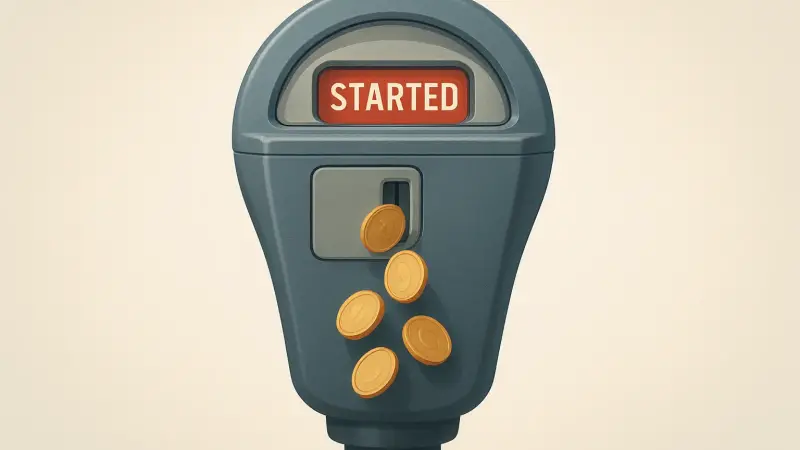
When the machine pays you
You walk up expecting the usual routine: feed coins, get time. But sometimes a parking meter does the opposite. You drop in a quarter and it clinks, pauses, and then a few coins spill into the return tray like a tiny payout. There isn’t one single famous “coin-dispensing meter” incident tied to one town or one year. The stories show up as scattered service calls and local-news oddities. They’ve been reported in different U.S. cities over the years, and similar quirks can happen anywhere older, coin-based meters are still running. The core mechanism is simple: the meter is supposed to sort, count, and retain coins. A fault can flip that behavior into “accept, then eject.”
How a coin meter is supposed to handle money
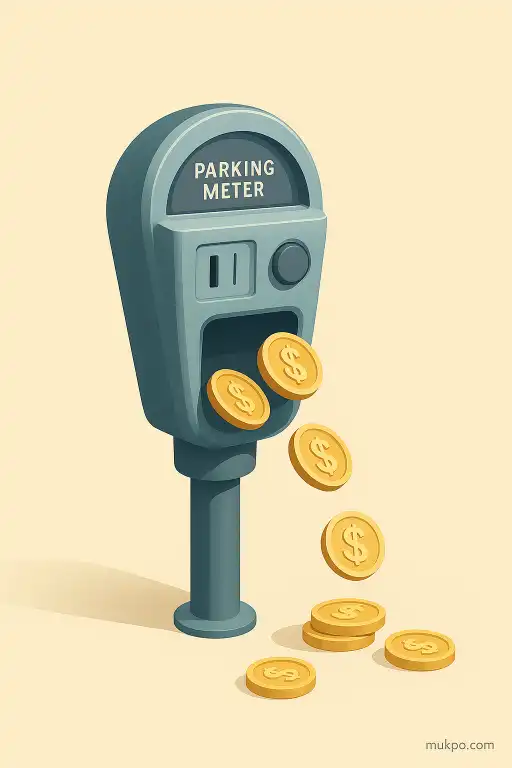
Traditional meters are more like small vending machines than people assume. Coins pass through a slot and into a validator path sized for specific diameters and thicknesses. A mechanical meter might use ramps, gates, and a coin “escapement” that only lets one coin move at a time. An electronic meter often still uses a physical path, but adds sensors that watch the coin’s movement and confirm it landed where it should. Once accepted, the coin drops into a locked vault or tube. A separate lever or solenoid controls the coin return, which is supposed to stay closed unless the meter rejects a coin.
The overlooked detail is that many meters have two different “returns.” There’s the obvious coin return tray for rejected coins, and there’s also a service-access route for maintenance that can dump or reroute coins during testing or clearing jams. If an internal flap is left in the wrong position after service, or a linkage doesn’t reset, a meter can behave like it’s constantly in reject mode even while it’s counting time as if it accepted payment.
The common ways the logic gets reversed
The cleanest failure is a stuck diverter gate. Many meters use a small pivoting piece to choose “accept” or “reject.” Dirt, corrosion, or a bent spring can keep that gate from returning to accept. Another common culprit is a misaligned chute or a loose fastener that changes the coin’s path by a few millimeters. That doesn’t sound like much, but these parts are designed around very tight tolerances. A coin that should drop into the vault can instead fall into the reject channel every time, especially if the meter is slightly tilted from being bumped by a car.
Electronic meters can create their own version of this problem. The sensor might detect the coin as “valid” and add time, but a separate actuator still decides where the coin physically goes. If the actuator fails open, the software can keep behaving normally while the hardware routes coins out. That’s how you get the strange situation where the display increments, but the return tray fills.
Why it can look like free money for a moment
When people say a meter “dispensed coins,” it can mean a couple of different things. One is that it simply rejected the coins that were just inserted. The other is more dramatic: it starts spitting out older coins that were already inside. That can happen if coins are stacked in a tube and a jam clears in the wrong direction. Some designs use spring pressure or gravity-fed stacks. If the lower stop fails, or a service door isn’t fully latched, coins can migrate toward the exit path and dribble out over repeated insertions and vibrations.
It also helps explain why the “payout” usually isn’t endless. Meters don’t have hoppers like slot machines. They store coins in simple vaults or tubes meant for collection, not for dispensing. So the burst tends to be limited by whatever coins were trapped near the reject path, or by a small section of tube that temporarily found an unintended exit.
The small, real-world conditions that trigger it
Temperature and grime matter more than people expect. In places with freeze–thaw cycles, a little moisture can become ice inside a coin path and hold a gate open. In coastal areas, salt air can corrode springs and pivot points until they don’t snap back. Even a sticky residue from spilled soda can slow a sliding piece just enough that it behaves differently coin to coin. Meters also live through constant vibration: traffic rumble, door slams, trucks rolling over uneven pavement. A borderline linkage can work fine in a shop and fail once it’s bolted to a pole on a busy block.
The most situational example is right after maintenance. A technician may open the head to clear a jam or test the reject mechanism. If a retaining clip isn’t seated, or a temporary test position isn’t returned, the meter can go back into service quietly misrouting coins. It won’t announce “I’m broken.” It will just act generous until the next collection, the next inspection, or until the internal geometry shifts again from one more bump.
Related reads
- The city that repainted a highway overnight to look like a giant zebra
- A laundromat that returned a wedding ring after two decades in a dryer
- The cafe that charged customers by the length of their conversations
- The calming tunnel effect of repetitive chores
- Why a 20 minute nap can reset a bad mood
- A legionary’s bronze dodecahedron: the Roman-era object’s baffling purpose