

What it looks like in real life
People buy air all the time without thinking about it. A scuba tank. A medical oxygen bottle. Even a tire fill at a gas station. The odd part here is that it’s ordinary outdoor air, branded as a place you can’t easily reach. This isn’t one single “Himalayan air” company or one famous launch event. It’s a recurring startup idea that has shown up in different forms, including products marketed from Nepal and Tibet, and similar “fresh air” cans sold out of places like Canada.
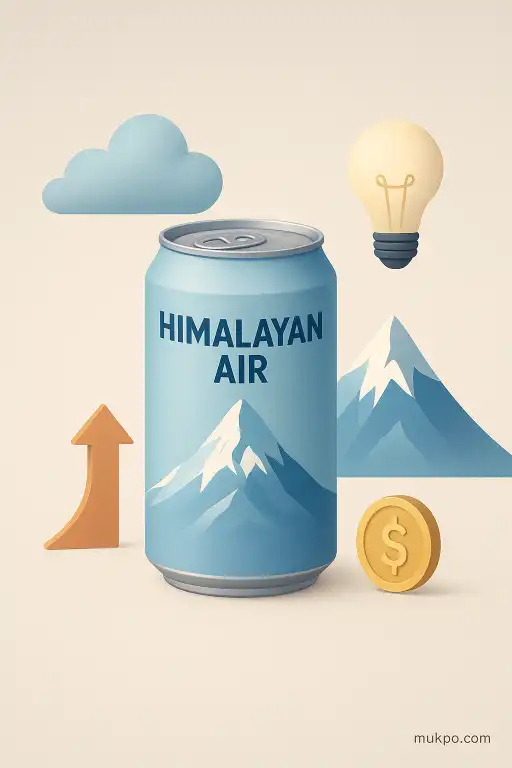
The core mechanism is simple: capture air in a clean, high-altitude location, compress it, seal it in a can, and sell the can as a small dose of “mountain air.” Depending on the company, the can has a pull tab, a valve, or a small mask. Some claim a certain number of “breaths,” but that number varies and is hard to verify because a “breath” isn’t a standard unit.
How you can actually put air in a can
Getting air into a container is not the hard part. Making it portable and shelf-stable is. A startup typically uses a compressor and a drying/filtration stage, then fills pressure-rated cans. Moisture matters more than people expect. If humid air is compressed and sealed, condensation can build up inside, and that can affect taste, smell, and corrosion risk.
One overlooked detail is that “clean air” is not just about avoiding smoke and smog. Compressors can introduce their own contamination if the intake and equipment are not designed for breathable air. Oils, plasticizers, or residues from the filling line can change the odor, even when the source air is pristine. That’s part of why serious breathing-air systems use specific compressor types, filters, and maintenance schedules.
Why high altitude sounds healthier than it is
Himalayan branding leans on an intuitive idea: higher mountains equal purer air. The cleaner part can be true in a local sense, especially away from roads and towns. But “better” is not automatic. At higher altitude, the air pressure is lower, which means each breath contains fewer oxygen molecules, even though the percentage of oxygen in air stays about the same.
That creates a weird marketing tension. The product is sold as refreshing, but the “mountain” aspect also implies thinner air. Companies often avoid framing it as oxygen for a reason: oxygen is regulated differently in many places, while “air” can be positioned as a novelty. The line between a souvenir and a health product is not about chemistry. It’s about claims and labeling.
What people are really paying for
The pitch usually lands with tourists and gift buyers, not with people trying to solve a breathing problem. A can of air is small, shippable, and easy to understand. It fits into the same mental category as local salt, spring water, or a jar of sand from a beach. The can is proof of place, even if the buyer never sees the source ridge or the intake hose.
A concrete situational example is an airport gift shop purchase. Someone is flying home from a trip and wants something light that feels specific. A can labeled with a Himalayan peak or “from Nepal” scratches that itch. The sensory part matters too. People often report a distinct smell when they open it, but that can come from the can, the valve, or the drying process as much as from the mountain itself.
The hard parts: logistics, regulation, and trust
The supply chain is more complicated than the product suggests. If the brand emphasizes remoteness, the company has to explain how equipment, staff, and empty cans get to that remote site, and how filled cans get back out. Air is “free,” but transport and compliance are not. Pressure containers have shipping rules, and different countries treat pressurized goods and anything implying wellness benefits in different ways.
Trust becomes the real product. Buyers can’t easily verify where the air was collected, what filtration was used, or how the can was stored. Some companies try to solve that with photos, GPS coordinates, or third-party testing, but those practices vary and are not universal. In the end, the can sits in an awkward space: it’s a physical item, but the most important qualities are the ones you can’t see on a shelf.

Related reads
- How a 16th-century Ottoman gardener sparked a palace scandal
- Why your hands go numb when you sleep on them
- Why your hands warm up when you remember a pleasant moment
- Rubber ducks from a cargo spill that still wash up decades later around the world
- How your feet decide the fastest route without conscious thought
- How the Amber Room vanished from a royal palace and became WWII’s enduring mystery