

Seeing it in the morning
You walk past a statue on the way to work. Yesterday it looked the same as always. Today the surface is thicker and a little softer at the edges, like the details have been gently blurred. It’s not one single famous monument where this happens. It’s a pattern you see in different places and for different reasons. At the Oscar Wilde Memorial Sculpture in Merrion Square, Dublin, people have left lipstick marks and small “offerings” that change how it looks up close. At the Charging Bull on Wall Street in New York, the surface keeps shifting from constant touching and polishing. Paint is a different kind of tribute, but it behaves the same way: it accumulates because visitors keep adding a layer.
Why people add paint at all
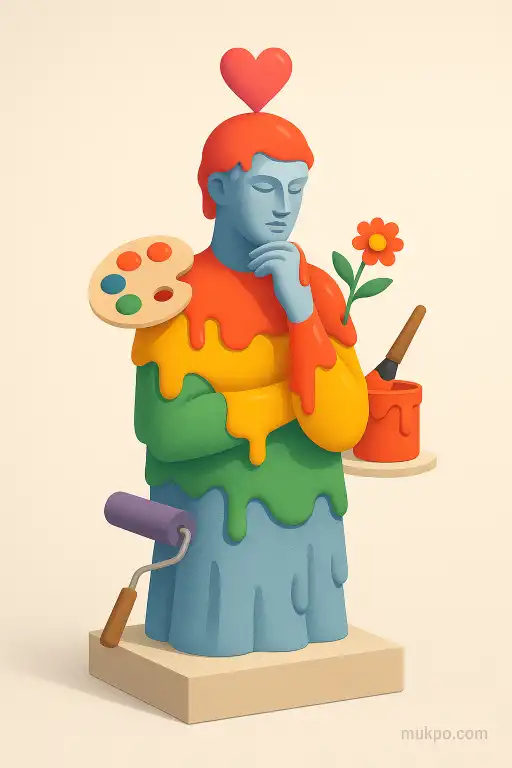
The usual story is simple. Someone paints a statue as a sign of respect, protest, luck, gratitude, or belonging. Then the act becomes legible to the next person. The object isn’t “finished” anymore. It’s a surface that invites participation.
Paint also solves a practical problem for a visitor who wants to leave something behind. Flowers wilt. Candles get removed. Notes blow away. A brushstroke stays. Even when it gets painted over later, that only reinforces the idea that marks come and go, and that adding another coat is part of the rhythm.
How a statue turns into layers
Once paint is involved, the change can be faster than people expect. Every new coat fills tiny pits and scratches. Raised areas get hit first. Recessed areas hold drips and thicker pools. If visitors apply paint at night or in low light, it often goes on unevenly. The statue can look “fine” from across the street while the face, fingers, or inscriptions start losing crispness up close.
A specific detail people usually overlook is what happens at edges. The sharp lip of a letter, an eyelid, a fingernail. That’s where paint creates a rounded bead. Over repeated coats, those beads build little ridges. The ridges catch dust and moisture, which makes the next coat stick even more. It’s one reason these statues can look like they’re swelling at the details rather than just getting “more colorful.”
Nighttime makes it feel supernatural
The “overnight” part is mostly about human schedules. Daytime brings pedestrians, tourists, and officials. Night brings fewer eyes, fewer interruptions, and a different kind of visitor. If a statue is near bars, a station, a waterfront, or a festival route, the timing can become predictable. People who want to leave a mark without a conversation tend to choose the quiet hours.
There’s also a visual trick. Many statues are lit from below at night. That lighting hides surface thickness because it flattens shadows in the small details. In the morning, sunlight comes from above and rakes across the surface. Suddenly the drips, ridges, and softened edges show up. It feels like the statue changed while nobody watched, even if the paint was added one quick coat at a time.
What caretakers can and can’t control
Whether the layers remain depends on who “owns” the surface in practice. City authorities may repaint to match an official look, or strip paint off if the statue is bronze or stone. Religious sites may tolerate thickening layers because the coating itself is part of devotion. In some places, a local group quietly maintains the object: they repaint it, but they also set the color, so tributes become a repainting schedule rather than a free-for-all.
Removal is not neutral, either. Strong solvents can stain stone. Abrasive cleaning can pit metal. Repainting can seal in moisture if the underlying material needs to breathe. So the decision often becomes a negotiation between appearance, preservation, and the social meaning of the marks. That’s how you end up with a statue that keeps “growing” a skin of paint, not because anyone planned it, but because the easiest actions for everyone involved all point toward one more layer.

Related reads
- How your stomach keeps time without a clock
- A parking meter that once spooled out free bakery coupons during a heatwave
- Why a single compliment can change the way you walk
- An unused stairwell that opens into a hidden rooftop garden full of mailboxes
- What your blink rate reveals about attention and stress
- Why your taste changes with your mood