
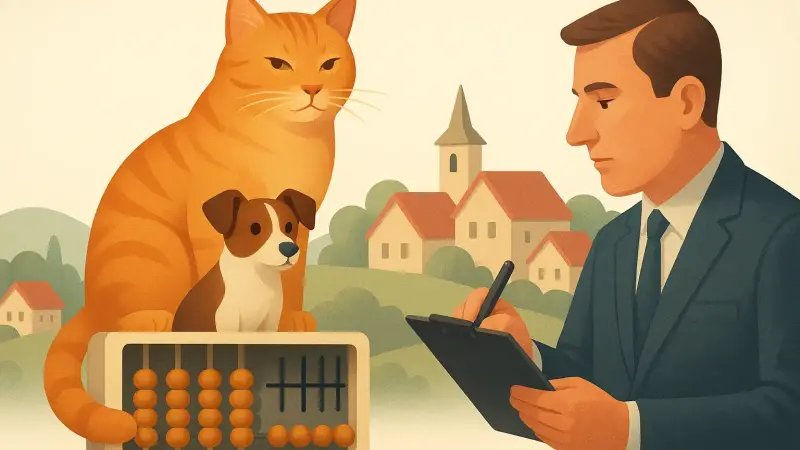
People notice it at the town office first. A board or a page on the website lists “residents,” and mixed in with human names are cats and dogs. It sounds like a joke until you learn why it happens. Some places facing steep population decline have tried symbolic “pet residency” schemes to make the community feel less empty and to draw attention to the problem. It isn’t one single village with one national law behind it. It shows up as local campaigns and registrations that vary a lot. Japan is where this idea is most often reported, alongside other small-town efforts to count seasonal residents or second-home owners differently.
Why a village would try it
For a shrinking village, the headcount matters even when it doesn’t change formal census numbers. Population is tied to school closures, bus routes, medical staffing, and whether a post office stays open. When the human number keeps sliding, morale goes with it. A “pet resident” registry is a cheap way to signal that the place is still lived in, still cared for, and still worth talking about.
There’s also a marketing angle that towns don’t always say out loud. Pets make a softer story than demographic collapse. A photo of a dog receiving a mock resident card travels farther than another press release about aging. That attention can translate into visitors, donations to local groups, and sometimes inquiries from people considering a move.
How “pet residents” usually get counted
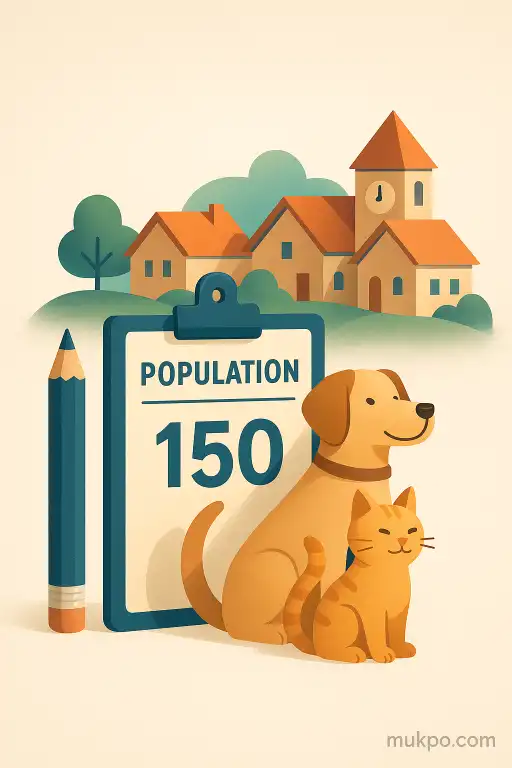
Most of the time, this is not the legal population used by national governments. It’s a parallel list run by a municipality, a neighborhood association, or a tourism office. Owners register an animal’s name and address, sometimes with a small fee that funds local events. The town might issue a certificate, a tiny “resident” ID, or include the pet’s name on a community roster.
One overlooked detail is that these schemes tend to track the humans, not just the animals. A registry can quietly reveal how many homes are still occupied year-round, how many are weekend-only, and which households are likely to need services like snow clearing or welfare checks. Pets become the friendly wrapper for a basic inventory of who is still around.
What it changes, and what it doesn’t
It can change the texture of local life. A town newsletter suddenly has a “new residents” section again. Community events feel less sparse when a few people show up because they’re bringing their pets for a photo, a stamp rally, or a small parade. Local shops sometimes benefit if registration is tied to using a local vet, groomer, or pet-friendly café.
It usually does not change the official statistics that decide representation or large-scale funding. National censuses typically count people, and the rules are strict. Even when pet residency is framed as “boosting the population,” it’s often shorthand for boosting visibility and participation, not rewriting government ledgers.
The edge cases that make it complicated
The idea runs into practical questions fast. Do pets in second homes count the same as pets in permanent homes? What about farm animals, or stray cats that are fed by multiple households? Some towns keep it simple and only register companion animals with an identifiable owner. Others let people “adopt” a local mascot animal on paper, which turns residency into a donation program.
There’s also a quiet tension between cute messaging and real needs. A village can be full of empty houses but still have a lot of “residents” on a pet list if former locals register from afar, or if visitors do it as a novelty. That can be fine if the goal is attention. It’s less helpful if people start treating the number as a serious measure of recovery.
Why it keeps showing up in the news
Journalists like it because it’s concrete. “Population decline” is abstract, but a cat with a resident card is easy to picture. It also fits a broader pattern of small places experimenting with alternative definitions of belonging, like counting long-term tourists, remote workers with second addresses, or “hometown members” who pay dues even after moving away.
And it lands because almost everyone understands the underlying contradiction. A community can feel alive even when the official population drops, and it can feel lonely even when the numbers look fine on paper. A pet registry is a way of talking about that gap without requiring anyone to stare too long at the spreadsheets.
Related reads
- Why your hands tremble before a big moment
- How tiny bedtime rituals quietly prepare your brain for sleep
- Why your recorded voice sounds like a stranger
- A bakery that bakes secret birthday messages into loaves that appear only when toasted
- Why pupils widen when someone catches your eye
- Why you cannot tickle yourself