
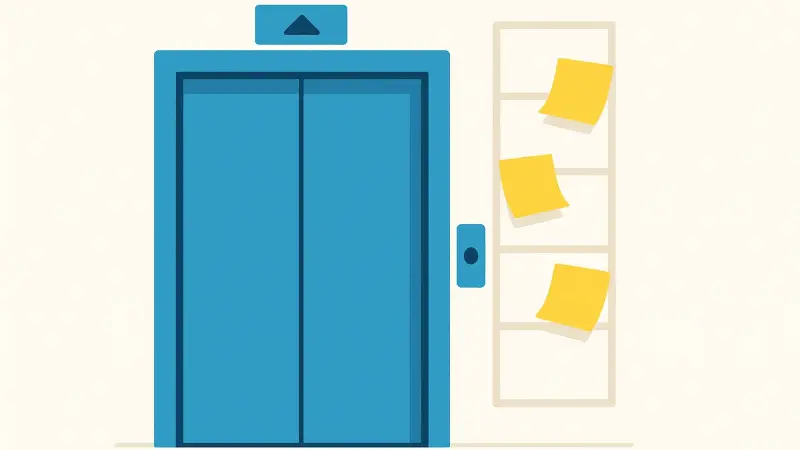
You don’t expect an elevator to have opinions. You press “4,” it goes to 4, and the day keeps moving. But there’s a recurring kind of building story where the car pauses on a floor that isn’t in the panel, the doors open to a blank hallway, and later someone finds a sticky note inside—sometimes addressed to a specific tenant. It isn’t one single famous incident. You hear versions of it in office towers in Manhattan, older apartment blocks in Chicago, and mid-rise hotels in London. The details vary and are often unclear. The core mechanism, when it isn’t outright fiction, tends to be a mix of how elevator controllers handle service modes and how people use small, disposable notes in shared spaces.
How an elevator can stop where you can’t choose
Most elevator buttons are just the user interface. The controller behind them can be programmed with more stops than the panel shows. That’s normal in buildings that have mechanical levels, staff corridors, or secured amenities. The car can also be told to “answer” certain calls even when riders can’t request those floors directly. A key switch, a fob reader, a fire service panel, or a building management system can do it. To a rider, it looks like a ghost stop. To the equipment, it’s a valid destination that isn’t meant for the public panel.
One specific detail people usually overlook is the difference between the car’s buttons and the hall call stations. A floor can be hidden from the car operating panel but still have a hall call button in a locked vestibule, a service corridor, or behind a door that tenants don’t notice. If the car is in a mode that prioritizes those calls, it can detour without anyone inside touching a thing.
The unmarked floor is often a real floor

Unmarked doesn’t always mean imaginary. Buildings sometimes skip numbers for convention, marketing, or superstition, and that creates a weird gap in everyday expectations. Even when a “13” is missing from the panel, there is still a level in the shaft where the car can stop. In some places it’s labeled 14, 12A, M, or simply left off tenant-facing signage. If someone rides it for the first time, it can feel like the elevator invented a space.
Another mundane cause is reconfiguration. A floor that used to be publicly accessible might get converted into storage, building systems space, or a private suite, while the controller still retains the stop for service access. The hallway might be lit but unoccupied, with plain doors and no tenant plaques. That emptiness is what makes the moment stick in memory, even when it’s just a locked-off part of the same building.
Why sticky notes show up in elevator stories
Sticky notes are the perfect “evidence” because they’re common, anonymous, and mobile. People use them in elevators for mundane reasons: a quick reminder for themselves, a note to a neighbor they missed in the hallway, or a message meant to be delivered by chance to whoever rides next. In office buildings, it’s also common to see temporary signage placed wherever people will actually notice it—inside the car, at eye level, near the buttons. When those notes fall off a clipboard or jacket pocket and get stuck to a wall, they become part of the setting.
The situational example that comes up a lot is a note placed right beside the “Door Close” button or over the card reader, where hands hover and eyes naturally land. That placement makes the note feel targeted, even if it’s generic. It also means it can be picked up, moved, or replaced without anyone remembering who first put it there.
Small technical quirks that create big impressions
Elevators can behave oddly without anything paranormal or deliberate. Dispatching systems group cars and reassign calls based on traffic. A car might slow, stop, or open briefly because it believes it has a registered hall call, then cancel it when it doesn’t detect a door zone condition it expects. Door sensors can also trigger reopen cycles that make a pause feel like a stop. If the ride is quiet, that pause becomes a scene. People notice the hush, the slight leveling movement, and the doors parting like they’re supposed to.
Service modes make this stronger. Fire service operation, inspection mode, and independent service change what the elevator is allowed to do and who can command it. A rider might not see a key switch in the hallway, a security desk might have sent a car to a staff level, or a technician might be testing calls. None of those require the car’s panel to show the destination to the public.
How the story gets sharper each time it’s told
Once a building has a tale like this, later ordinary events get pulled into it. Someone finds a sticky note in a car, and it gets connected to last month’s weird stop. Someone rides alone late, the elevator pauses, and the brain reaches for the most available explanation. Even the same physical note can be “discovered” multiple times if it gets moved from a wall to a mirror to the control panel, each time seeming newly placed.
That’s why these stories tend to cluster in places with lots of turnover and lots of shared surfaces: older apartment buildings with layered renovations, hotels where staff use back-of-house levels, and office towers where security and maintenance have their own routes. The elevator is one of the few spaces everyone shares, briefly, without context, which makes any unplanned stop or stray note feel like it was meant for you.

Related reads
- The mental habit behind checking the stove twice
- Plants that fling seeds: the mechanics of botanical catapults
- How whales feel the Earth’s magnetic ripples
- The bacterium that cements sand into rock
- When fireflies flash together: the physics of synchronized light
- How desert varnish forms on sun-baked rocks