

A smell can bring back more than a picture
It’s strange how a smell can return an entire stretch of time, not just a single snapshot. This isn’t tied to one famous event or one town. People report it everywhere, from New York City subway stations to lavender fields in Provence to fish markets in Tokyo. The basic mechanism is simple: smell information takes a fast route into the brain systems that handle emotion and memory. So a scent can arrive already “colored” with feeling. That feeling helps pull up a scene with texture—light, temperature, other people—like an afternoon you didn’t realize was still stored in full.
The shortcut: nose to emotion to memory
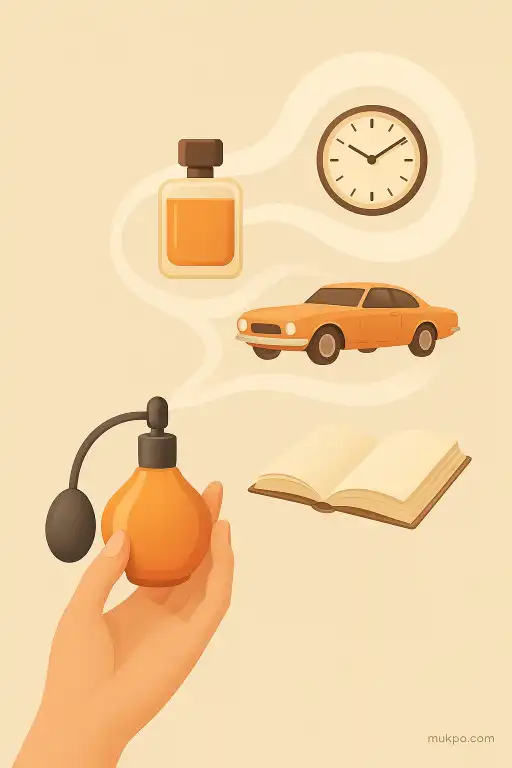
Smell signals start in the nose and travel to the olfactory bulb. From there, the connections to the amygdala and hippocampus are unusually direct compared with other senses. Vision and sound get more relay and filtering before they reach the same memory circuits. Smell is also tightly tied to the body’s threat and comfort systems, which is why it can feel immediate and physical.
That directness doesn’t guarantee a perfect replay of the past. It just makes retrieval more likely to feel involuntary. The memory can arrive with a surge of certainty even when details are fuzzy. People sometimes describe it as being “dropped into” a moment, because the emotional tone lands first and the brain fills in context right after.
Why it often comes back as a whole afternoon
Smells are good at acting like keys because they’re often learned in specific, repeated settings. If someone always smelled sunscreen on the same porch during summer breaks, the scent isn’t linked to one single image. It’s linked to a cluster: the glare off a driveway, the sound of a screen door, a certain boredom, the feel of sticky skin after swimming. Memory tends to store episodes as networks, not as isolated files. A strong cue can light up a big portion of the network at once.
A concrete example shows the scale. The smell of chlorine can bring back not just “a pool,” but a particular day: damp towels in a gym bag, the echo in an indoor lane, the specific sting in the nose, the walk home with wet hair in cold air. The overlooked detail is that smell often includes trigeminal sensations—burning, cooling, prickling. Menthol’s cold bite or vinegar’s sharp sting becomes part of the cue, which can make the return feel unusually vivid.
What decides which memory you get
The brain doesn’t pull memories randomly. Recency matters, but so does emotional intensity and repetition. Early experiences can be overrepresented because many signature smells are first learned in childhood, when new environments and routines are being recorded fast. A “grandparent’s house” smell is rarely one ingredient. It’s a mix of detergent, cooking fat, old wood, cigarette smoke, garden soil, whatever happened to be constant there.
Context at the moment of smelling also steers what comes up. If someone catches the smell of rain on hot pavement while already feeling tired, the retrieved scene may skew toward a weary, late-afternoon memory rather than a joyful one. Two people can smell the same thing and retrieve different decades because the cue is not the chemical itself. It’s the pairing between that chemical profile and a personal history.
Why it can feel so real, and still be unreliable
When a scent-triggered memory arrives, it often comes with a strong “this is true” feeling. That’s partly because emotion signals are fused into the retrieval process. But vividness isn’t the same as accuracy. Memory is reconstructive. The brain rebuilds the scene from fragments, and it borrows plausible details from general knowledge. An afternoon recalled from the smell of cut grass might include the wrong shirt color or the wrong year, even while the mood and setting feel exact.
Smell is also hard to name, and that matters. People can recognize a scent instantly but struggle to label it. Without a label, the brain leans on older, well-worn associations instead of a neat verbal category. That’s one reason a faint whiff—like the particular plastic-and-dust smell of an old car interior warming in the sun—can open a door faster than a photograph ever does.
Related reads
- The muddled alertness after waking that slows decisions
- Why a stranger can feel like an old friend at first sight
- The night Pope Alexander VI’s Banquet of Chestnuts exposed the excesses of Renaissance Rome
- The apartment with a hidden garden growing beneath a stairwell
- A tiny island where locals deliver mail by canoe and exchange homemade maps
- Why crying can feel identical for joy and grief