

A tiny request can flip the whole vibe
It isn’t one single event tied to one place. You can see it in a New York office, a Seoul café, or a group project at a university in London. Someone asks for a small favor—pass the stapler, watch a bag for a minute, forward a file—and the other person’s impression shifts faster than you’d expect. The mechanism is simple: once a person does a small helpful act, their mind tends to treat that act as evidence about what they’re like and how they feel about you. The change can happen even if the favor was minor and the relationship was neutral seconds earlier.
The mind tries to make the favor “make sense”
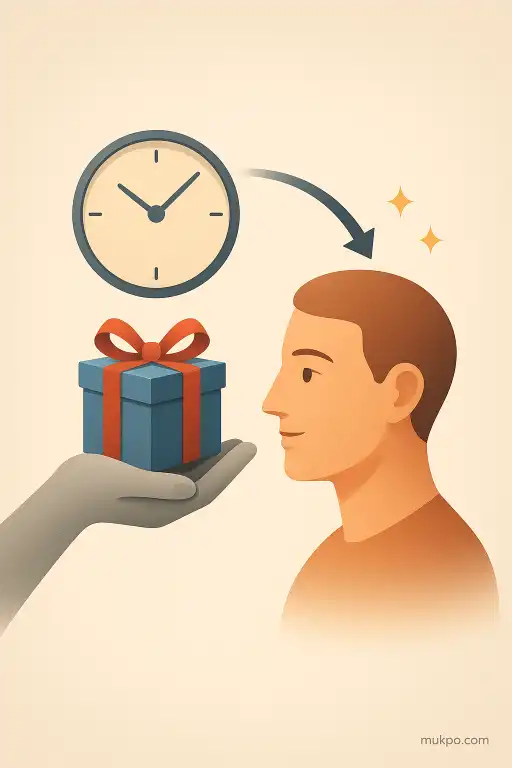
There’s a well-known idea in social psychology sometimes called the Benjamin Franklin effect. The observation is that doing a favor for someone can make the helper like the requester more, not less. It sounds backward if you’re thinking in strict “I like you, therefore I help you” terms. But the mind also works the other way around: “I helped you, so I must not dislike you that much.” People generally prefer their actions and their attitudes to match, because mismatch feels mentally messy.
The overlooked detail is timing. The impression shift often comes after the favor is already done, not during the request. Right after helping, there’s a quick internal accounting: was this person worth my effort, was I pressured, did I volunteer, did it cost me anything. If it felt chosen and low-cost, the brain can file it as a small sign of warmth or alignment. If it felt forced, the impression can swing the other way just as fast.
Small favors act like a fast trust test
A minor request creates a tiny social contract. It tests whether the requester seems normal, respectful, and safe to cooperate with. That’s why the same favor can land differently depending on the framing and context. “Could you hold the elevator?” is often perceived as basic courtesy. “Can you cover my shift tonight?” is still a favor, but it carries more risk and can feel like an imposition. The size isn’t just minutes spent. It’s also uncertainty, inconvenience, and whether saying no feels allowed.
People also track whether the favor has a clear endpoint. Holding a door is closed-loop. Proofreading “real quick” can be open-loop, because “real quick” is undefined. That’s a small detail people usually overlook when they’re surprised an impression changed. When the boundary is unclear, helpers may assume future demands are coming. That assumption alone can make someone feel wary, even if the requester never asks again.
The requester’s tone becomes part of the memory
When someone remembers a small favor exchange later, they often remember less about the task and more about the social texture around it. Was there a pause that allowed a real “no”? Did the requester look away while asking, like they expected rejection? Did they keep talking so the other person couldn’t answer? These tiny cues get stored as information about status, entitlement, and empathy. Two identical requests can produce opposite impressions depending on those cues.
There’s also a subtle signal in how the favor is received. A quick, calm “thanks” usually closes the loop. Over-the-top gratitude can feel like performance, especially among people who don’t know each other well. No acknowledgment can feel like the helper was used. The impression shift isn’t only “they’re nice” or “they’re rude.” It can be more specific: “they notice effort,” “they assume compliance,” or “they get awkward around reciprocity.”
A concrete example: the printer, the password, and the clock
Picture a shared office printer. One person is trying to print a boarding pass and the printer is asking for an admin password. They turn to a colleague they barely know and ask, “Do you know the admin login?” It’s a small favor because it’s just information. But it’s also loaded. The helper is deciding whether sharing access is appropriate, whether they’ll get blamed if something goes wrong, and whether this is normal workplace behavior. The clock matters too, because urgency can make a request feel like pressure.
If the colleague says, “I can’t share the password, but I can log it in and you can print,” that’s not just problem-solving. It reshapes the impression on both sides: the requester sees someone as competent and principled, and the helper experiences themselves as helpful without crossing a line. The small, overlooked detail here is that the favor isn’t “printing.” It’s the way the helper manages risk and boundaries in real time. That’s the part that tends to stick, and that’s why a small favor can change an impression so quickly.

Related reads
- The town where every street sign is painted by a stranger overnight
- How microplastics hitch rides inside sea salt crystals
- How 17th-century Ottoman tulip mania turned gardens into a speculative market
- The hotel room shaped like an egg people book for its strange acoustics
- The bench that secretly grows a community garden inside its slats
- Why some river stones sing when water rushes over them