
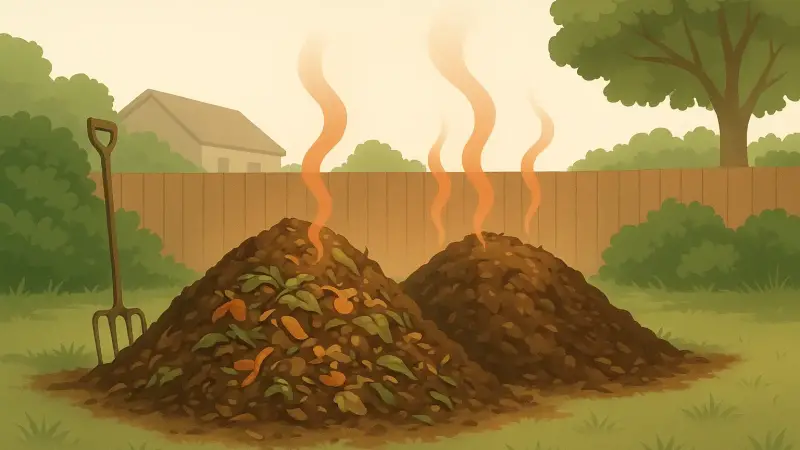
If you’ve ever walked past a compost heap on a cold morning and noticed steam, it can feel oddly out of place. There isn’t a heater in there. There isn’t a flame. This isn’t one single town’s trick, either. People see it in backyards in places as different as the U.K., the Pacific Northwest in the U.S., and New Zealand. The basic mechanism is simple: microbes break down food scraps and yard waste, and that work releases heat. It’s the same reason your body warms up when it burns fuel, just scaled down and messier. The pile is a little ecosystem, and its temperature is one of the easiest clues to what’s happening inside.
Heat comes from microbes doing fast work
When conditions suit them, bacteria and fungi multiply quickly and digest carbon-rich and nitrogen-rich material. Their metabolism produces heat as a byproduct. In an active pile, the center can get much warmer than the surrounding air because the outer layers act like insulation. The warming is not evenly distributed. The surface cools fast, especially in wind, while the core can stay hot because air movement is limited and the material holds warmth.
That heat output changes over time. Early on, easy-to-digest sugars and proteins drive a surge in activity. Later, tougher fibers like lignin and cellulose dominate, and the pace slows. The temperature usually follows that pattern: a rise, a peak, and then a gradual drop as the most accessible food for microbes runs out.
Oxygen and moisture decide whether it runs hot
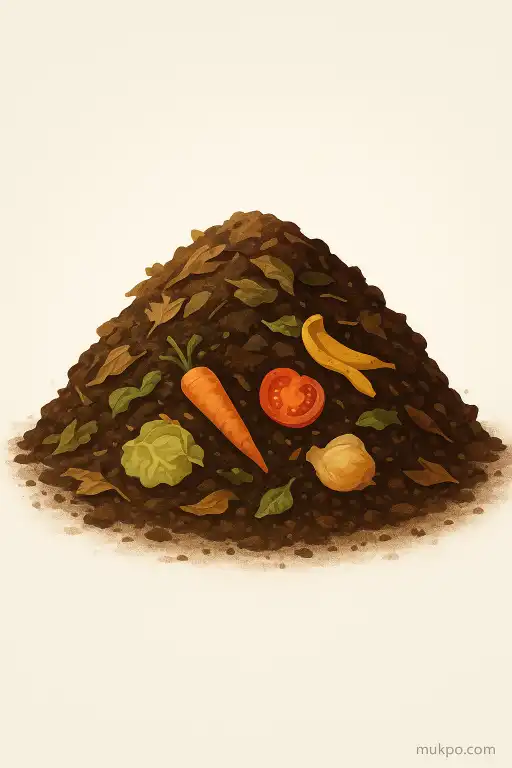
The microbes that generate the most heat tend to be aerobic, meaning they need oxygen. If air can’t reach the interior, the pile shifts toward anaerobic decomposition. That path still breaks things down, but it’s typically slower and cooler, and it produces different gases. Moisture matters just as much. Microbes need water films to move nutrients around, but too much water can fill air spaces and choke off oxygen.
A specific detail people often overlook is how “wet” can hide inside a pile that looks dry. A crusty top layer can shed rain, while the middle stays damp because food scraps release water as they break down. That uneven moisture can create a hot, active pocket in one spot and a sluggish, air-starved zone a few inches away.
What’s in the pile changes the temperature curve
Not all ingredients feed microbes the same way. Fresh kitchen scraps, coffee grounds, and grass clippings tend to provide nitrogen and easily available compounds, which can drive rapid growth and higher heat. Dry leaves, shredded cardboard, and woodier trimmings lean more carbon-heavy and break down more slowly. The exact “right” mix varies and is hard to measure in a backyard, but the general effect is consistent: more fast food for microbes usually means a quicker, hotter phase.
Particle size also matters because it changes surface area and airflow at the same time. Chop something small and microbes can access it faster, which can boost activity. Pack too many small particles together and the air spaces shrink, limiting oxygen and cooling the overall process. That tradeoff is one reason two piles with the same ingredients can behave differently.
Heat is also the pile’s way of managing pests and pathogens
Higher temperatures can suppress some unwanted organisms. Many plant pathogens and weed seeds are less likely to survive sustained heat, though the exact threshold and time needed varies and isn’t always reached in small or uneven piles. The hottest conditions tend to occur in the center, which means survival can depend on where something ends up. A seed near the edge might never experience the same heat as material buried deep in the core.
Heat also changes which decomposers dominate. As temperatures rise, heat-tolerant microbes become more competitive, and some insects and worms retreat to cooler zones. When the pile cools later, larger decomposers often move back in. That shifting cast is normal, and it’s one reason compost doesn’t smell or look the same from week to week.
Reducing food waste is mostly about avoided landfill chemistry
Food waste “disappears” in any system, but the byproducts differ. In a landfill, much of the decomposition happens without oxygen, which tends to generate methane, a potent greenhouse gas. Some landfills capture methane, but capture rates vary by site and over time, and not all methane is collected. In a backyard pile with enough oxygen, the carbon is more likely to leave as carbon dioxide instead, and a lot of the remaining material becomes stable organic matter rather than gas.
There’s also a quieter reduction that isn’t about gases at all: volume and mass. Food scraps are mostly water. As they break down, water drains, evaporates, or gets incorporated into microbial biomass, and the solid structure collapses. That shrinking is why a bucket of peels and leftovers can turn into a much smaller amount of finished material over time, even when nothing looks “used up” from the outside.
Related reads
- Why names disappear mid-conversation
- Why you sometimes freeze when a joke lands on you
- An old radio that plays broadcasts from distant towns at random
- What happens in your body in the seconds before you speak up
- Why scrolling social feeds makes you feel worn out
- How lichens turn bare rock into the first soil