
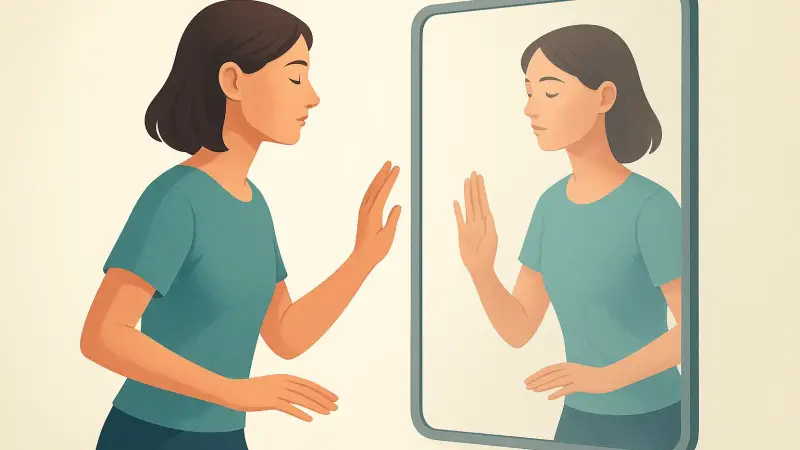
Noticing your walk after you glance at yourself
You catch your reflection in a hallway mirror and your shoulders quietly shift. Your chin lifts a few millimeters. Your feet land a little differently. There isn’t one official “mirror practice” that everyone means; it shows up in ballet studios in Paris, gyms in the United States, and school bathrooms almost anywhere. The mechanism is plain: vision becomes feedback. The mirror turns movement into something you can monitor in real time, which changes what your brain prioritizes. It stops relying only on muscle feel and starts correcting from what it sees, even if the check lasts just a few seconds.
Why a mirror changes the brain’s plan mid-motion
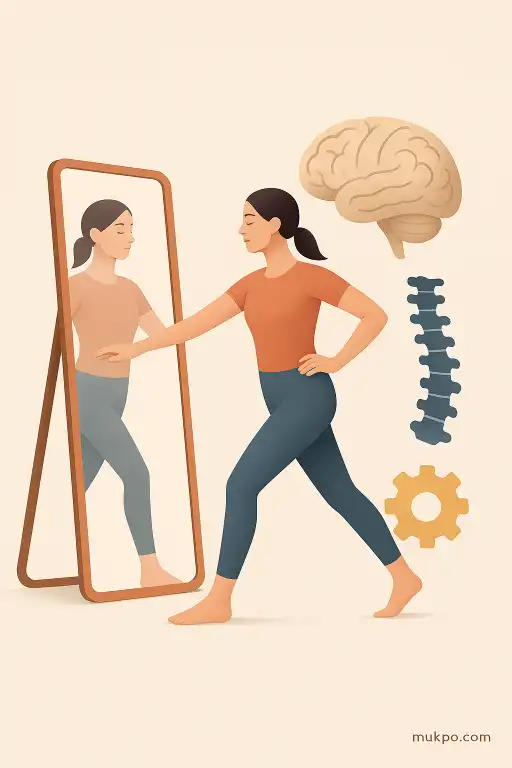
Movement usually runs on prediction. The nervous system sends a plan, then senses whether it matched what was expected. A mirror adds a fast external signal. That matters because visual information is often weighted heavily, especially for posture and symmetry. When a person sees one shoulder higher than the other, the correction can happen before they can name it. The adjustment can be tiny, but it still alters the next step, the next reach, the next breath.
There’s also a timing quirk people overlook: mirrors are “live,” but not instant in the way touch is instant. The eyes sample, the brain interprets, then the body edits. That small delay can lead to overcorrection, like a subtle sway when someone tries to stand perfectly still while watching themselves. It’s not clumsiness. It’s a control loop being tuned on the fly.
What changes first: head, ribs, and the way the feet meet the floor
When people use a mirror briefly, the first changes often show up high in the body. Head position and ribcage stacking are easy to see, so they get “fixed” first. That shifts balance. If the head comes back and up, weight can move from the toes toward midfoot. If the ribs pull down, the pelvis often follows. The feet respond because they have to, not because someone consciously changed their steps.
A concrete example shows how fast it can happen. Picture someone in a gym with a wall-length mirror doing a simple bodyweight squat. On the first rep they notice their knees drifting inward. The next rep looks cleaner, but the overlooked detail is the ankle and foot change that made it possible: the arch stiffens a little, the big toe presses more, and the knees track differently without a separate “knee” command. The mirror pushed attention to a visible problem, and the solution came from a less visible place.
Mirror feedback can compete with body sense
Body sense (proprioception) is quieter than vision. A mirror can drown it out. When someone watches themselves closely, they often start moving “for the picture.” That can make motion more segmented. The person pauses to check, then moves, then checks again. It also tends to increase muscle tension in the neck and shoulders, because those areas are easy to brace while trying to look controlled.
This is why two people can react differently to the same quick mirror check. One person stabilizes and looks smoother right away. Another becomes more rigid, because they’re managing appearance and movement at the same time. The mirror doesn’t just show what the body is doing. It changes the task from “move” to “move and monitor,” which is a different job for the nervous system.
Why a brief check can have effects after the mirror is gone
Even a short bout of visual feedback can recalibrate what “neutral” feels like. If someone sees that their right shoulder sits higher, the correction creates a new internal reference. When they walk away, they may keep part of that change because the brain updates its prediction: this is the new baseline. That update can last minutes, or longer, depending on fatigue, stress, and how practiced the movement is.
There’s also a social layer that lingers. Mirrors are tied to being observed, even when no one else is there. That can shift gait and gesture toward what feels presentable: smaller movements, less swing in the arms, a steadier head. In a quiet, everyday setting—like catching yourself in a shop window while carrying groceries—that tiny self-observation can be enough to tighten posture and change how your next few steps land.
Related reads
- The statue whose bronze weeps salty streaks after foggy nights
- How mussel byssal threads anchor entire intertidal communities
- The bakery that times its loaves to the passing freight trains
- The coffeehouse pitch in 1719 that fanned the South Sea Bubble
- A hidden stash of decades old receipts that paid someone s rent
- Why waiting in line feels longer than the same wait at home