
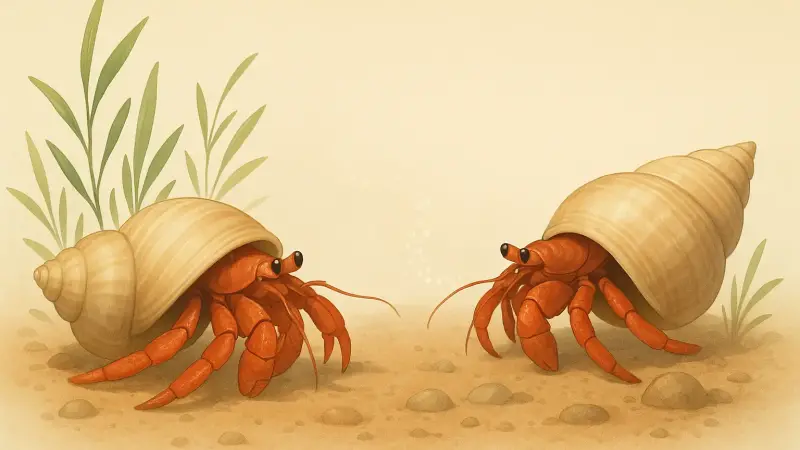
Why a shell can “smell” right
At a rocky tide pool, a hermit crab can pass a shell that looks fine and still keep walking. This isn’t one single place or event. People have watched it on coasts from Japan to Florida to the Mediterranean. A big part of the choice happens through chemicals in the water. Crabs “taste” with sensors on their antennae and mouthparts, and those sensors pick up faint traces coming off shells. The cue can be as basic as whether a shell has been occupied recently, and whether the last tenant was the right kind of animal.
The chemical trail left by other crabs
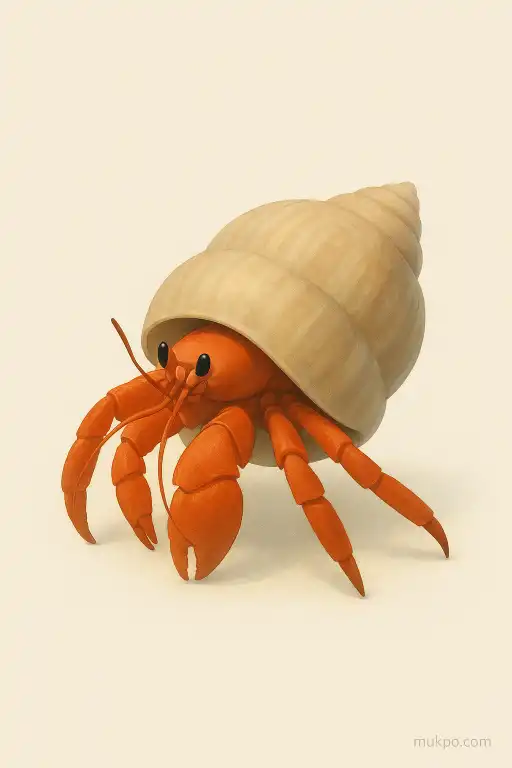
One strong signal is other hermit crabs. When a crab handles a shell, it leaves behind compounds from its body surface and waste, and those residues can cling to the shell’s interior. A shell that carries “hermit crab smell” often gets more attention than a chemically blank one, because it suggests the shell was usable for a crab recently. It can also act like a local message: there are other crabs nearby, which matters because shell upgrades often happen in groups.
A specific detail people overlook is where the crab samples the shell. It’s not only sniffing from a distance. It often touches the rim and then probes inside with its antennae and mouthparts, where the chemical signal is stronger and less washed away by waves. That inside film can last longer than you’d expect, especially in calmer pools where water exchange is slower.
How a crab detects “occupied,” “dead,” or “dangerous”
Hermit crabs also pick up cues from the original shell-maker. Many shells come from marine snails, and fresh shells often enter the system after a snail dies. Chemical traces from decaying tissue can make a new shell easier to locate, which is useful because empty shells are patchy and easy to miss. But “fresh death” chemicals can also overlap with predator activity, scavengers, or poor water quality. So the response isn’t fixed. It can vary by species and context, and researchers don’t always agree on which compounds matter most in the wild.
There are also alarm-type cues. Injured or stressed crabs can release chemicals that other crabs detect quickly. In some situations that can draw crabs in because it hints that a shell might become available. In others it can make them hesitate, because the same situation could mean a predator is present. The key point is that the shell itself isn’t the only thing being evaluated. The chemistry around it carries a running update about what just happened there.
Why “smell” doesn’t replace fit
Chemical cues get a crab to inspect a shell, but they don’t settle the decision. Fit still matters, and the crab checks it with fast, physical tests: rotating the shell, pulling partly inside, and comparing the opening against its own claws and abdomen. A shell can carry attractive chemical residue and still be rejected because the opening is too wide, too narrow, or the interior curve doesn’t match the crab’s body.
Weight is part of this, and it’s easy to miss if you only look at size. Two shells with similar openings can feel very different because of thickness, sand packed inside, or encrusting growth on the outside. That changes how costly it is to carry. Chemical cues can’t tell a crab that. The crab has to lift and handle the shell to learn it.
A concrete scene: the “vacancy chain” at the shore
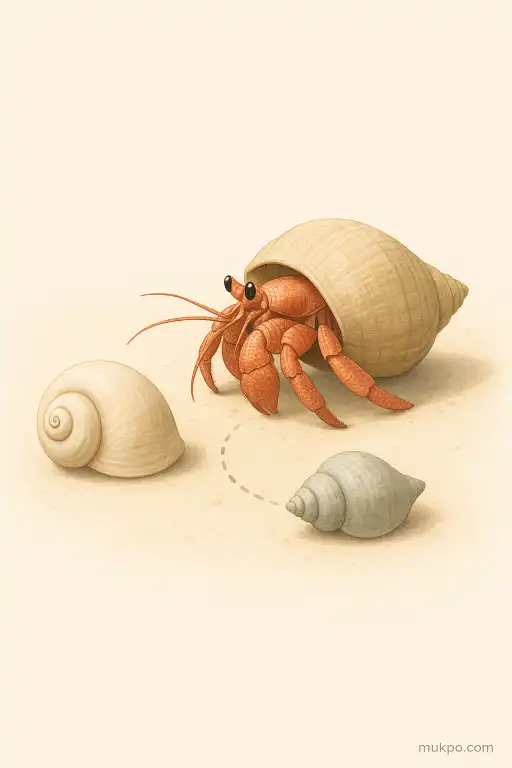
On some shores you can see a cluster of hermit crabs gathering around a single empty shell and then a fast sequence of swaps. It’s often called a vacancy chain. One crab moves into the newly available shell, and others step into the shell it leaves behind. Chemical cues help start the crowd. The empty shell carries traces that make it noticeable, and the crabs themselves add more chemical information as they touch and test it.
That crowding changes behavior in a practical way. A crab may accept a shell it would ignore if it were alone, because another crab is already inspecting it and time is short. The chemical “buzz” around the shell gets stronger as more crabs handle it, but the final outcome still depends on quick physical checks and the immediate social pressure of nearby competitors.
Related reads
- How photosynthetic bacteria thrive in boiling hot springs
- A rainforest bat that farms figs by planting seeds
- The night in 1944 when a Midwestern town awoke to an invisible assailant
- The medieval forger who persuaded Europe that three centuries were fabricated
- The spider that sails on silk rafts to cross oceans
- The mural that slowly revealed a hidden city map as layers of smoke were cleaned away