

People often picture a new coastline as something bulldozed into place. Mangroves do it differently. It isn’t one single site, either. You can see the pattern in the Sundarbans of Bangladesh and India, along Florida’s southwest coast, and in Indonesia’s river deltas. The core trick is small and local: mangrove roots slow water down, trap fine sediment, and then microbes living on and around those roots change the chemistry of the mud. That microbial work turns loose grains into something that holds together, so the next tide has a harder time pulling it back out.
Roots that force the ocean to drop its load
Mangroves don’t need to “stop” waves to change a shoreline. They just need to roughen the flow. A tangle of prop roots and pneumatophores (the little “breathing” spikes some species push up through mud) creates drag. Water moving through that maze loses energy. Suspended silt and clay settle out, especially during slack tide and after storms when the water is full of particles.
A detail people usually overlook is grain size. Coarse sand drops quickly and is easier to rework. The really coastline-building material is the fine stuff—clays and organic-rich flocs—that can stay suspended for a long time until something slows the water enough. Mangrove root fields create exactly that slow zone, which is why the mud can build upward as well as outward.
The microbial film that makes mud behave differently
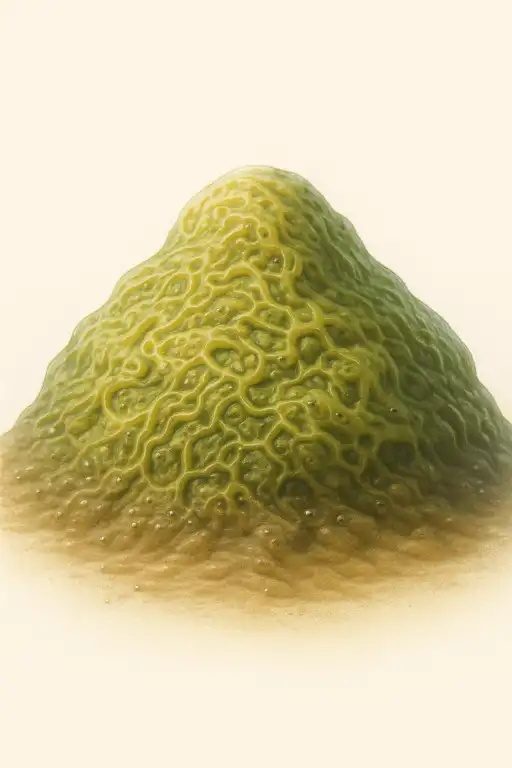
Once mud starts accumulating, the root surfaces become real estate for biofilms. These are dense mats of bacteria, archaea, fungi, and microalgae embedded in sticky polymers they secrete. Those polymers—often called extracellular polymeric substances—act like glue. They bind mineral grains together and make the surface more resistant to being resuspended by a returning tide.
This is not a single “helper microbe.” It varies by place, season, salinity, and oxygen. But the same kinds of functions show up again and again: microbes that produce sticky coatings, microbes that consume oxygen and create steep chemical gradients, and microbes that cycle sulfur, iron, and nitrogen in ways that change how particles clump. That clumping matters because flocculated mud settles faster and erodes more slowly than the same grains drifting separately.
Making a firmer seabed by changing oxygen and chemistry
Mangrove soils are patchy in oxygen. Right next to a root that leaks a bit of oxygen, conditions can be very different from a few centimeters away where it’s anoxic. Those sharp transitions invite microbes that use whatever chemistry is available: oxygen when it exists, then nitrate, then iron compounds, then sulfate, depending on the micro-zone.
Those reactions can stiffen sediments. Sulfate-reducing microbes, for example, can produce sulfide that reacts with iron to form iron sulfide minerals. Other microbes influence iron cycling that affects how strongly clay particles stick together. The point is not that microbes “cement” mud like concrete. It’s that they nudge sediments toward aggregates and mineral associations that are harder for flowing water to peel apart.
Roots feed the underground workforce
Microbes need carbon and nutrients, and mangroves supply both in a very specific way. Roots leak a mix of sugars, amino acids, and small organic acids into the surrounding sediment. That leakage is not constant. It changes with temperature, salinity stress, and even time of day. It creates a “rhizosphere” zone where microbial activity is often much higher than in nearby bare mud.
At the same time, mangroves drop huge amounts of leaf litter and woody debris. Some of it becomes dissolved organic matter; some becomes peat-like material that can build elevation. Microbes break this down slowly in low-oxygen mud, which helps organic material persist. That persistence matters because organic-rich sediments often hold water differently and resist compaction in ways that influence whether a shoreline keeps its height relative to sea level.
What it looks like on an actual mangrove edge
Along parts of Florida’s Ten Thousand Islands, you can find a sharp boundary where open water meets mangrove fringe. After a storm, the water may be brown with suspended mud. Inside the roots, it often clears faster. The settling material is not evenly spread; it piles in small pockets and ridges shaped by root spacing, crab burrows, and tiny channels that drain at low tide.
Those crab burrows are another easy-to-miss detail. Burrowing animals mix sediments, move leaf fragments downward, and pump water through the mud. That changes oxygen patterns and microbial hotspots. It can either help stabilization or create weak spots, depending on local conditions, wave energy, and how fast sediment is arriving. The “stitched” shoreline is the end result of all these small interactions repeating tide after tide, with microbes doing a lot of the quiet binding work in the background.
Related reads
- A row of doors each fitted with a different custom keyhole
- A bench that refuses to warm for the same person twice
- Why some people whisper instructions to themselves
- A shop that only accepts payment in odd-numbered coins
- Seagrass meadows that trap microplastics in their blades and change sediment chemistry
- How dust grains stick together to build planets around young stars