
Why a burrowing animal matters to a river
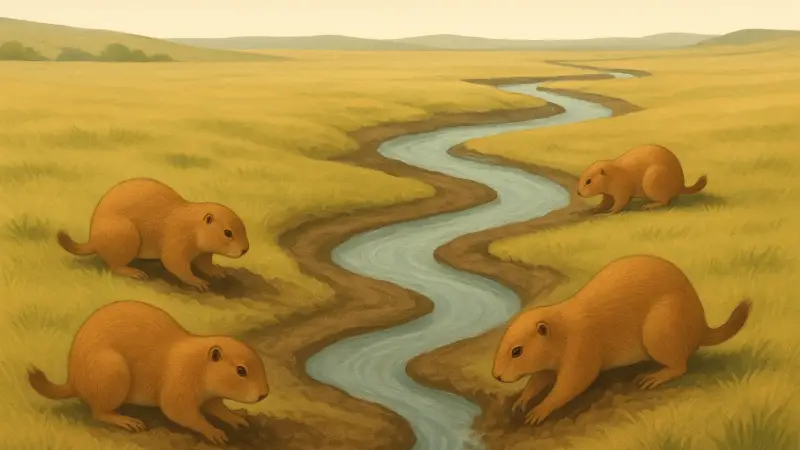
It’s a quiet contradiction on the Great Plains. You can stand in a prairie dog town and see no water at all, then drive a few miles and cross a stream that carries their fingerprints. This isn’t one single place or event. It shows up in different ways across the shortgrass and mixed-grass prairies of Colorado, Wyoming, and the Texas Panhandle. The core mechanism is simple: prairie dogs move a lot of soil and keep vegetation short, and that changes how rainwater runs off the land. Once water starts choosing a slightly easier path downhill, it tends to keep using it, and small changes at the surface can add up into channels that feed creeks and rivers.
Digging changes the ground before water even moves
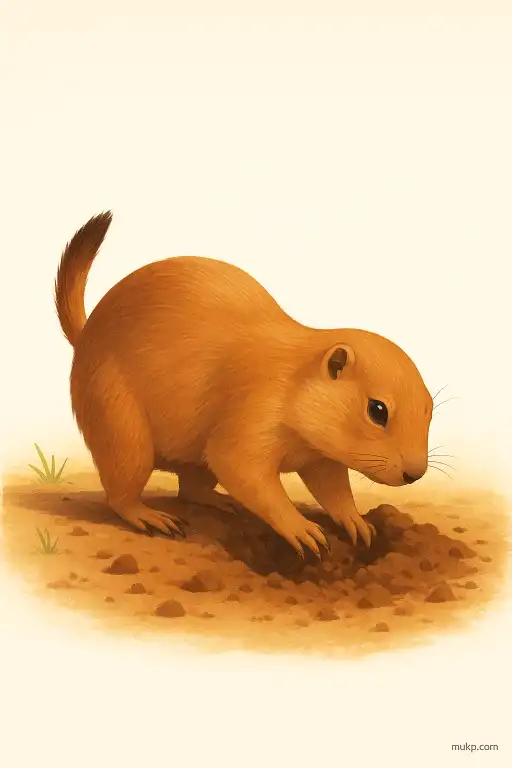
Prairie dogs excavate burrows and pile the dirt at the entrance. Those mounds are not just “mess.” They are micro-topography: little ridges and bowls that redirect the first thin sheet of runoff during a storm. The soil they bring up is also different from the soil that was on the surface. It’s often looser, sometimes finer, and typically less protected by plant cover. That matters because the earliest minutes of a rain event can decide whether water soaks in or starts sliding.
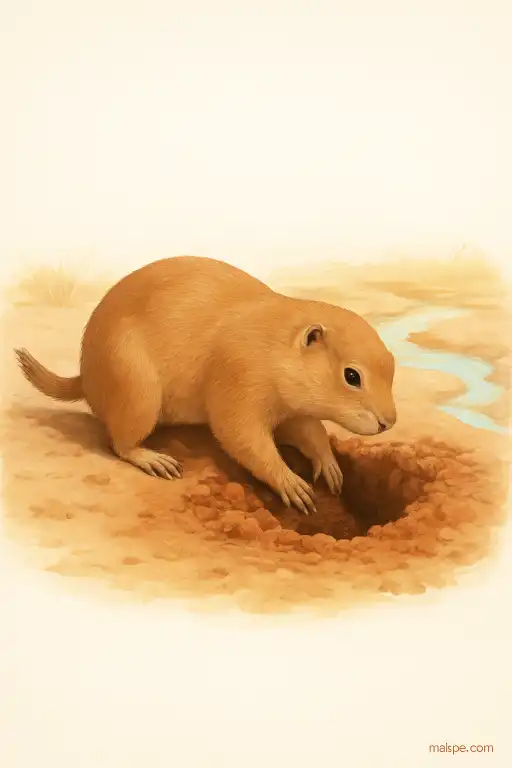
One detail people usually overlook is the burrow itself as a hydraulic feature. Burrow openings can act like temporary drains when water ponds around them. But the effect varies. Some tunnels collapse, some stay open, and the way they connect underground is hard to see without digging. In certain soils, those voids can increase infiltration locally. In others, the disturbed surface crusts over and sheds water faster. The same animal can push the system in different directions depending on soil texture and how compacted the ground becomes around a colony.
Shorter plants can mean faster runoff and more sediment
Prairie dogs clip grasses and forbs to keep sightlines open. That changes the “roughness” of the surface. Taller, denser vegetation slows shallow flow and traps sediment. Short, sparse vegetation lets water move faster and gives it more power to pick up loose particles. Add wind-dried, bare patches and the disturbed soil from digging, and there is simply more material available to be moved when a storm finally hits.
When that sediment leaves a colony, it doesn’t vanish. It can fill small depressions, bury plant litter that would have held water, or build low fans at the edge of a slope. Those deposits subtly reshape where the next runoff pulse goes. Over time, repeated small pulses can carve rills that become gullies, especially on the edges of colonies where bare ground meets more vegetated ground. That edge is often where flow concentrates, because it’s where surface resistance changes abruptly.
From tiny rills to connected channels
Rivers are built from networks. A prairie dog town can influence the top of that network: the headwaters of a gully, the line where water starts cutting instead of spreading. Once a gully forms, it tends to pull in more runoff because it offers a ready-made path downhill. That’s how a patch of altered ground can end up affecting a creek that seems far away. The connection can be seasonal too. A channel might only run during intense summer thunderstorms, yet still deliver sediment and reshape the stream bed downstream.
There’s also the opposite effect in some settings. Burrows and loosened soil can increase infiltration enough to reduce surface flow, at least until the soil seals or becomes saturated. Whether a colony becomes a source of runoff or a sink can depend on storm intensity. Light rain may disappear into the ground. A high-intensity downpour can overwhelm infiltration quickly, and then the same disturbed surface becomes a sediment source. That switch is one reason different studies and observations don’t always line up neatly.
What it looks like on the ground during a storm
During a hard rain on the plains, the first visible change is often where water “decides” to line up. It threads between mounds, runs along slightly compacted paths, and gathers speed as it finds the lowest route off the colony. If the soil is fine and bare, the runoff can turn cloudy fast. That cloudiness is the story: detached particles that will either settle nearby, plug small pores, or ride the flow into a larger channel.
Downstream, the signal can show up as a thin layer of fresh silt on the inside of bends, or as a shallow bar where a small tributary meets a creek. Those are easy to miss because they can be erased by the next flood or even by wind. But they are part of how prairie landscapes slowly rework their drainage lines. The animals aren’t “engineering” a river the way a dam does. They’re nudging the starting conditions that decide how water and sediment behave when the sky finally opens.
Related reads
- The lichen that eats airborne metals in mining towns
- How mantis shrimp detect polarized light
- Why names are harder to recall than faces
- The Paris baker whose 1817 substitution sparked a week of bread riots
- A streetlight that has blinked in perfect Morse for decades
- Why singing sand dunes howl when wind sweeps them