
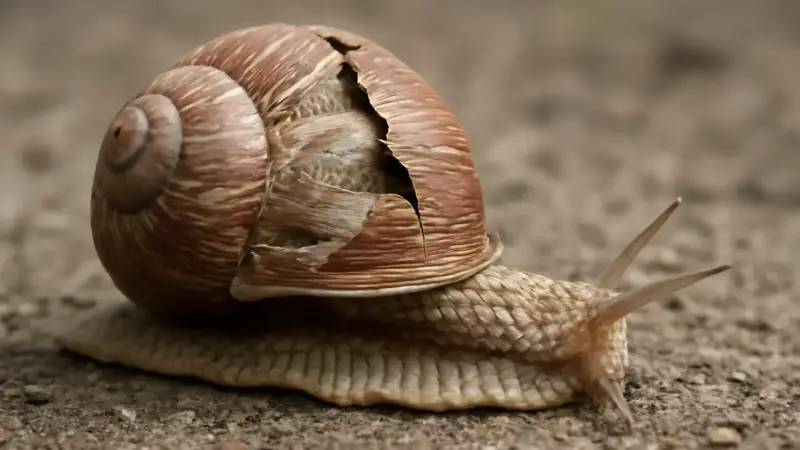
Not all shell damage is the same
If you’ve ever picked up a garden snail in the UK or a common grove snail on a wall in France, you’ve probably seen it: a pale, rough patch on an otherwise glossy spiral. The shell looks chipped, but the animal is still moving around like nothing happened. That’s because the repair work doesn’t mainly happen from the outside. A snail rebuilds a cracked shell by laying down new material from the inside surface, using the same body tissues that build the shell in the first place. The outside scab you notice is often just the visible edge of a much quieter interior patch.
Where and how the shell breaks matters. A small crack near the opening is different from a puncture on an older whorl, and both are different from a full crush. Repair is most likely when the snail can keep the gap covered by its body, hold moisture, and keep the crack from flexing with every movement.
The shell factory is the mantle
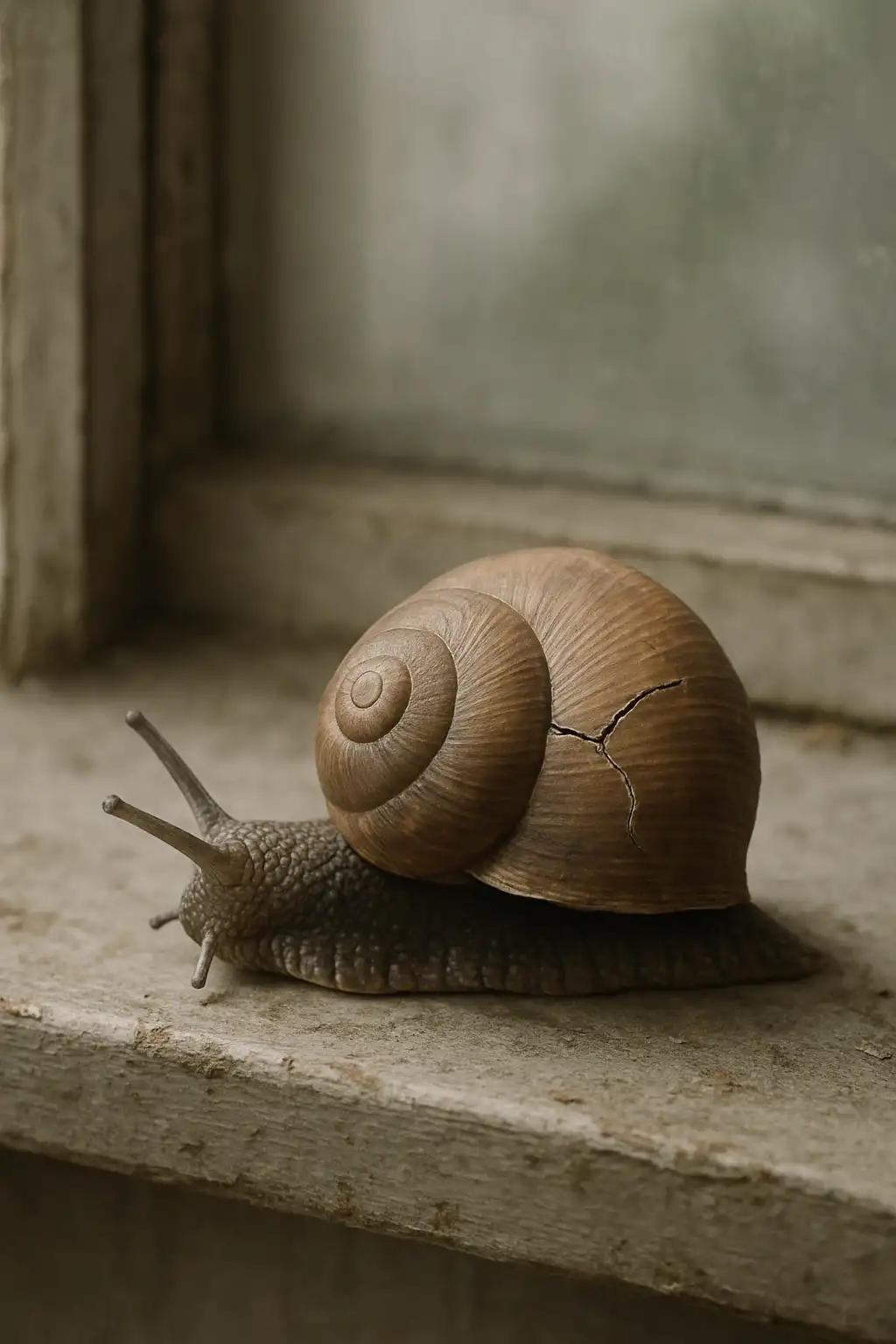
The key actor is a thin sheet of tissue called the mantle. It sits right under the shell and, when it’s healthy, it constantly manages shell maintenance. When damage happens, the snail shifts how the mantle behaves. It presses against the broken area from the inside and starts secreting fresh layers: first an organic film, then minerals. The new material isn’t poured like cement. It’s deposited as thin layers that harden into a patch.
The first layer is a protein-rich matrix, similar to the shell’s normal “skin.” It can span tiny gaps and cling to jagged edges. Only after that scaffold is in place does the mantle add calcium carbonate crystals. This is one reason a repair can look chalky at first. It’s also why the patch may never match the original shell’s gloss or banding, even if it becomes strong again.
How a crack becomes a sealed patch
A crack isn’t just a line. It’s a weak hinge. Each time the snail moves, the shell flexes a little, and that motion can keep the crack from sealing. So one of the first practical goals is stiffness. By adding an inner “backing plate,” the snail can stop the edges from shifting. Once the inside is reinforced, the outside chip often stops spreading even if it still looks ugly.
A detail people usually overlook is that the patch is not always placed directly under the most obvious hole. The mantle can only deposit material where it can make close contact. If the break is recessed, contaminated, or too exposed to dry air, the snail may seal around it from the inside, bridging the weak region rather than filling the visible gap neatly. That can leave a lumpy repair line that seems offset from the original damage.
What the shell is made of, and why repairs look different
A snail shell is a layered composite. There’s an outer organic coating (often called the periostracum), then mineral layers underneath. The mineral is usually calcium carbonate, but the crystal form and the arrangement vary by species and even by body region. A fast emergency repair tends to be more irregular. It may have different crystal structure and more organic content than the original shell.
That difference shows up as color and texture. The repaired area often stays matte, paler, and slightly thicker. If you’re looking at a banded snail, the bands may break or blur across a repair because pigment and surface patterning are not always restored the same way once the outer coating is disrupted. Some snails can re-lay the outer coating over time, but it’s variable, and it’s not always complete.
Limits: moisture, calcium, and simple geometry
Repair depends on the snail having the raw materials and the conditions to deposit them. Calcium has to come from somewhere: food, soil, or internal stores. Moisture matters because the mantle tissue has to stay active and close to the shell, and the chemistry of mineral deposition is sensitive to drying. A snail that can’t stay hydrated may manage a thin internal membrane but fail to mineralize it into a hard patch.
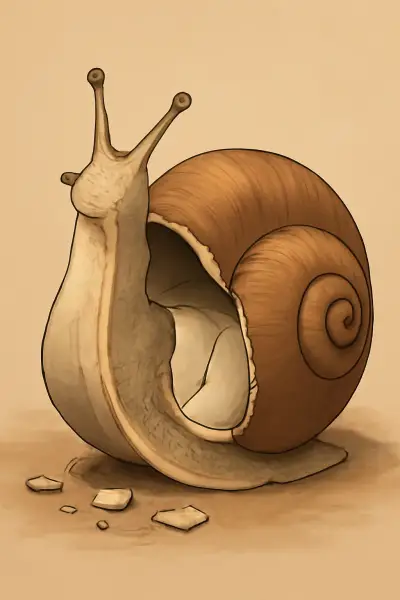
There are also geometric limits. If the shell is crushed so badly that the snail can’t maintain a stable internal surface to work against, the mantle can’t form a coherent plate. And if the break is right at a growing edge, the snail may keep building forward while leaving a permanent scar behind. The shell continues to grow, but the repaired zone stays as a record of a moment when the mantle had to do construction under pressure.
Related reads
- The Boston molasses tsunami of 1919 that swept trains and toppled buildings
- How a Habsburg envoy went out a window and sparked Prague’s uprising
- How the solar wind sculpts comet tails into bright, streaming plumes
- The smell-triggered time machine: how odors unlock buried memories
- Why some rivers form tidal bores that rush upriver as walls of water
- How microbes dissolve concrete to access buried minerals