
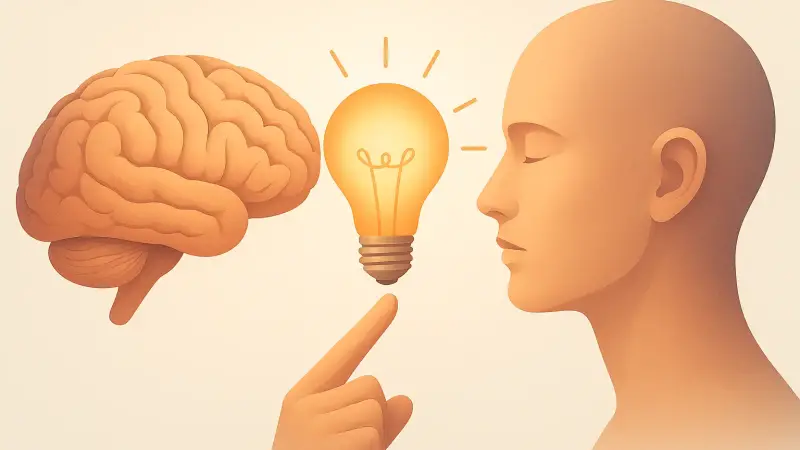
That quick story we tell ourselves
Someone asks why you picked the blue mug instead of the red one, and an answer appears fast: it “felt cleaner,” it “matches the kitchen,” it “just seems right.” This isn’t one single famous event. It shows up in ordinary life and in labs. One classic lab example is the 1960s “split-brain” work by Roger Sperry and Michael Gazzaniga, where people sometimes gave confident explanations for actions that were triggered by information they didn’t consciously perceive. The basic mechanism is simple: choices can happen quickly, then the brain assembles a reason that fits, because a coherent story is socially useful and mentally comfortable.
Choices can form before awareness catches up
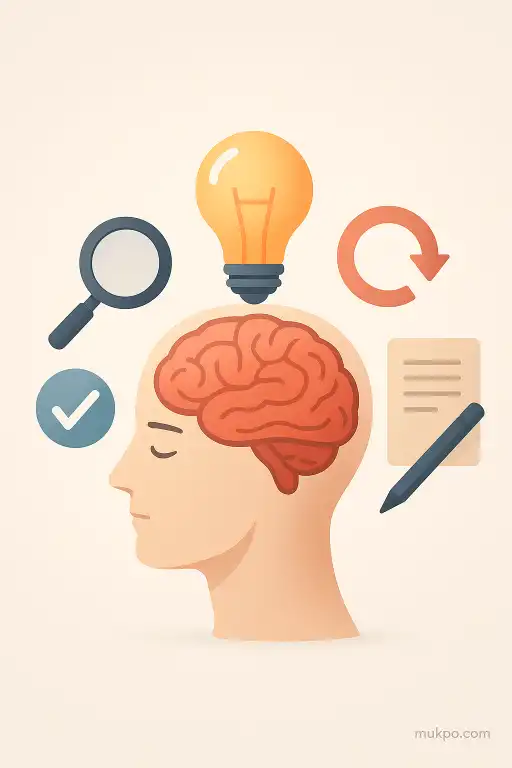
A lot of deciding is handled by fast systems: habit, emotion, and pattern recognition. That work can be mostly invisible from the inside. By the time a person notices “I chose X,” the selection may already be underway. The conscious mind still gets the job of explaining it, because conversation and self-image demand an account.
The overlooked detail is timing. People assume the reason comes first and the choice follows. Often it’s reversed. Awareness is late, not absent. The result is a feeling of authorship paired with a reason that may be more like an interpretation than a report.
The interpreter: a narrator that hates gaps
In split-brain studies, information shown to one visual field goes mainly to the opposite hemisphere. When the left hemisphere (typically stronger for speech in many people) doesn’t get the full input, it may still produce a fluent explanation for whatever the person just did. Gazzaniga described this as an “interpreter” function: it connects dots, even when some dots are missing, because silence feels like failure.
This isn’t the brain lying on purpose. It’s a normal drive to make actions intelligible. The explanation usually borrows whatever is handy: recent context, visible cues, personal values, and whatever sounds reasonable to the person speaking. Confidence can stay high even when accuracy drops, because the goal is coherence, not auditing.
Reasons are also for other people
A reason is not only private. It’s a social object. If someone says “I don’t know” too often, it can read as careless, impulsive, or untrustworthy. So the brain treats “why did you do that?” like a real-time performance. It supplies a motive that protects identity and keeps interactions smooth.
That’s why the same choice can get different explanations depending on the audience. With a friend, it might be “I liked it.” With a boss, it might be “It seemed most efficient.” The choice may not change, but the reason shifts to fit the social setting, and it can still feel completely sincere.
A concrete example: the menu, the decoy, and the after-the-fact logic
Picture a café menu with two sandwiches: one is $9, one is $15. Add a third option at $14 that is clearly worse than the $15 one. People often move toward the $15 sandwich after that “decoy” appears, even if they would have picked the $9 option before. Ask for a reason and you’ll hear things like “better ingredients” or “more filling,” even when they didn’t read the description closely.
The overlooked detail here is what the person actually attended to. In quick decisions, attention may land on one standout feature—price spacing, a single word like “artisan,” even the order items are listed—while the later explanation talks as if the whole choice was weighed carefully. The brain isn’t trying to fool anyone. It’s filling in missing steps so the decision sounds like it came from stable preferences rather than a momentary nudge.
Why the invented reason can feel like a memory
Once a reason is said out loud, it can become part of how the event is remembered. The brain stores the choice together with the explanation that was available at the time, even if that explanation was assembled under pressure. Later, the person may recall the reason as if it was present at the moment of choosing, because memory favors a clean sequence: motive, then action.
This is why people can sound so certain about why they bought that phone, voted that way, or ended a relationship, even when the real causes were scattered: mood, timing, a comment from a friend, a headline seen in passing. A single neat reason is easier to carry around than a bundle of small influences, so it tends to win the retelling.
Related reads
- A library that stamps books with the weather they were read in
- How smiling can actually lower your stress levels
- Why some people prefer messy desks and others thrive on order
- How tiny annoyances hijack your focus all day
- A cliff that resonates a clear low note only at sunrise
- A roadside diner where the jukebox plays songs recorded by customers the same day