

Why small actions can feel like relief
Why does doing something tiny—like putting your keys in the same bowl every night—make the rest of the day feel easier? There isn’t one single place or event behind this. It shows up in everyday routines in New York subways, Tokyo apartment entries, and school mornings anywhere kids have to get out the door. The basic mechanism is simple: when a behavior becomes automatic, the brain stops spending as much effort deciding, checking, and correcting. The relief isn’t just about time. It’s about fewer moments that demand a choice.
A detail people usually overlook is how often the “cost” is paid in tiny payments. Not one big decision. It’s the micro-pauses: Where did I put that? Did I reply to that email? Should I bring a jacket? Those pauses add friction, and they quietly drain mental energy long before anyone notices they’re tired.
Decision-making has overhead, even when the choice is easy
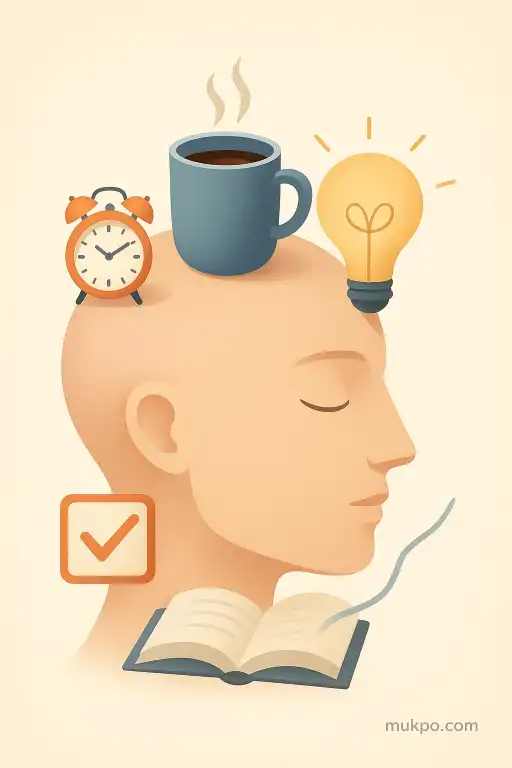
Even simple choices use working memory. That’s the limited mental space used to hold information in mind while doing something else. When a person has to decide the order of their morning steps, or whether a task is “done,” they pull from that same pool that later gets used for meetings, driving, reading, or conflict.
This is why the same day can feel different depending on how many “open loops” are floating around. A tiny habit often closes a loop by default. If there’s always one way to log a receipt, one place to put the charger, or one phrasing used to start a recurring message, the brain doesn’t have to keep re-evaluating the options. The energy saved is partly the energy not spent reconsidering.
Automaticity shifts effort away from monitoring
Once a behavior is learned well enough, it runs with less conscious supervision. That matters because supervision is expensive. Monitoring is the “Did I do that right?” process running in the background, and it ramps up when steps vary. Consistent routines reduce the need to monitor, which leaves more attention available for things that actually change.
A concrete example is a commuter who always checks wallet, phone, and keys in the same order while standing at the apartment door. The overlooked detail isn’t the checking. It’s the location. Doing it at the threshold means the cue is stable and the consequence is immediate. That reliability is what turns the behavior into something that can run with less internal debate later, like halfway down the block.
Tiny habits reduce the number of “context switches”
Mental energy often disappears during switching, not during the task itself. Context switching is the small reset that happens when attention jumps between domains: from a text message to a spreadsheet to remembering dinner plans. Each switch forces the brain to reload what matters, what the goal is, and what counts as finished.
Small, repeated behaviors can act like default bridges between contexts. For example, if someone always writes down the next step at the end of a work session, the next session starts with less rummaging through memory. That doesn’t eliminate hard work. It reduces the warm-up cost. The energy saved is the energy not spent reconstructing where things left off.
Predictability lowers background stress signals
Uncertainty isn’t just unpleasant. It creates a low-level scanning mode. When routines are inconsistent, the brain keeps checking for mistakes and surprises: Did I miss something? Is there another step? That vigilance uses attention even when nothing is going wrong, and it can make a day feel mentally “loud.”
This is one reason tiny habits can matter late in the day, when willpower and patience tend to be thinner. A stable sequence—like always placing tomorrow’s items in one spot—reduces the need for late-night checking and re-checking. The effect varies by person and situation, and it’s not magic. It’s predictability reducing the number of signals the brain treats as unresolved.
Related reads
- Why a familiar melody can surface a distant memory
- What a split second of eye contact tells your brain
- How changing your posture shifts decision making
- Why rearranging small objects calms an anxious mind
- How tiny vortices make rainbows around waterfalls
- The pond that freezes into perfectly clear glass overnight every winter