
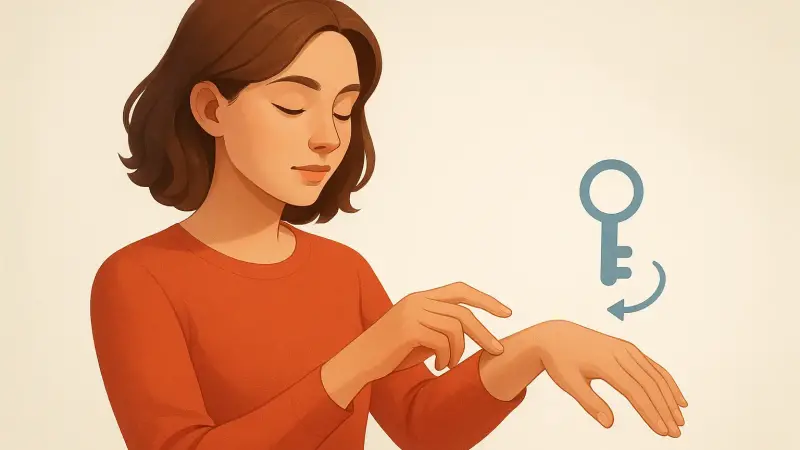
Why small actions feel bigger than they are
In Japan, people sometimes do a quick “pointing and calling” check at train platforms: point at a signal, say it out loud, move on. Elsewhere the tiny routines look different. A person taps their pocket before leaving. Someone re-checks the stove knob. A commuter makes sure their badge is there, then checks again at the elevator. There isn’t one single place or one famous incident behind this. It’s a common human pattern. The basic mechanism is simple: a small, repeatable action turns a fuzzy situation into a clear moment of “done,” even if the world outside is still unpredictable.
Control is a feeling built from signals
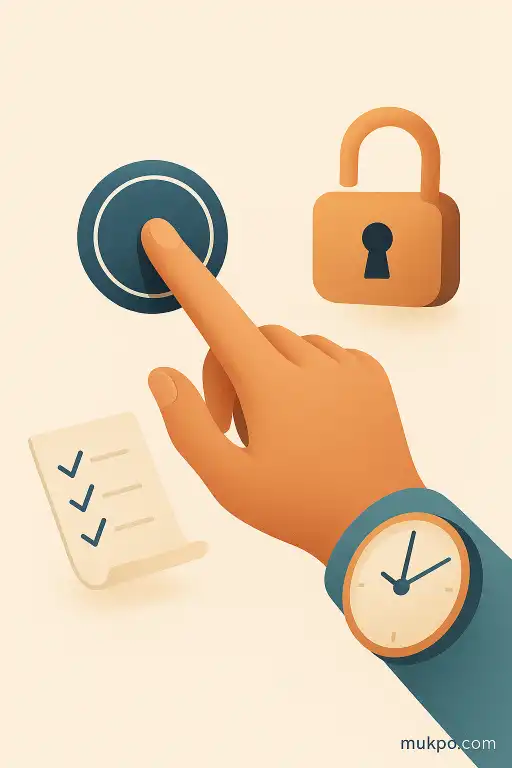
A sense of control usually isn’t built from big facts. It’s built from fast signals the brain trusts. A tap, a glance, a spoken word, a quick count. These are easy to repeat, and repetition makes them feel reliable. They create a boundary between “before” and “after.” That boundary matters because uncertainty is mentally expensive. When the brain can’t prove a risk is handled, it keeps the topic open.
Checking also narrows attention. It forces a person to look at one small thing instead of the entire mess of possibilities. The stove is either off or it isn’t. The door is either locked or it isn’t. That shrinkage of the problem space can feel like control, even when nothing external has changed.
Rituals work best when they leave a trace
One overlooked detail is how often these rituals create a physical “marker” that the memory can grab. Touching the lock while looking at it. Saying “locked” under the breath. Feeling the click. When checking is only mental, it’s easier for the memory to blur. People confuse a routine they did today with the same routine they did yesterday. That confusion is a big reason re-checking shows up.
This is also why small differences can matter. A person who always locks the door the same way may later struggle to remember if it happened this time. If something about the moment is distinctive—cold key, stiff latch, loud click—memory has more to hook onto. The ritual is doing double duty: it confirms the action and stamps the moment so it can be recalled.
When tapping turns into looping
There’s a point where “I checked” stops feeling like evidence. The feeling of certainty doesn’t arrive, so the person checks again. Each check gives a brief dip in anxiety, then the doubt comes back. This can happen under stress, sleep loss, or overload, when the brain is already struggling with confidence and recall. It can also happen when the risk feels morally heavy: “If I’m wrong, something bad happens.”
At that stage, the ritual can become less about the object and more about the internal sensation of reassurance. The person isn’t learning new information from the door or the stove. They are trying to trigger the feeling that the issue is settled. When the feeling doesn’t stick, the loop becomes its own problem.
The social side of checking
Some tiny rituals are shared, not private. “Pointing and calling” is a formal example. It’s used in rail and industrial settings because it reduces errors by forcing attention and making the check visible. When another person can see or hear the check, it changes the brain’s calculus. It’s not only “I believe I did it.” It becomes “there was an observable moment where it happened.” That visibility can strengthen the feeling of control.
Private rituals can borrow the same features. People add a tap, a glance, or a muttered word because it feels more official than thinking. It resembles a record, even if nobody else is watching. And sometimes the most calming part is not the tap itself, but the tiny pause it forces—one beat where the person stops rushing and the action becomes a clear, singular event.
Related reads
- The town that paid families to move in and brought its main street back to life
- Why yawns spread across a room even when people are strangers
- The sudden phantom smell that isn’t there and how memory conjures scent
- Why rehearsing arguments feels more satisfying than actually apologizing
- The house that legally owns itself in Athens, Georgia
- Why do we wake up right before the alarm