
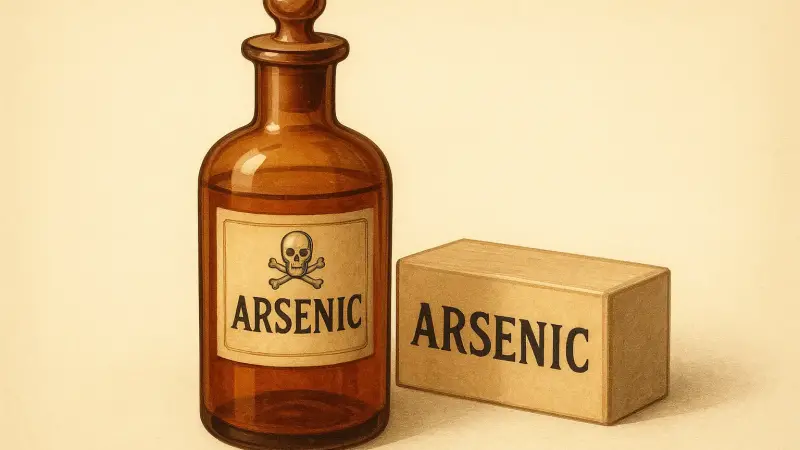
It’s strange to remember that “healthy” and “fashionable” once shared a shelf. In Victorian Britain this wasn’t one single salon or one single city story. It was a pattern that shows up in London, Paris, and the industrial towns feeding them. In 1862, the British Medical Journal was already warning about arsenic showing up in wallpapers and dresses, and the fear wasn’t abstract. The core mechanism was simple. A vivid green pigment made rooms and clothes look modern, and it could also turn into dust, rub off on hands, or drift into the air. Beauty worked best under gaslight, and gaslight helped people stay indoors with it.
Why arsenic green looked so good
The color that caused the most trouble was a bright, saturated green used in paints, fabrics, artificial flowers, and wallpapers. It was often made from copper arsenite or related compounds, sold under names like Scheele’s Green and, later, Paris Green. These pigments were cheap enough to spread beyond elite drawing rooms, but still bold enough to signal taste. Under the soft yellow of gas lamps, green could look rich and flattering, especially next to the era’s blacks, creams, and burgundies.
One detail people overlook is how those surfaces behaved after the first few weeks. Wallpaper isn’t sealed like modern paint. The paste behind it can stay slightly damp. The pigment layer can chalk and shed. A dress dyed green can leave residue where it creases or where it brushes skin. The color’s appeal depended on it being finely ground and evenly applied, which also made it easier to become a powder.
Salons were perfect exposure machines
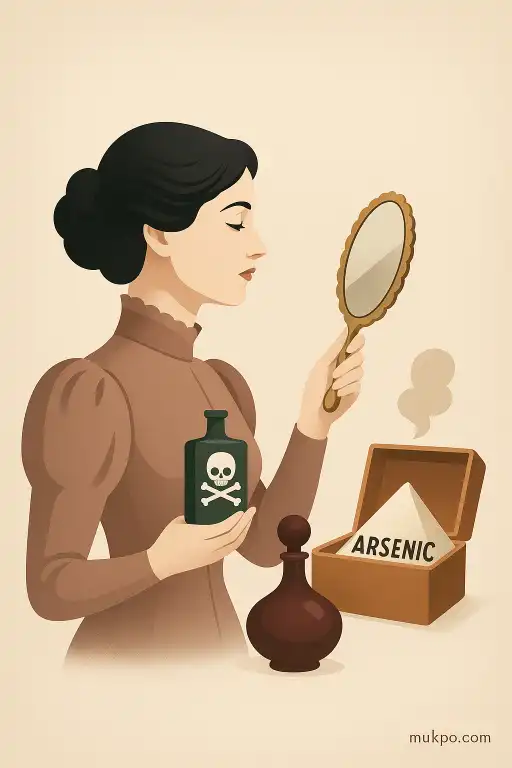
Victorian salons were built for lingering. Heavy curtains, upholstered furniture, and crowded rooms kept warmth in and soot out. They also kept dust from leaving. A fashionable evening meant hours of conversation in close quarters, with people leaning toward each other and brushing against walls, drapes, and one another’s clothing. If a pigment was unstable, the salon routine did the mixing and the distributing.
Gaslight matters here in a practical way. Gas fixtures added heat, and many rooms had limited ventilation in winter. Warm air moves upward, then cools and falls, stirring what’s on surfaces. That small convection loop is easy to miss when talking about “poison,” but it helps explain why complaints clustered around time spent indoors: headaches, sore throats, irritated eyes, and a general feeling of being unwell that could be blamed on everything from late nights to “bad air.”
How it moved from objects into bodies
Arsenic from green pigments didn’t need a dramatic accident to matter. It could arrive as dust on fingertips after adjusting a curtain, then transfer to food at a supper table. It could sit on a glove and then touch a lip. It could be inhaled when someone shook out a dress or when servants beat rugs and swept floors. Exposure varied a lot, because products varied. Pigment purity, how it was bound, and how much it shed depended on the maker and the use.
There was also a quieter route that worried some doctors and chemists: damp conditions and certain microbes can convert arsenic compounds into volatile arsenic-containing gases. The details were debated in the nineteenth century, and they’re still discussed with nuance today, but Victorians didn’t need the gas theory to be right for the hazard to exist. The simpler route—dust and contact—already fit what households described when symptoms improved after removing wallpaper or moving rooms.
Beauty culture turned it into a social problem
Fashion didn’t just use the color. It defended it. A vivid green dress or a room trimmed in green said you followed the new palette coming out of chemical dyes and modern manufacturing. Pulling it down could feel like admitting you’d been careless, or that your home was less polished than your neighbors’. Hosts wanted a striking room. Guests wanted to look alive under lamplight. Makers wanted to keep selling what people asked for.
That’s where scandal grew. When someone fell ill, the cause was hard to pin to a wallpaper you’d admired for months. Rumors did the work that evidence couldn’t. Was it the room, the dress, the cosmetics, the food, the servant’s cleaning powders, or something more intentional? Arsenic already carried a reputation as a murder weapon, so it had a second life in gossip. A fashionable pigment could make a household look modern and, at the same time, make it feel like the walls were suspect.
Warnings, denials, and slow change
By the mid-to-late 1800s, newspapers, medical journals, and public lectures were circulating warnings about arsenical wallpapers and dyed goods. The British Medical Journal’s 1862 discussion is one often cited example, but it was part of a wider churn of advice, rebuttal, and industry pushback. Some manufacturers argued the pigment was safe when properly made or properly used. Some experts tried to test products, with results that depended on sampling and methods.
Change came unevenly. Certain households stripped wallpaper and avoided particular shades. Some retailers quietly shifted to different dyes as alternatives improved. But the social machinery of the salon—status on display, rooms built for long indoor evenings, the pressure to keep up—meant the color didn’t disappear the moment people learned it could harm them. It faded in patches, often after an illness, an embarrassing public warning, or a redecorating cycle that finally gave a room permission to become something else.
Related reads
- The museum plaque that rewrote itself every morning
- How a nine-day queen became a pawn in the Tudor succession crisis
- When a streetlight began syncing its blink to residents footsteps
- A supermarket that redirected abandoned carts into a hidden community garden
- The town that numbered its stray cats and issued them identity cards
- The statue swallowed by a sinkhole that reappeared intact days later