
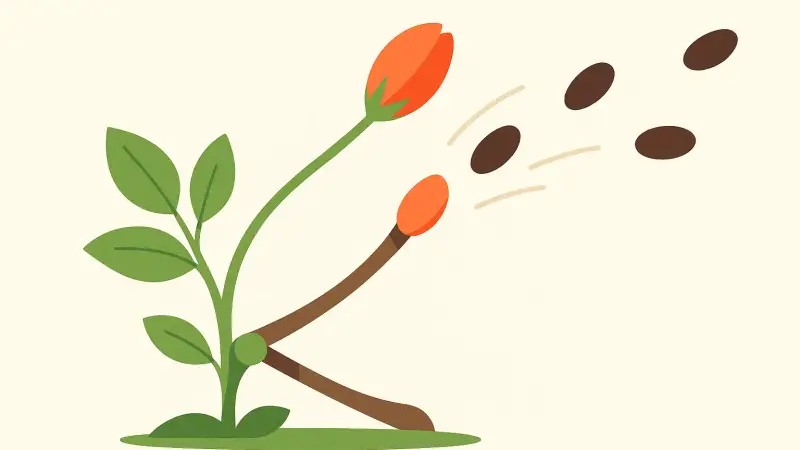
When a seed doesn’t wait to be carried
If you’ve ever brushed past a patch of touch-me-not (Impatiens) and heard a tiny snap, you’ve seen the basic trick. This isn’t one famous event in one place. It shows up in lots of plants across regions, from jewelweed in North America to squirting cucumber around the Mediterranean, to sandbox tree in tropical forests. The core mechanism is simple: the plant stores mechanical energy in a fruit or pod as it dries or matures, then releases it suddenly. The seed isn’t drifting. It’s being launched by a structure that has been “loaded” over time.
How a pod stores energy without muscles
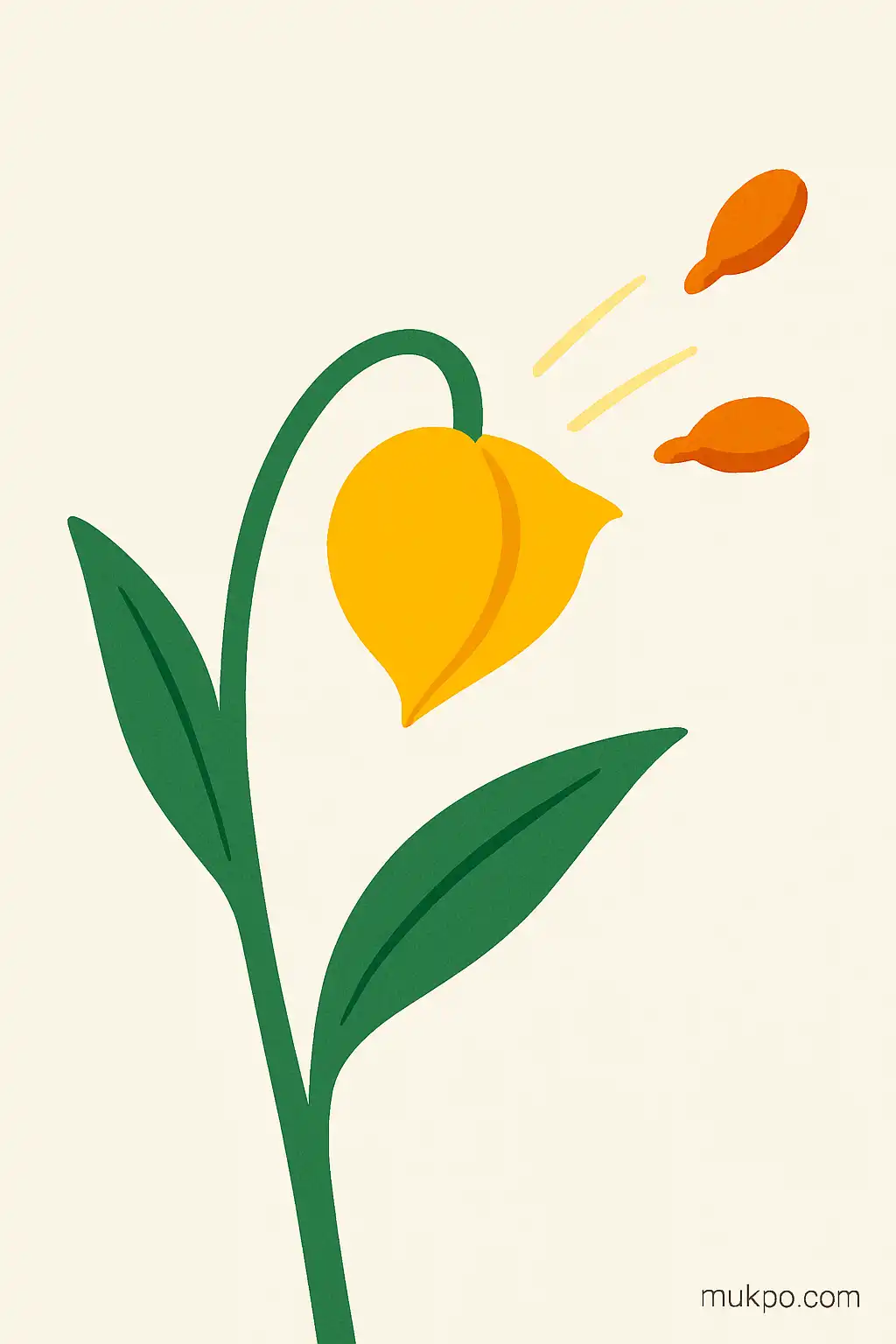
A seed pod can behave like a spring because plant tissues change shape as they lose water. Different layers of the pod wall shrink by different amounts and in different directions. That mismatch builds stress. The pod is stable only while its parts are still locked together, often by seams or fibers that resist splitting. When that restraint fails, the stored strain energy turns into motion fast.
One detail people tend to overlook is that the “spring” is usually not a single bend. It’s a coordinated warp across layers, like plywood that wants to curl because the grains pull differently. Botanists often describe this as hygroscopic movement: motion driven by humidity and drying, not by active pumping. It means the same pod can be quiet in damp conditions and suddenly eager to move in drier air.
Real botanical launchers and what actually moves
With Impatiens, the classic motion is a coiling pod. The mature capsule is under tension, and a touch can trigger it to split. The valves roll back rapidly, and that rolling flicks seeds outward. The pod itself becomes the moving part. It is not a seed “exploding” on its own. It’s a structure snapping into a new shape it has been trying to reach.
Squirting cucumber (Ecballium elaterium) uses a different setup. Pressure builds inside the fruit as it ripens. When the stalk detaches, the fruit can eject a jet of fluid carrying seeds. Here the moving part is pressurized liquid, not a curling valve. Sandbox tree (Hura crepitans) takes yet another route: a woody fruit dries, internal stresses build, and it can split with a loud report as segments spring apart. The exact distance seeds travel varies by species and conditions, and reported numbers are not always consistent.
Triggers: why it happens at a particular moment
These systems need a “latch,” even if it’s just a seam that holds until it doesn’t. Sometimes the trigger is mechanical contact, like an animal brushing the plant or a person’s sleeve. Sometimes it’s simply the right degree of drying. Many pods split along pre-formed lines of weakness, called dehiscence zones, where cells are shaped and glued together differently. The plant is not tearing at random. It is failing where it was built to fail.
Timing matters because seeds have to be mature enough to survive the ride. So the fruit often changes in multiple ways at once: tissues dry, walls stiffen, seams weaken, and the seed coat finishes hardening. If one of those steps lags, the launch can be weaker or not happen at all. That’s why the same patch of plants can feel “armed” on one day and dull on the next, even when they look similar at a glance.
Why flinging seeds is useful, and what limits it
Throwing seeds solves a local problem. A plant’s own shade, roots, and pathogens make the ground right under it a tough place for seedlings. A short, forceful launch can spread offspring beyond that immediate zone without needing wind or animals. It can also place seeds into small openings in vegetation. That matters in dense understories, where “a few feet away” can be a different light environment.
But ballistic dispersal has hard limits. Air drag quickly steals speed from small seeds, and heavier seeds cost more energy to move. Wet conditions can keep a pod from building the right stresses, while very dry conditions can cause premature cracking that dumps seeds rather than throwing them. The mechanism is clever, but it’s still just plant tissue responding to physics, and it only works when the material properties line up with the weather and the moment of release.
Related reads
- How whales feel the Earth’s magnetic ripples
- The bacterium that cements sand into rock
- When fireflies flash together: the physics of synchronized light
- How desert varnish forms on sun-baked rocks
- Why hummingbird wings create tiny vortices that aid hovering
- A street whose lawns rearrange their stripes overnight