
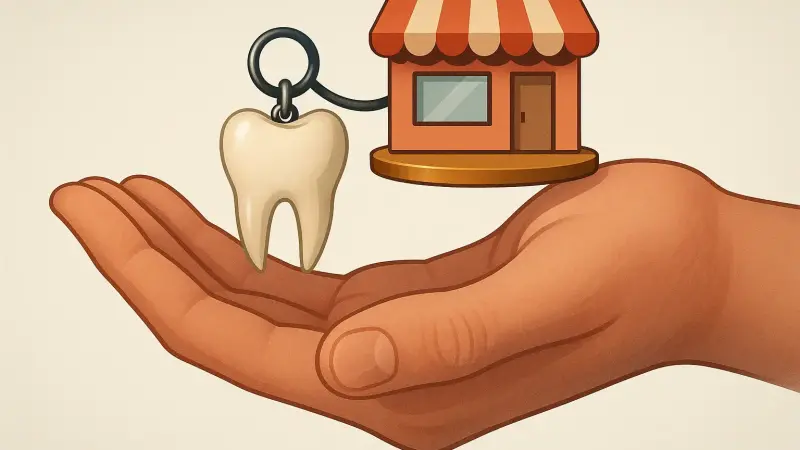
Walk through certain markets and you’ll spot the oddest “lucky” items tucked near the register. Not a rabbit’s foot or a coin, but a small tooth in a vial, a packet, or wrapped in paper. This isn’t one single town story. It shows up in different ways in different places, from Mexico’s mercado stalls where teeth can be sold alongside folk charms, to parts of India where “witchcraft” items sometimes circulate, to online marketplaces that ship worldwide. The core mechanism is simple: a human part gets treated like a portable piece of power. The shopkeeper sells it as protection, attraction, or luck, and the buyer carries it close.
Where these teeth show up
When human teeth are sold as charms, it’s usually in places that already sell spiritual supplies: amulets, oils, powders, roots, saints’ candles, astrological stones. The teeth don’t always sit out front. They may be kept under the counter and offered only if a customer asks for something “strong,” or if they seem like they already believe.
One overlooked detail is how the item is presented. A tooth might be set into a pendant, sealed in resin, or stored in a tiny bottle with red thread, ash, or perfume. That packaging isn’t just for looks. It limits handling, hides odor, and helps the seller frame it as a finished “object” rather than human remains.
Why a tooth is seen as powerful
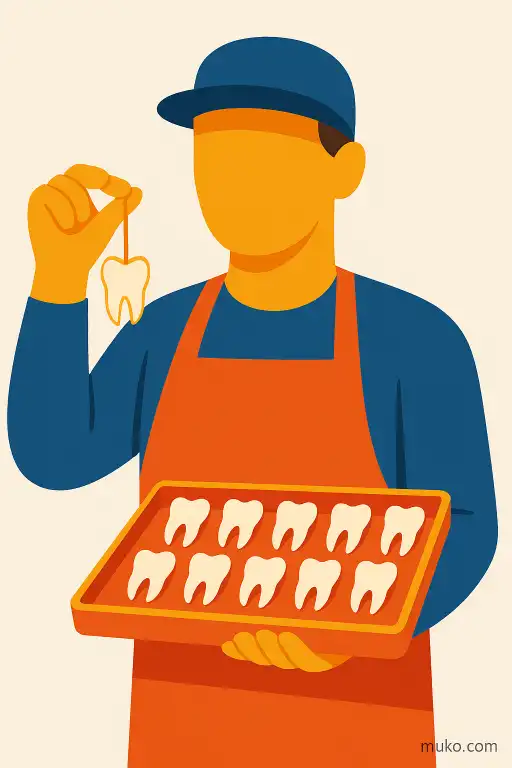
Teeth are intimate and durable. They’re one of the few parts of the body that persist after death, and they’re also something people associate with identity. That combination makes them easy to turn into a token: small enough to carry, durable enough to keep, personal enough to feel loaded with meaning.
Different traditions explain that “charge” differently. Sometimes it’s about contact: the tooth is believed to hold something of the person it came from. Sometimes it’s about sympathetic magic: a hard, biting object stands in for strength, defense, or dominance. Sometimes it’s just taboo value. The more forbidden the thing, the more customers assume it must “work.”
How shopkeepers source them
Sourcing is where the story gets uncomfortable, and it also varies. Teeth can come from dentistry and informal medical waste, from personal collections of baby teeth, from graves and illicit digging, or from people selling their own teeth in hard times. It can also be unclear even to the buyer. A seller may claim a tooth is “old” or “from a powerful person,” because that story is part of the price.
There’s also a practical reason teeth circulate more than other human remains: they’re easy to store, easy to transport, and hard to identify. A single tooth has no obvious name attached to it. That anonymity lowers risk for the seller and makes it easier to slide into the same supply chain as animal parts, charms, and curios.
The sales pitch and the social dance
The transaction tends to be half retail, half performance. A shopkeeper might speak in a lower voice, ask what problem the customer has, and match the item to the fear: protection from envy, success in gambling, keeping a lover, winning a court case. The tooth becomes a “stronger” alternative when ordinary charms feel too mild.
Pricing often follows a logic customers don’t notice. The tooth’s size, color, and condition can be treated like “grades,” the way stones or talismans are graded. A molar may be framed as more potent than an incisor because it looks heavier and more “serious.” A cracked tooth might be discounted, not for ethics, but because it looks less convincing as a vessel of power.
Legality, ethics, and why it persists
Whether it’s legal depends heavily on where it’s happening. Some places treat human remains as tightly regulated, while others have gaps in enforcement, especially when items are sold informally or under vague labels. Online sales add another layer. A listing can call something a “specimen,” a “curio,” or avoid saying “human” outright, and it can still reach buyers across borders.
Even when the practice is condemned, it persists because it sits at the crossroads of belief, scarcity, and commerce. The buyer wants certainty. The seller wants inventory that feels exceptional. And a tooth, presented the right way, can be made to feel like a tiny guarantee you can hold in your hand.
Related reads
- Why boredom sometimes triggers sudden bursts of creativity
- How listener nods and murmurs steer the direction of conversations
- A museum that seals strangers’ letters under the floor and forbids opening them
- Why the opening and closing moments of events stick in memory
- The town that renamed itself to win a radio contest
- Why laughter spreads through a crowd even when no one plans it