

How a sealed diplomatic pouch becomes a smuggler’s shortcut
A consulate pouch is meant to be boring. Paperwork, passports, routine cables. Under the Vienna Convention on Diplomatic Relations, those bags are protected from search and seizure, even when they cross borders. That protection is the whole point. During the Cold War, when inspection regimes tightened and customs officers got jumpy, the pouch also became an unusually clean path for contraband. If a diplomat decides to treat it like private cargo space, the mechanism is simple: put something valuable inside, label it as official material, and rely on the rule that nobody is supposed to open it.
Why Cold War consulates were perfect cover
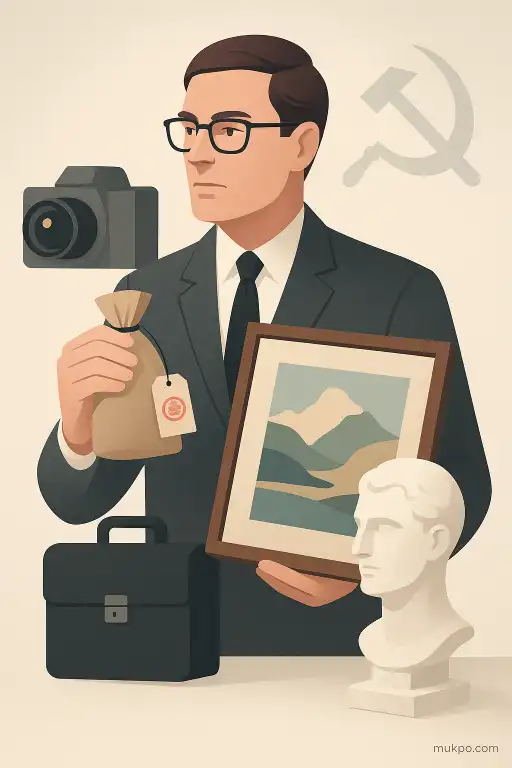
Consulates moved a lot of objects, not just documents. Gifts for visiting delegations. Cultural materials for events. Official portraits. Shipments tied to “friendship” societies and exhibitions. Cold War governments also cared about appearances. A crate marked as cultural outreach could look innocuous next to the heavy political traffic of the era. That mix—high volume, plausible reasons, and strong legal protection—made diplomatic channels attractive to anyone who wanted predictable border crossings.
Art fits especially well because it travels as rectangles. A rolled canvas can be described as “printed matter.” A framed work can be wrapped as “display material.” And art has one feature smugglers love: the value-to-weight ratio can be extreme. A small drawing can be worth more than a suitcase full of jewelry, and it doesn’t set off alarms unless someone gets a look at it.
Where forgery and diplomatic privilege intersect
An art forgery ring needs three things: production, paperwork, and placement. The pouch can help with all three. It can move fake works to a buyer without a customs inspection. It can also move supporting documents—letters of authenticity, appraisals, export permits—separately, so the story arrives looking complete. And it can move the money or the “returns” back the other way. None of this requires a huge organization. It requires a trusted person who can consistently get items across a border.
The overlooked detail is the paperwork problem. Most fakes don’t fail because someone spots a bad brushstroke at a cocktail party. They fail because a shipment triggers questions about provenance, insurance values, or export rules. Diplomatic mail sidesteps that whole early layer of friction. It doesn’t just hide the object. It skips the administrative trail that would normally create records, and those records are often what investigators use to pull a case apart later.
What the pouch can and can’t protect
Diplomatic bags aren’t supposed to be opened, but they are supposed to be used for official communications and items. That gap—protected in practice, restricted in theory—is where abuse lives. If a government suspects misuse, it can pressure the sending state, declare a person persona non grata, or quietly restrict movements. It can also watch everything around the pouch: who delivers it, how often it goes out, whether it’s unusually heavy, whether it’s routed oddly, whether the same intermediary always appears.
Even without opening anything, patterns can be loud. Frequent “official” shipments that don’t match the consulate’s workload stand out. So do time-sensitive trips that coincide with auctions, gallery openings, or private sales. The pouch creates a blind spot at the border, but it doesn’t erase surveillance, informants, or financial investigations. A forgery ring also leaves traces in boring places: freight invoices, framing shops, photographers who make catalog images, and bank transfers that don’t fit a civil servant’s salary.
How these schemes usually come apart
Art fraud tends to break when one link gets impatient. A buyer wants independent verification. A dealer tries to resell the work and a specialist asks for prior exhibition history. A restorer notices modern pigments or anachronistic canvas. At that point, the diplomatic angle becomes relevant because investigators can’t just rewind customs logs and pull the seized item from a warehouse. They have to rebuild the chain from people—handlers, fixers, couriers—and from the story told on paper.
And there’s a human friction that’s easy to miss: consulates are staffed environments. Bags get logged. Drivers get scheduled. Colleagues notice routine. A diplomat running side business has to manage curiosity from coworkers and scrutiny from the host government at the same time. The pouch can carry a fake across a border, but it can’t make everyone around the pouch stop paying attention.
Related reads
- Why an entire block unintentionally matched paint after a single storm
- The streetlight turned time capsule: decades of lost items stuck in its base
- How morning light recalibrates your mood and sleep
- A 1920s wallpaper hiding a modern grocery receipt and a century of secrets
- Why basalt columns form hexagons
- The museum gallery where labels kept switching between exhibits