
A crowd that can’t stop moving
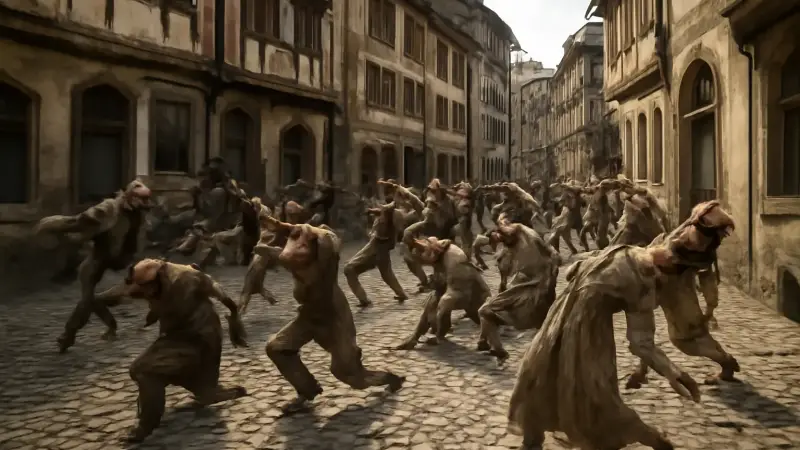
It’s hard to imagine a problem where the danger is simply… dancing. But in Strasbourg in 1518, people reportedly started moving in the street and could not stop. They didn’t dance in neat lines. They thrashed, shuffled, swayed, and kept going for hours. Some collapsed and then stood up again. The basic mechanism people reach for today isn’t a single “dance disease” so much as a mix of stress, expectation, and the way bodies copy other bodies when fear is high and explanations are ready-made. Even the count is unclear. Some accounts say dozens at first. Later retellings inflate it to hundreds.
What the records actually say (and don’t)
The episode is often tied to one named figure: Frau Troffea, described in later sources as an early dancer who drew attention in mid-July 1518. Beyond that, the paper trail gets thin fast. We’re dealing with a patchwork of city notes, chronicles, and later summaries, not modern medical charts. Dates, numbers, and even the order of events vary depending on which document a writer leans on. A detail people usually overlook is how much of the story comes from texts written after the fact, when the event had already become a “known” local spectacle and could be shaped into a moral lesson.
What does seem consistent is the setting. Strasbourg in the early 1500s was a crowded city with tight streets, summer heat, and constant pressure on the poor. Bad harvests and food insecurity hit the region repeatedly around that period. Illness circulated. Work was precarious. When bodies started behaving strangely in public, it didn’t happen in a vacuum. It happened in a place where people were primed to see suffering as both physical and spiritual, and where public life made private distress visible.
Why dancing made sense to people at the time
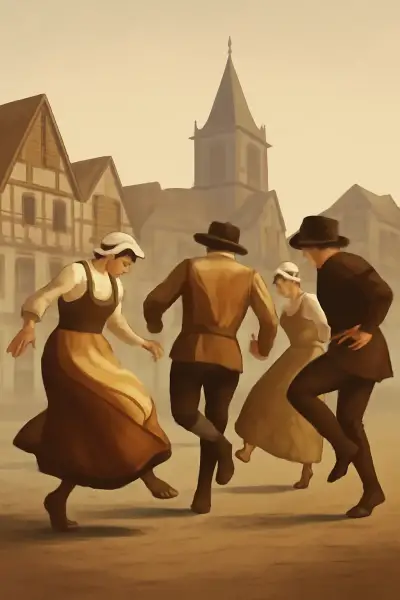
Early 16th-century Europeans had cultural scripts for involuntary movement. There were older stories about “dancing” outbreaks along the Rhine, and religious ideas about affliction, penance, and saintly intervention. Strasbourg sat in a world where saints were not abstract figures but practical agents in everyday explanations. If you believed a condition could be sent, lifted, or redirected through ritual, then the right response wasn’t “rest and isolate.” It was to manage the meaning of the event.
That matters because group behavior follows the story available to it. If a community expects a certain pattern—possession, curse, pilgrimage, exorcism, divine punishment—people under strain can express distress in the form that gets recognized. It’s not play-acting. It’s a body using the language it has. Once a few people are seen moving uncontrollably, others can join without deciding to. Humans synchronize easily. Stress makes that easier, not harder.
The response may have amplified the problem
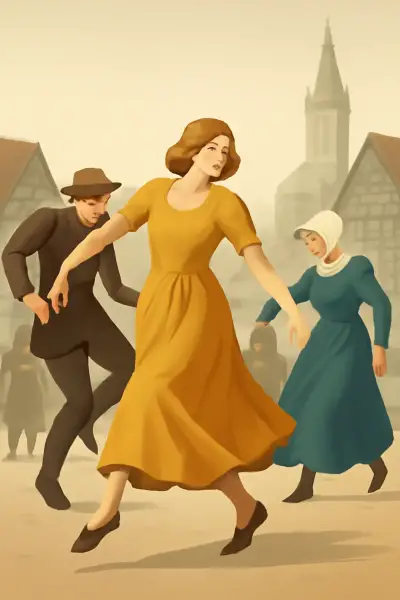
One of the strangest reported choices is that authorities and local leaders sometimes tried to accommodate the dancers rather than shut the scene down. Later accounts describe attempts to create spaces where people could dance “safely,” including hiring musicians. Whether every detail of that response is perfectly documented is debated, but the general idea fits how people handled public crises when the cause was seen as spiritual or humoral. If the body needed to “work it out,” you helped it work it out.
From a modern observer’s view, that sort of staging can act like fuel. It gathers spectators. It signals that the behavior is a recognized condition. It gives it a soundtrack and a setting. That doesn’t mean officials were foolish. They were operating with the tools they trusted. But public attention is not neutral. When a behavior becomes a socially legible role, more bodies can slip into it, especially when exhaustion, hunger, and fear are already in the background.
What could have been happening in the dancers’ bodies
People often want one clean medical answer, and none fits perfectly. Ergot poisoning is the popular guess because rye can be contaminated by a fungus that produces chemicals affecting the nervous system. The problem is that ergotism more often causes pain, vasoconstriction, and hallucinations, not coordinated days-long dancing by many people in public. Another possibility is a form of mass psychogenic illness, where stress and suggestion produce real symptoms that spread through observation and social contact. That doesn’t require anyone to fake anything.
There’s also a blunt physical constraint that gets lost in the legend. Sustained frantic movement for hours in summer clothing, on hard ground, with poor nutrition and limited water, can cause dangerous overheating, injury, and cardiac strain. Even if some reports of deaths are exaggerated, the risk is obvious. The body has limits. When a community keeps interpreting those limits through ritual and spectacle, the boundary between illness, belief, and crowd dynamics gets thin enough that a street can turn into a ward without walls.
Related reads
- How a beetle’s dramatic death pose fools both birds and ants
- Why mangrove roots trap carbon and hold back storm surge
- Antique toys discovered hidden inside a house wall
- Why a yawn from someone else makes you yawn too
- The mailbox that spat out letters decades later
- Why names get stuck on the tip of your tongue
If you liked this, you might also enjoy: