

A tiny conversation with too much weight
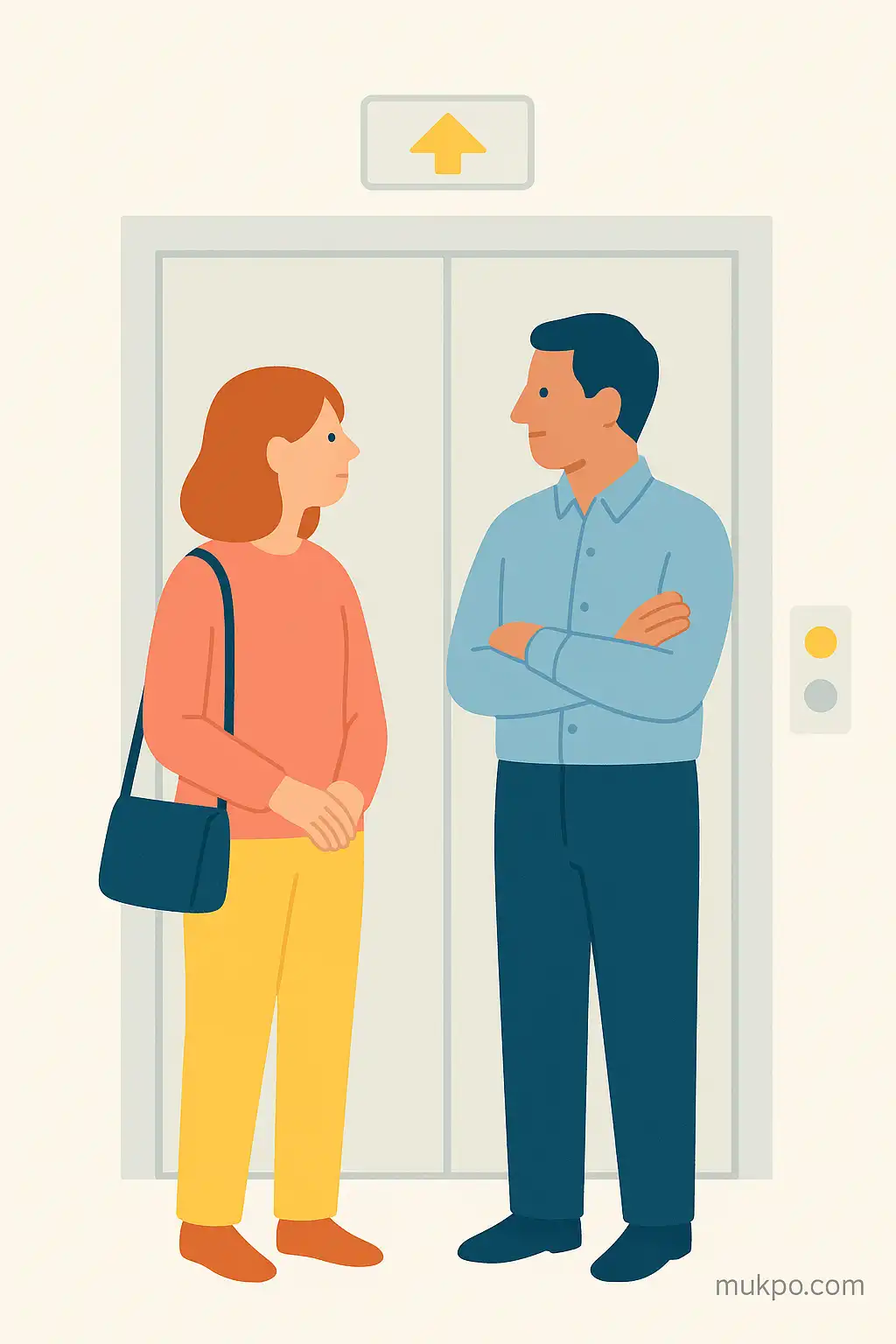
This isn’t one single rule from one place. It’s a common pattern that shows up in elevators in New York City, office towers in London, and apartment buildings in Tokyo. Two strangers step into a small moving box, and a five-second “hey” can feel harder than a ten-minute chat at a party. The setup is simple: there’s no real choice about being together, and there’s no clear script for what you owe each other. A sentence that would sound friendly anywhere else suddenly sounds like a bid for attention. Silence starts to feel like a decision, too.
Forced closeness changes the social math

Elevators create closeness without permission. People didn’t choose the interaction, and they can’t easily leave it. That changes how any small talk lands. A comment about the weather can feel less like “sharing a moment” and more like “I’m entering your space.” It’s not hostility. It’s just that the usual escape routes of public life—turning away, drifting to another group, checking your phone and walking off—aren’t available.
There’s also a status question that hangs in the air. In a lobby you can usually tell who belongs where. In an elevator you can’t, at least not right away. People are quietly sorting: resident or visitor, coworker or client, same floor or not. Until that’s resolved, speaking can feel like it raises the stakes, because it forces a quick decision about familiarity.
Small talk depends on time, and elevators hide time
Ordinary small talk needs a soft boundary. You can start, then let it fade, and the moment ends naturally. In an elevator the boundary is mechanical and unpredictable. The ride might be eight seconds. It might stop three times. It might pause between floors. That uncertainty makes any opening line risky. If the elevator arrives immediately, you’ve launched a conversation with no landing. If it gets stuck, you’ve committed to a topic you didn’t mean to carry for ten minutes.
A concrete example: someone steps into an office elevator with a coffee and says, “Long morning already.” If the doors open on the next floor, it lands as a throwaway. If the elevator keeps climbing in silence after that line, it can feel like a request for a response that nobody agreed to give. The same sentence flips meaning based on a detail people overlook: nobody can see how long the interaction will last.
The body rules are stricter than people realize
Elevator etiquette is partly about managing bodies, not words. People face forward. They keep their hands still. They watch the floor indicator. Those behaviors reduce the sense of being watched. Talking breaks that arrangement because it asks for eye contact, or at least a turn of the head. In a tight space, even a small head turn can feel like a spotlight. That’s why a simple “How’s it going?” can feel oddly intense when said from two feet away.
Sound matters more in an enclosed box. Voices bounce. There’s no background noise to blur the edges of a sentence, especially in newer buildings with quieter motors. One person speaking can dominate the whole space. Even a friendly tone can feel loud. That’s part of the awkwardness: the conversation doesn’t stay between two people. It fills the elevator and includes everyone, whether they want it or not.
Strangers avoid signaling the wrong kind of interest
With people you don’t know, talk is a kind of signal. In most public places, a signal can be ignored without much consequence. In an elevator, ignoring someone is more visible because there’s nowhere else to look, and because the silence after a question is shared by everyone. That makes people cautious about starting anything that might require a reply. It’s not that strangers hate each other. It’s that they’re trying to avoid forcing a moment where someone has to publicly accept or refuse a connection.
Even neutral topics can drift into personal territory faster than expected. “Which floor?” is practical, but it also reveals where you’re going. “Heading home?” implies a life outside the elevator. In a lobby those details blur into the crowd. In a small cabin, they can feel specific. So people lean on the safest shared object—numbers on buttons, a floor display, the weather outside—then often decide it’s simpler to say nothing and let the ride do its job.
Related reads
- When it literally rained frogs and fish
- The town where the postman still delivers every letter by canoe
- Luggage that repeatedly showed up on flights to the wrong continent
- Microbes that breathe metals and reshape subterranean chemistry
- Coral skeletons as time capsules of ocean heat spikes
- A streetlamp that lights only when neighborhood cats pass