
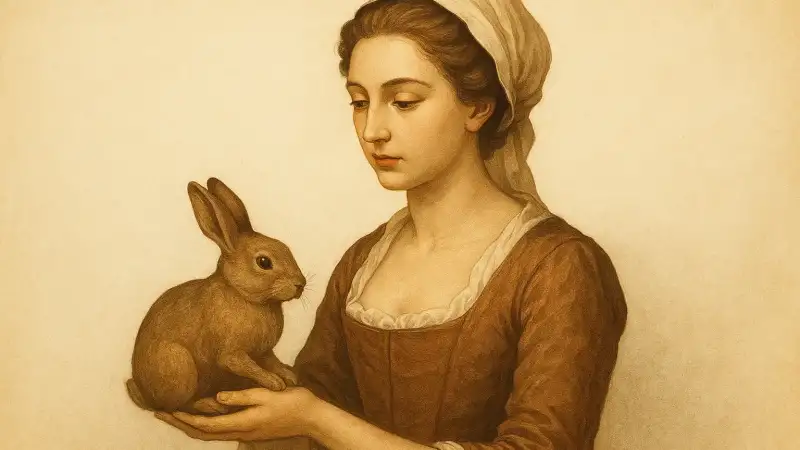
People usually assume doctors can’t be fooled by something as basic as pregnancy. But in 1726 in England, a poor woman named Mary Toft convinced multiple men with medical training that she had given birth to rabbits. The mechanism was brutally simple. Pieces of animal tissue were placed in her body, then produced during painful “deliveries” in front of witnesses. Once the story spread, it pulled in surgeons, midwives, and even royal attention, because everyone wanted to see it happen again and be the one who could explain it.
Who Mary Toft was, and how the story started
Mary Toft lived in Godalming, Surrey. Contemporary accounts describe her as a young married woman from a working household. After a miscarriage, she began reporting strange labor pains and producing animal parts, first described as fragments and later as whole rabbits. Local practitioners examined her and, instead of stopping the spectacle, helped stage it by attending the episodes, collecting the remains, and sending letters about what they had seen.
One overlooked detail is how much this depended on the setting. These “births” were not happening in a clean hospital ward with controlled access. They happened in domestic rooms with neighbors, relatives, and practitioners coming and going. That kind of traffic makes it easier to smuggle objects, manage witnesses, and keep anyone from watching closely for too long.
Why educated doctors took it seriously
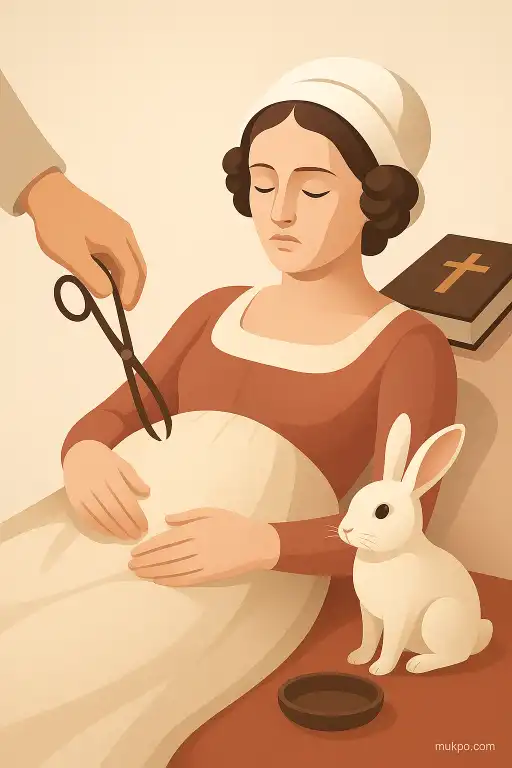
Early 18th-century medicine still leaned heavily on testimony and repeated observation. If enough respectable people said they saw an event with their own eyes, that carried weight. There were also lingering ideas about “maternal impression,” the belief that a pregnant person’s intense experiences could mark or shape a fetus. A story about rabbits could latch onto that, especially when it came wrapped in blood, pain, and apparent physical proof.
There was also professional pressure. Surgeons and man-midwives were competing for status and patients. Being connected to a rare natural wonder could make a career. Skepticism had a social cost if the wonder turned out to be real and someone else got credit for recognizing it first.
The chain of witnesses, letters, and the London pull
The case escalated through correspondence. Practitioners reported details to one another, specimens were shown around, and the story traveled from Surrey to London. The name that often appears in retellings is Nathaniel St. André, a surgeon associated with the royal household, who examined Toft and treated the event as a serious medical puzzle. Once someone with court connections was involved, the story became harder to dismiss quietly.
A concrete situational example from the reports is that people would wait for the labor pains to begin, then rush in to witness what emerged. That structure matters. When everyone arrives only at the “critical moment,” it leaves a large window beforehand where preparation can happen offstage, and it narrows what any one person can honestly claim to have observed.
How the hoax worked in practice
The most consistent explanation, supported by later confessions and investigations, is that animal parts were inserted into Toft’s vagina and then “delivered” during examinations. Rabbits were accessible and visually dramatic. Their recognizable anatomy made them feel like strong evidence. The repetition of the event also helped. Each new episode looked like confirmation of the last one, even though it should have raised a different question: why was nobody controlling access to her body between the pains and the inspection?
Another easy-to-miss detail is the role of handling. Once a specimen is in a jar or wrapped in cloth, it becomes an object people debate at a distance. That shift turns an intimate event into a portable “fact.” It also separates the thing being argued over from the messy circumstances of how it appeared in the room.
The collapse, the confession, and what it did to reputations
In London, scrutiny increased. Observers began to notice inconsistencies, and more controlled watching made it harder to stage the same performance. Eventually, the story unraveled and Mary Toft confessed that the births were not real. Accounts vary on the exact pressure and sequence that produced the confession, but the result was clear enough: the medical miracle became a public embarrassment.
The reputational damage landed unevenly. Toft was treated as both criminal and curiosity, but the sharper sting was for the men who had vouched for the phenomenon. Their published statements and preserved letters meant the error was hard to bury. The scandal lingered because it wasn’t just one person lying. It was an entire little system—witnesses, specimens, professional rivalry, and a hungry audience—making the lie easier to believe each time it was repeated.
Related reads
- Why elevator silence twists into awkwardness as a crowd grows
- The invisible muscle memory behind sloppy versus neat handwriting
- How tiny rituals like tapping or checking unlock a sense of control
- The town that paid families to move in and brought its main street back to life
- Why yawns spread across a room even when people are strangers
- The sudden phantom smell that isn’t there and how memory conjures scent