
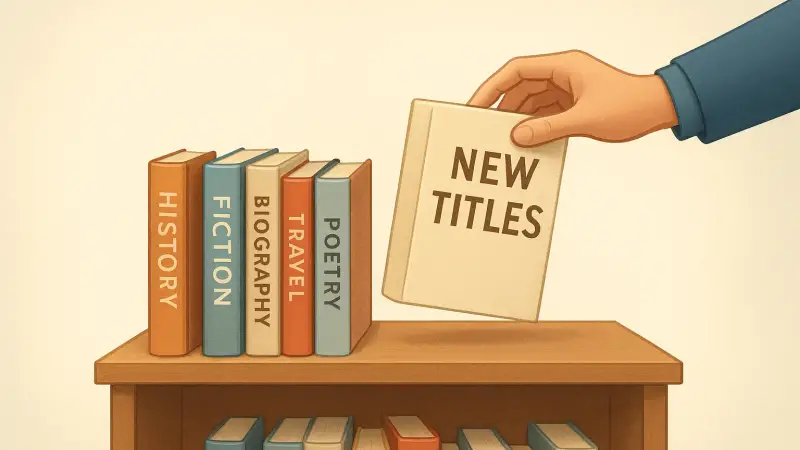
The moment it feels like the shelf changed
People notice this kind of thing in lots of places, not one famous library. A public branch in London, a university library in the U.S., a small municipal library in Australia. Someone walks past a shelf, comes back later, and there’s a new spine wedged in. It’s not a dramatic swap. It’s a single extra title that wasn’t there a minute ago. The core mechanism is usually simple: shelving is constant, but it’s also quiet. If you aren’t watching the exact bay the whole time, the shelf is effectively “unobserved” for long stretches.
A specific detail people overlook is the “in-between” surface where books sit before they ever reach the shelf. Holds shelves, reshelving carts, sorting tables, even the top of the return bin. Those spots are often within arm’s reach of the stacks, but they’re not visually tagged as part of the collection. A book can move from one of those to the shelf in seconds.
How books actually move when no one is paying attention
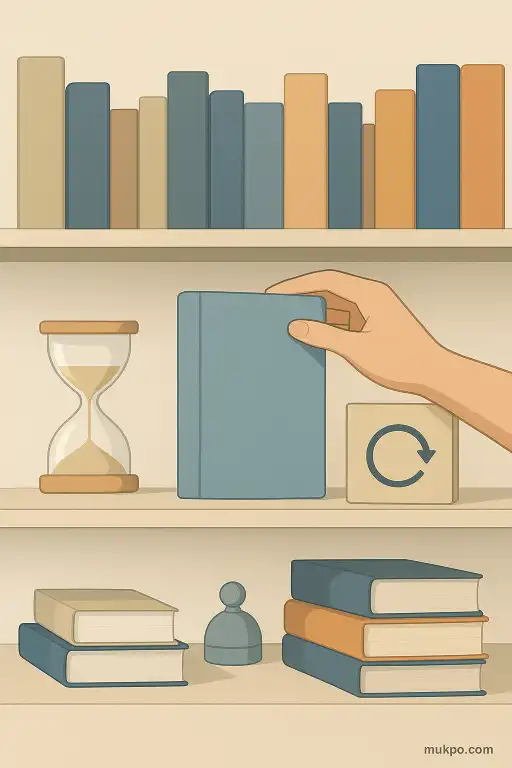
Most libraries are running a loop all day. Returns get checked in. Items get sorted by section. Then someone shelves them, usually in short bursts between other tasks. That means a shelf can look stable for an hour, then change three times in ten minutes. It’s also common for staff to “face” shelves, sliding books forward to the edge so the row looks neat. That small movement changes the pattern your brain remembers, even if the titles are the same.
Then there are the books that were never gone. A title can be out of order by one or two spots, or tipped back behind the row. Someone straightens the line and suddenly it’s “new.” In tightly packed nonfiction ranges, a book can also be fully hidden by an overhanging jacket or a slightly taller neighboring volume. You don’t register it until the angles change.
Why the catalog and the shelf disagree
People assume the catalog is a live map of the shelf. It isn’t. The system knows a book is checked in, and it knows a call number. It usually does not know which shelf, which side, or which exact position. Some libraries use RFID or inventory wands, but even then, location data can be stale. A book can be checked in and listed as “available” while it’s still on a cart, on a sorting table, or in a back room waiting to be shelved.
There’s also a lag that looks like magic. New acquisitions might be in the building for days while they’re labeled, covered, and processed. When they finally hit the floor, they appear all at once, often slipped into the correct call number sequence rather than displayed. The person who visits weekly experiences it as sudden growth in the middle of an unchanged section.
The human memory trick that makes it feel impossible
Most people don’t encode a shelf like a photo. They encode a gist: the color blocks, a few familiar author names, the empty gap where they pulled a book, the place they stopped scanning. If you looked for one title and didn’t find it, your brain can lock onto “not there” as a certainty. When it shows up later—because it was mis-shelved, recently returned, or simply overlooked—it feels like it wasn’t present in the world a moment ago.
Lighting and angle matter more than people admit. A glossy spine can disappear under overhead glare. Lower shelves are easy to scan poorly because you’re bending and your eyes are moving fast. If the book is a thin paperback between hardcovers, it can read as a shadow line. When someone else shifts the row forward, it becomes legible, and you experience it as an arrival.
Small, boring causes that produce “new titles”
Sometimes it’s just a cart. A librarian rolls through, reshelves three returns, and keeps going. If you’re turned away or around the corner, you miss the whole event. Sometimes it’s a patron who picks up a book, changes their mind, and puts it back in the wrong place. Later, someone doing a quick tidy puts it where it belongs, and it materializes right where you’re looking.
And sometimes the “new” book isn’t new at all. It’s a different edition with a different spine. Libraries replace worn copies, swap paperback for hardcover, or rebind a damaged book. The content is the same, but the visual cue is new. That tiny swap is enough to convince you the shelf is generating titles on its own, as long as it happens during the moments you weren’t staring at it.
Related reads
- A river that briefly flows uphill after the full moon
- The microbe discovered living inside salt crystals and how it survives
- How the Swedish warship Vasa capsized on her maiden voyage in 1628
- When a familiar face suddenly feels unfamiliar and what the brain is doing
- Why your sense of direction blurs in repetitive city blocks
- What household biofilms in drains reveal about microbes and cleaning