

You’re walking through a grocery store, or sitting on a train, and it happens: a quick buzz against your leg. You reach for your phone and there’s nothing. No notification. No missed call. This isn’t one single local story with a single cause. People report it in lots of places, from the US to the UK to India, and it doesn’t seem tied to one brand or one year. The core mechanism is simple: the brain is guessing. It’s stitching together faint body sensations and learned expectation into a “phone vibration” that feels real for a second.
What people mean by “phantom buzz”
The sensation is usually brief and specific. It often feels like one or two pulses in the exact spot the phone tends to sit: front pocket, jacket pocket, waistband, handbag strap. It’s not the same as tinnitus or a random itch. People describe it as having the timing and shape of a notification pattern they know well, which is part of why it gets interpreted as a vibration instead of “my skin did something.”
A concrete version is easy to picture. Someone is standing in line, weight shifted to one leg, phone in the same pocket as always. Fabric presses differently for a moment and the thigh muscle twitches. The hand moves toward the pocket before the person is even fully aware of deciding to check.
The brain treats notifications like a prediction problem
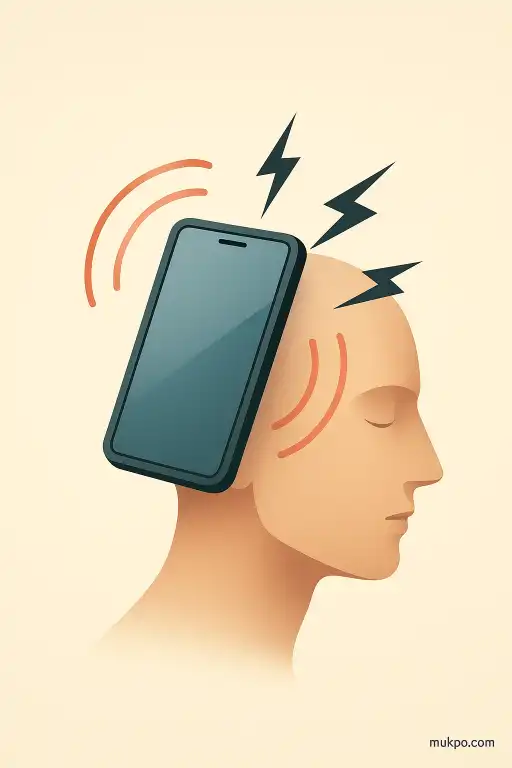
Brains are built to predict sensations, not just receive them. When a person checks their phone a lot, the brain learns a tight link between context and outcome: “phone in pocket” plus “waiting” plus “I might be needed” equals “incoming alert.” That expectation doesn’t stay abstract. It changes how incoming signals from the body get interpreted. A small, ambiguous touch can get categorized quickly as the most meaningful option available: a notification.
That’s why it often shows up during low-demand moments. Standing still. Sitting in a meeting. Riding in a car as a passenger. There’s enough spare attention for the brain to keep running the prediction loop, but not enough clear sensory information to resolve every tiny sensation correctly.
Where the “vibration” can physically come from
The body produces plenty of small signals that usually get ignored. Minor muscle fasciculations, tendon shifts, and skin receptors reacting to pressure changes can all create a short “tap-tap” feeling. Clothing adds more noise: a seam sliding, a pocket edge folding, or a belt tightening slightly when posture changes. Even a bag strap can transmit a tiny jolt from a step or a door closing and land on the same patch of skin that’s associated with the phone.
A detail people often overlook is how much the sensation depends on contact points. A phone in a loose pocket that occasionally bumps the leg produces lots of small, real touches. Over time, those touches train the brain’s template for “this is what my phone feels like,” which makes it easier for a similar sensation—real or not—to be labeled as a buzz.
Why it feels urgent even when it isn’t real
The quick urgency is part of the learned pattern. Notifications often carry social or work consequences, so the brain treats a possible alert as something to confirm fast. That urgency can pull attention toward the body sensation and lock in the interpretation before there’s time to double-check. It’s similar to how people can “hear” their name in a noisy room: the brain is biased toward signals that might matter.
It also helps explain why the experience can cluster during stressful periods. Not because the phone is vibrating more, but because the brain is scanning harder for updates and threats. The threshold for “maybe that was my phone” drops when attention is already keyed up.
Why it varies so much from person to person
Some people rarely experience it, and others get it often, and the reasons can vary. Phone-carrying habits matter: pocket vs bag, tight jeans vs loose fabric, sitting vs standing jobs. Notification patterns matter too. A person who gets frequent short bursts of alerts may internalize a very specific vibration “signature,” while someone who mostly gets silent notifications won’t have the same sensory template to misfire.
There’s also the simple fact that people don’t all notice the same body signals. Some tune out background sensations easily. Others are more sensitive to tiny changes in pressure, movement, or skin contact. Put a highly familiar object against a highly monitored patch of skin, and the brain sometimes fills in the rest.
Related reads
- Why we rehearse arguments long after they’re over
- How archerfish aim water jets to dislodge insects from branches
- Why fog clings to valley floors while nearby ridges stay clear
- Why some conversations make you forget time completely
- A café that brews espresso in cups stitched from old concert wristbands
- The beach where certain shells sing when the tide goes out