
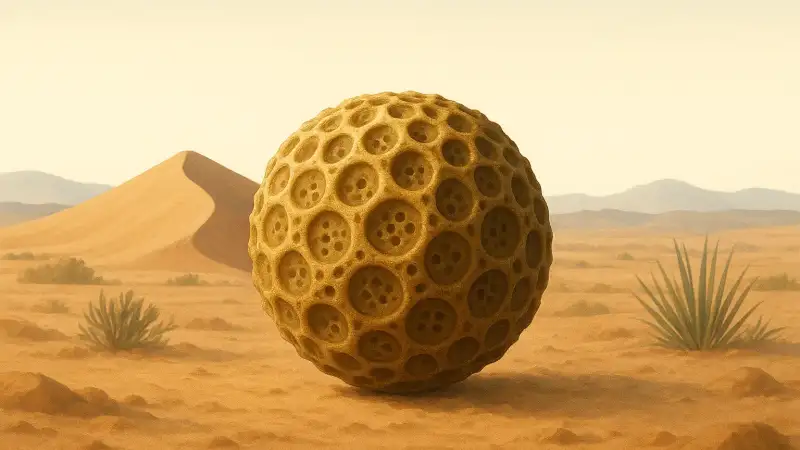
How can a desert have a memory?
When people picture a desert, they picture empty space: sand, rock, heat. But deserts keep records. They’re just not written in obvious layers like a forest floor. In places like the Sahara, the Atacama, and Australia’s interior, one of the most reliable clues to older landscapes can be something that looks like dust under a microscope: fossil pollen. It’s not one single story tied to one “famous desert.” Different sites and time periods show different patterns, and some gaps are still unclear. The basic mechanism is steady, though. Plants release pollen. Some of it gets buried in mud at a lake edge, in a wetland, or in a coastal lagoon. Later, that mud turns into a timeline.
Why pollen survives when almost everything else disappears
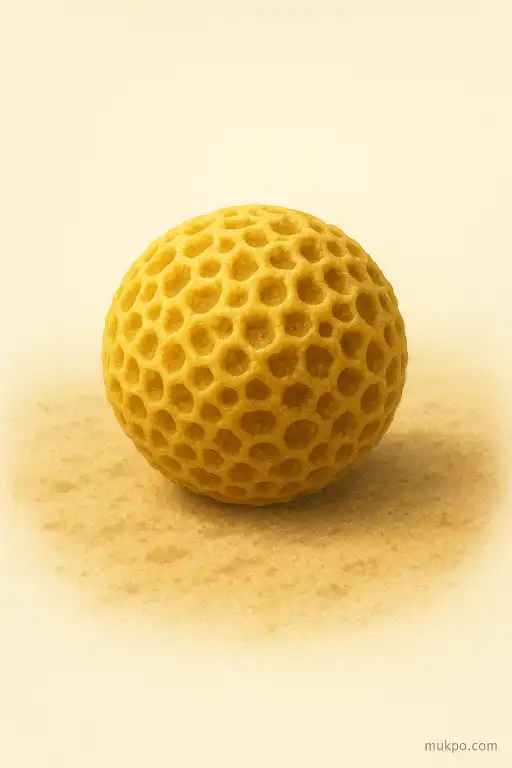
Pollen is built to travel and to survive. Many grains have a tough outer wall made of sporopollenin, a material that resists decay far better than most plant tissue. That matters in deserts, where leaves and wood can rot away, burn, or never get preserved at all. A tiny grain can still end up sealed inside oxygen-poor sediment, protected from microbes that would normally destroy it.
One detail people overlook is that “desert pollen” usually isn’t collected from sand dunes. It’s pulled from places that used to stay wet long enough to trap particles: dried lake basins, spring-fed marshes, old floodplains, or offshore cores where rivers once delivered silt. A coring tube goes down, a narrow column of sediment comes up, and the pollen in each layer reflects what was growing around that water at the time the layer formed.
What a grain can say about rain
Pollen doesn’t give a postcard-perfect view of a past landscape. It gives a biased, but useful, sample. Wind-pollinated plants often show up more than insect-pollinated ones. Some plants dump huge quantities of pollen. Others barely register. Even with those quirks, certain shifts are hard to explain any other way. If layers that formed in what is now hyper-dry terrain contain abundant pollen from grasses, sedges, or other moisture-linked plants, it points to a different hydrology: more rain, longer wet seasons, a higher water table, or persistent lakes and wetlands nearby.
Researchers don’t read one grain and declare the past rewritten. They count many grains, usually hundreds per layer, and build a percentage profile. Then they compare it with what those plants need today. A spike in tree pollen can imply woodland expansion. A rise in salt-tolerant species can hint at shrinking lakes and increasing salinity. The key is the pattern across depth, not a single “surprising” find.
The fieldwork is careful and a little unforgiving
There’s a practical reason pollen work changes desert histories: it adds timestamps to environments that otherwise look timeless. Once sediment layers are dated—often with radiocarbon dating when organic material is present, or other methods when it isn’t—the pollen sequence turns into a schedule of change. That schedule can show that a dry spell started earlier than people assumed, or that wet periods were shorter and more frequent than a simple “green then dry” story suggests.
Contamination is an ever-present worry, and it’s easy to underestimate. Modern pollen is everywhere. It floats into sampling gear, clings to clothing, and settles onto open cores. Labs use careful handling and chemical treatments to isolate ancient grains from the surrounding sediment. Even then, teams look for warning signs, like pollen from modern crops appearing in layers that should predate agriculture in that region. When the result is clean, it’s because the boring parts of the process were done well.
How it can change what “desert” even means
Deserts are often treated as permanent features, but pollen records keep showing that many have shifted boundaries and identities. A basin that is dust today might have been a mosaic of grassland, shrubs, and seasonal water not that long ago in geological terms. In some regions, the record suggests rapid switches that line up with known climate drivers, like changes in monsoon strength or shifts in ocean circulation. In others, it points to very local effects, like a spring system turning on or off as groundwater routes change.
There’s also a humbling limit to what pollen can say. It can hint at what grew near water, but it may miss plants that lived farther away from the sediment trap. A dry plateau could have remained barren while a nearby lowland stayed green around a lake. That’s why the strongest reconstructions usually come from multiple cores in the same region, taken from different kinds of basins, where the pollen signals agree in the broad strokes but still show local quirks.

Related reads
- Why a brief compliment can lift your mood for days
- How crows use cars to crack nuts
- How a 14th-century Florentine guild staged a mock funeral to settle a trade dispute
- How gut microbes extract energy from fiber
- Why you blush before you speak even when no one heard you
- Why insults stick in memory but compliments fade