

A place where “mail route” means water route
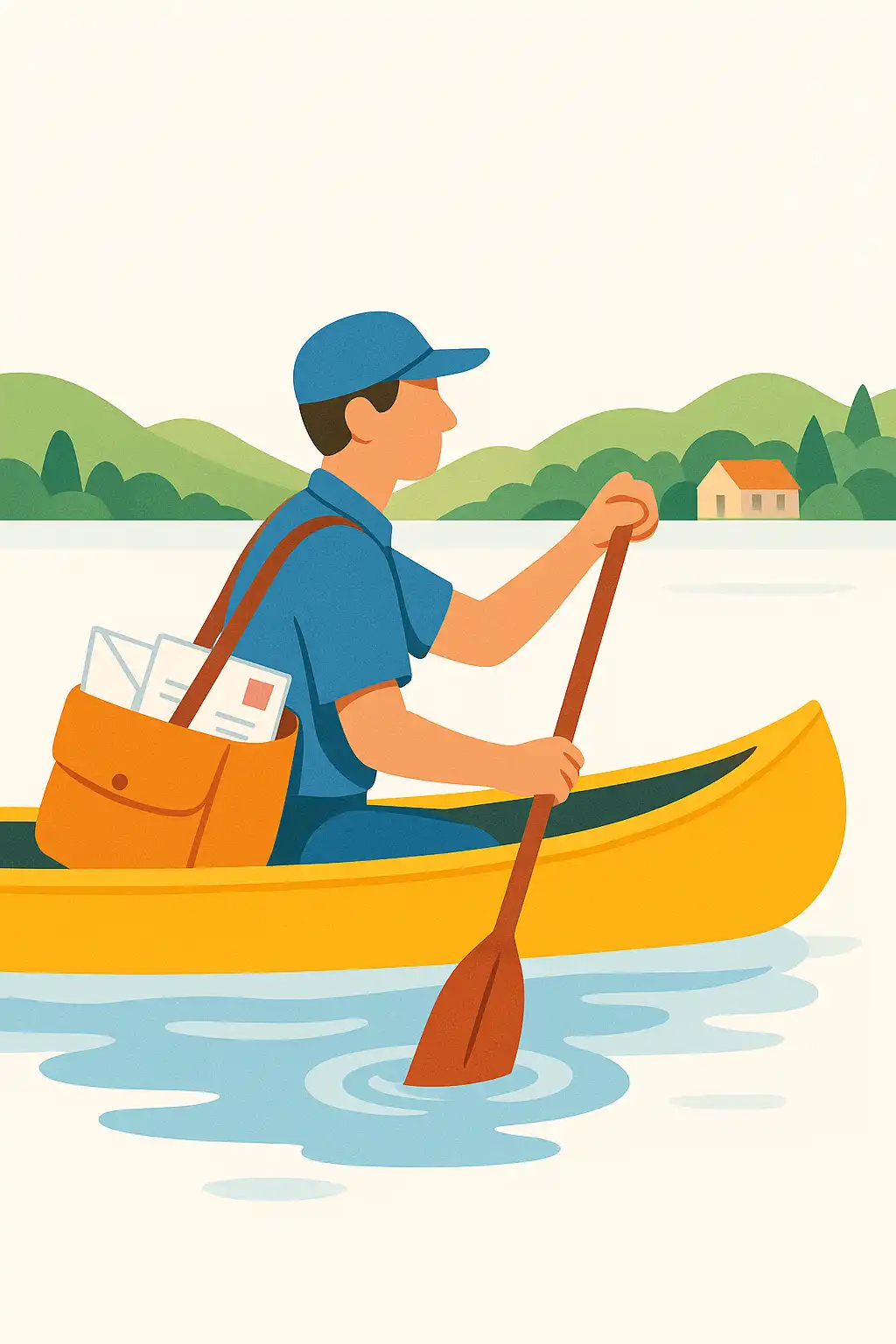
It’s a funny thing to picture until you see the map: a town where the quickest way to a front door is across a lagoon, not down a street. In Venice, Italy, the mail has long had to work around canals and footbridges, and the Italian postal service has used boats for delivery in parts of the city. People sometimes turn that into a cleaner story—one postman, one canoe, every letter—but the reality depends on the neighborhood, the day, and the service. What’s consistent is the mechanism: addresses that sit beside water, narrow lanes that don’t take vehicles, and deliveries that happen from the canal edge as often as from the sidewalk.
Why a canoe still makes sense in some towns
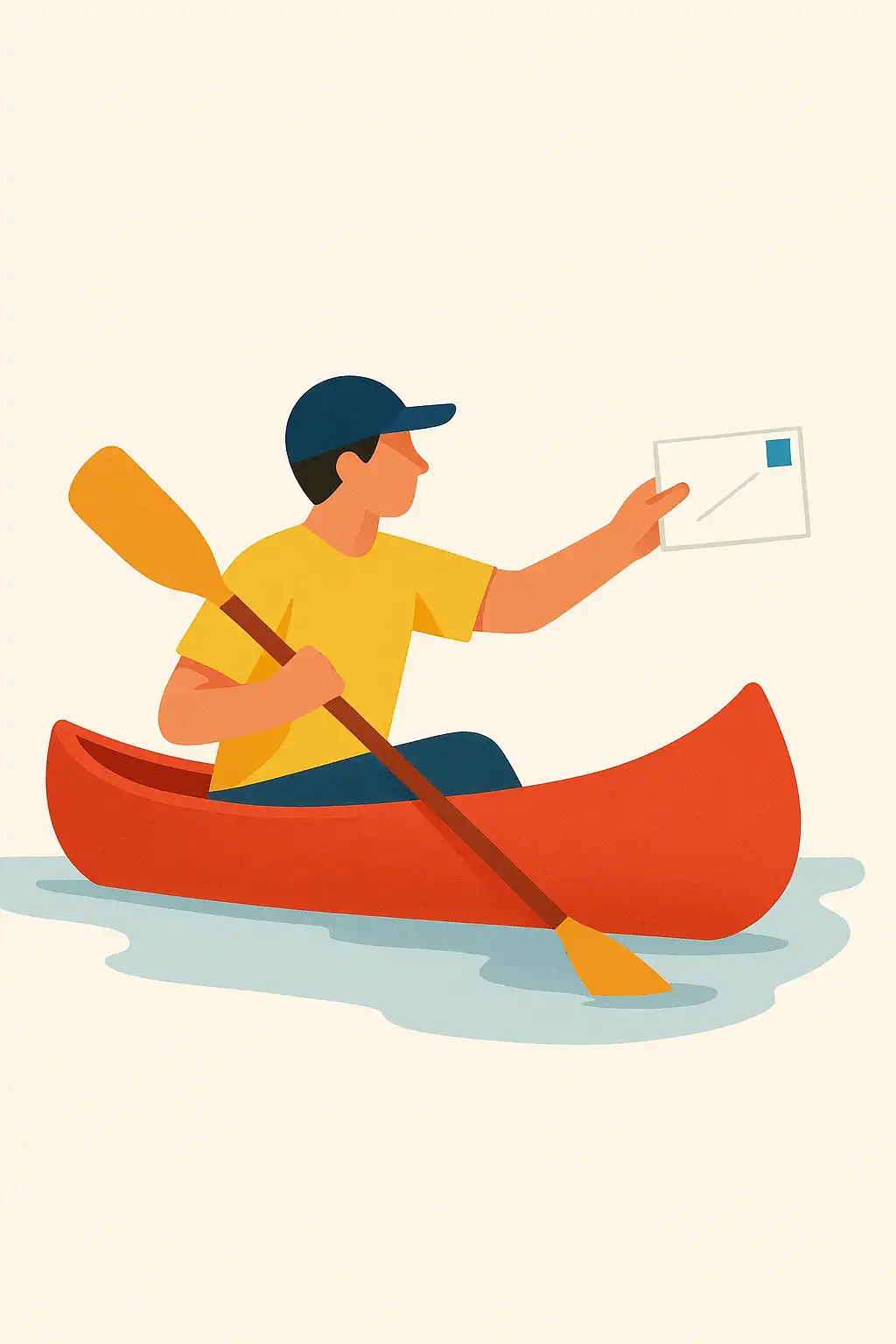
“Canoe” tends to be shorthand for “small craft that can get close.” In places built on water, that matters more than speed. A low-sided boat can nose up to a landing without a dock. It can slip through tight channels. It can be poled or paddled when an engine would be loud, unsafe, or simply impractical. Even where motorboats exist, a human-powered craft can be the difference between reaching a doorstep and stopping 50 meters away with no place to tie up.
There’s also the shape of the route. A postman on roads works in loops and blocks. A postman on water works in lines and tides. If the water level changes a lot, the “front door” might be a different step each day. That makes a small boat useful because it lets the carrier adjust constantly instead of relying on fixed infrastructure that may be underwater or too high to climb.
What delivery looks like when streets are footpaths and docks
The overlooked detail is the last few meters. A letter doesn’t get delivered “by canoe” to a mailbox the way it does in a suburb. It usually arrives in stages: boat to a landing, then on foot to a door slot, a wall-mounted box, or a cluster of boxes at a shared entrance. In canal towns, that handoff point is the whole system. If a building has no usable landing, the carrier may have to choose a nearby spot and walk farther, which changes how much can be carried at once.
That staging also affects what people think they’re seeing. A tourist might notice a person with a bag stepping out of a small boat and assume all mail is handled that way all day. But even in places that rely on water transport, some items may be consolidated at a local office, moved by larger boat in bulk, then split into smaller rounds. The small craft is often the “last mile” tool, not the entire pipeline.
Weather, water levels, and the problem of “every letter”
The phrase “still delivers every letter” is where the neat story starts to wobble. Letter volumes have changed a lot everywhere, and delivery isn’t only letters anymore. Parcels, registered items, and time-sensitive deliveries have their own handling rules. A canoe (or any small boat) can be perfect for envelopes and small packets, but larger items may require a different craft, a different crew, or a different schedule.
Then there’s weather. Wind can make open water unsafe. Flooding can erase the idea of a clear edge between canal and walkway. Ice is a hard stop in colder regions. In those weeks, the system either pauses, shifts routes, or swaps equipment. That doesn’t make the canoe story false, but it makes it situational. It’s a tool that appears when conditions allow and when the route geometry demands it.
Other real places where mail moves by small boat
Venice is the easiest named example because the canal network is famous, but it’s not alone. In the Netherlands, towns with dense canals can still require water crossings that shape how deliveries happen, even if not by canoe specifically. In parts of the Amazon region, river travel remains the practical connector between communities, and mail movement can depend on small boats along local waterways. In the United States, remote areas in Alaska have long relied on aircraft and boats, and some local routes still involve water travel when roads don’t connect settlements cleanly.
What these places share is not a romantic tradition. It’s a plain constraint: the “street” is water, the “curb” is a landing, and the last meter can be a wet step with no handrail. When those constraints show up, the simplest delivery vehicle sometimes looks old-fashioned because it’s small, light, and easy to aim right at the edge.
Related reads
- Luggage that repeatedly showed up on flights to the wrong continent
- Microbes that breathe metals and reshape subterranean chemistry
- Coral skeletons as time capsules of ocean heat spikes
- A streetlamp that lights only when neighborhood cats pass
- A mineral that drinks fog: how crystals harvest water from air
- Trees that chemically sculpt the soil for their seedlings