

What “paid in fish” actually looks like
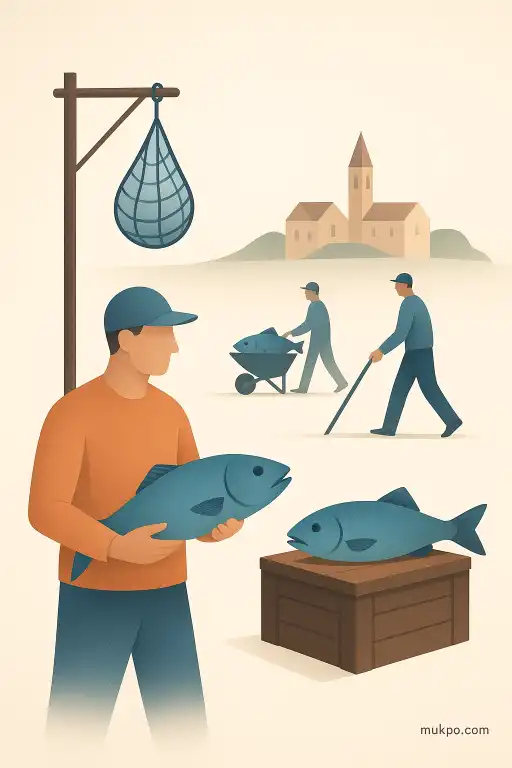
On parts of Newfoundland’s coast in Canada, a “payday” used to be a box on the wharf, still wet from the morning’s catch. It’s not one single place with one rule that never changes. It’s a habit that shows up in small fishing communities in different forms, including in Alaska and in coastal parts of Japan where seafood is traded locally. The core mechanism is simple: someone does work, and instead of cash, they go home with a share of fish pulled up that day. The value is understood by everyone standing there, even if nobody says a price out loud.
Why a fish can be a wage

This tends to happen where fish is both abundant and immediately useful. A crew might need a quick way to settle up with a neighbour who helped unload traps, mended gear, or drove supplies down to the harbour. Cash can be tight between sales, especially when payment from a buyer comes later, or when the catch is headed to a processor and the final amount depends on grading. Handing over part of the day’s fish avoids waiting, paperwork, and awkward haggling.
It also works because the “currency” is already sitting there. No one has to go to a bank. No one has to make change. If the worker already eats fish, feeds a family with it, or knows exactly who will trade for it, the fish is not a novelty. It is a practical settlement.
Who gets paid this way, and when
It’s usually not the main paycheck for a full-time deckhand on a formal payroll. It’s more common at the edges of the working day: a teenager helping carry tubs to a truck, a retired fisher who still fixes nets, a cousin who comes down for a few hours when the weather breaks right. Sometimes it’s a “thank you” that stands in for money. Sometimes it’s the only thing offered, and the person accepts because they expected it.
The timing matters. Fish is most valuable to the worker when it’s fresh and predictable. A share handed over right after landing is easier to clean, cook, salt, smoke, freeze, or give away. If it’s offered later, after it has sat in the sun or been mixed with other lots, it stops being a good wage and starts feeling like leftovers.
The overlooked detail: storage and spoilage decide the “rate”
The part people miss is that the real exchange rate is set by refrigerators, freezers, ice, and time. A family with a chest freezer can accept a larger share and make it last. Someone without reliable cold storage might only want enough for dinner and a neighbour. That changes what “fair payment” feels like, even if the same species is being handed over.
It also shapes what kind of fish gets used for pay. A high-value species that needs careful handling is harder to hand out casually. Fish that can be filleted quickly, salted, or stewed the same night fits better. The worker is also taking on a small job as part of the wage: cleaning, portioning, and getting it cold fast enough that it stays food, not waste.
How it stays informal without becoming chaos
These exchanges usually lean on local memory. People know what a tote of cod or a bag of salmon is worth to eat, even when market prices swing. They also know who is generous and who is tight. If someone consistently offers fish that’s bruised, too small, or near-spoiled, word travels. The system polices itself through reputation more than rules.
But it’s not friction-free. Fish-as-wages can collide with regulations about catch reporting, with a buyer’s contract, or with the simple fact that a worker might need cash for rent and fuel. So when it happens today, it often sits alongside ordinary money wages, not instead of them. You see it as a side-settlement on the dock, a quick transfer from one set of hands to another, while the rest of the catch moves on into the formal economy.
Related reads
- The petrifying well that turns lost toys to stone
- How Mongol catapults allegedly hurled plague corpses into besieged cities
- A garage sale that turned up a trunk of handwritten novels no one claimed
- The colonial standoff over the Ashanti Golden Stool and the symbol no one would hand over
- When Ottoman succession customs let new sultans quietly eliminate brothers to secure the throne
- Why you keep rehearsing conversations you never have