
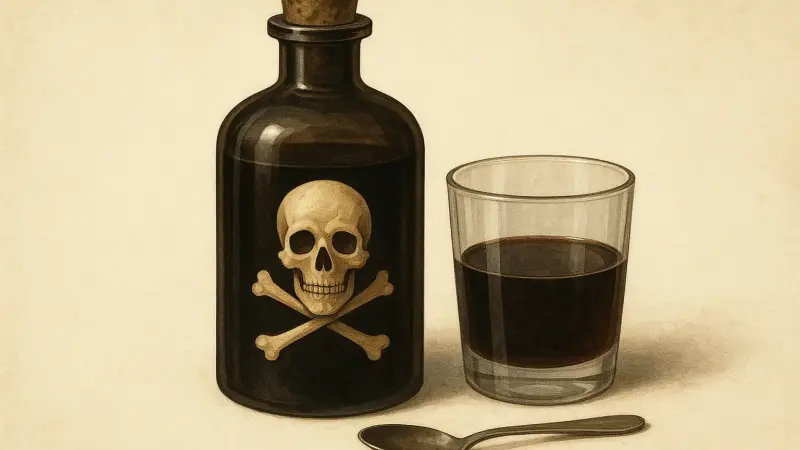
People like tidy stories about messy nights. Rasputin’s death in Petrograd in December 1916 is the opposite. In most retellings it runs like a machine: poison fails, bullets fail, drowning finishes the job. But the night inside Prince Felix Yusupov’s Moika Palace was more like a chain of decisions made under stress, with later edits. The basics are solid—Yusupov and the right-wing politician Vladimir Purishkevich were there, and Rasputin ended up dead in the Neva River area. The exact order of events, and what “worked,” is still argued because the main accounts came from the conspirators themselves.
The setting: a basement room and a political panic
The house was the Yusupovs’ palace on the Moika Canal, a short ride from the center of imperial power. The plotters weren’t random criminals. They were men with connections to the court and the Duma who believed Rasputin’s influence over Empress Alexandra was pushing Russia toward ruin during World War I. That belief mattered because it shaped their urgency. They weren’t trying to “send a message.” They were trying to remove a person they thought was steering state decisions through private access.
One overlooked detail is how theatrical the setup was. Yusupov later described arranging a downstairs room, with food and drink laid out and music playing upstairs to suggest a normal party. That kind of staging is practical. It buys time. It also creates a built-in alibi: servants or guards can be told there were guests, noise, movement. It’s hard to reconstruct what bystanders noticed because the most vivid descriptions come from men invested in the story’s drama.
The poison problem: why the famous cakes are disputed
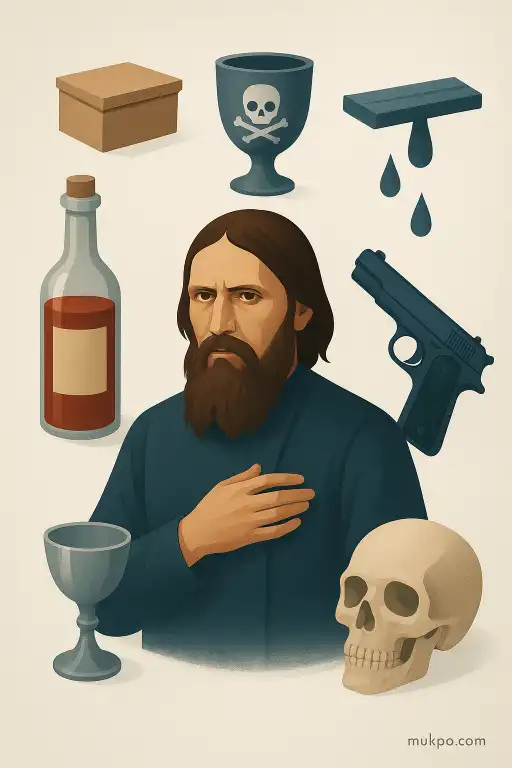
The most famous element is poison in food and wine, often described as potassium cyanide. In Yusupov’s memoir, it doesn’t work. Rasputin eats and drinks and keeps talking. That failure is what makes the story feel supernatural. The trouble is that the evidence for poison is thin outside Yusupov’s narrative, and later medical reporting didn’t settle it cleanly. Autopsy details were reported and re-reported, and some specifics vary by source.
Even if poison was present, there are mundane reasons it might not produce the expected collapse on cue. The dose could have been wrong, the poison could have degraded, or the conspirators could have exaggerated the “he wouldn’t die” part to make their actions sound more justified and their enemy sound uncanny. The poisoning scene also serves another purpose in the story: it delays the moment when they choose open violence, which makes that choice feel forced rather than planned.
The shooting: what we can say without the legend
Gunfire is the one element nobody seriously removes from the night. Yusupov said he shot Rasputin at close range in the basement. Purishkevich later wrote that he fired additional shots as Rasputin tried to escape into the courtyard. Those two accounts don’t match neatly in timing or detail, and both men had reasons to shape what they wrote. Still, the idea that multiple shots were fired, by more than one person, fits the chaos of a group crime where no one wants sole responsibility.
There’s another practical point that gets overlooked because it’s not exciting. Shooting indoors in a palace at night is loud, even with thick walls. If the upstairs “party” was partly cover, the noise becomes a risk. That may explain the constant movement in the stories: checking the body, arguing, going back downstairs, trying to manage the scene. The plot is often told like a script. It likely felt more like frantic problem-solving.
The body and the river: drowning as an ending, not necessarily a cause
The drowning part is usually treated as the final twist, with Rasputin still alive when he hits the water. What’s firmer is that his body ended up in the river after being transported from the palace. That disposal choice makes sense for conspirators who need time and confusion. A body on land is immediate. A body in winter water can be delayed, moved, or damaged in ways that complicate quick answers.
Whether he drowned is harder to pin down in popular memory than people assume. Different retellings lean heavily on the image of water in the lungs as proof. But forensic interpretation can be messy, especially with cold, injury, and later handling of the body. The “he drowned after surviving everything else” idea endures because it turns a killing into a struggle with fate. It also neatly spreads responsibility across methods, so no single shot has to be the decisive one.
Why the story keeps changing: memoirs, politics, and useful confusion
Almost every well-known detail comes filtered through self-justifying sources. Yusupov wrote memoirs. Purishkevich published his version. Their social standing and later exile gave them reason to dramatize and moralize. They were also writing after the imperial world they knew was collapsing. In that environment, turning a political murder into a kind of dark fable could protect reputations and keep enemies guessing.
It also helps explain why the mechanisms pile up: poison, shots, beating, drowning. A simple killing can look like an assassination. A messy, multi-step saga looks like a battle against an unusually dangerous man. That doesn’t require anyone to be lying about everything. It only requires selective emphasis, fuzzy memory, and the human habit of turning a panicked night into a story with scenes that land.
Related reads
- A public bench that collected wishes carved into its underside
- How a single scent can unlock an entire afternoon from decades ago
- The muddled alertness after waking that slows decisions
- Why a stranger can feel like an old friend at first sight
- The night Pope Alexander VI’s Banquet of Chestnuts exposed the excesses of Renaissance Rome
- The apartment with a hidden garden growing beneath a stairwell