
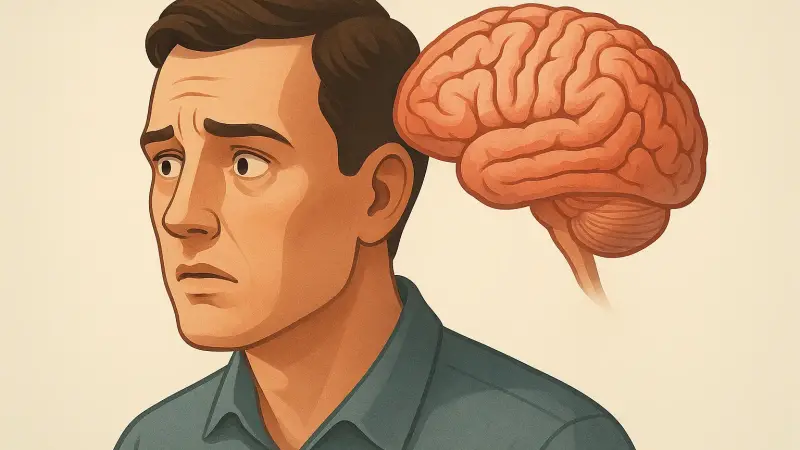
That moment a person doesn’t look like themselves
It isn’t one famous event. People report it in lots of places and settings: a spouse at the kitchen table, a friend seen across a café, a parent standing at the airport. For a few seconds, the face is correct but the feeling is wrong. The brain can still match the eyes, mouth, and voice. Yet the person seems like a convincing stand-in. That mismatch usually comes from two systems drifting out of sync: the one that recognizes identity and the one that supplies the warm sense of familiarity. When those signals don’t line up, the mind notices the gap.
Two tracks: knowing who it is and feeling that you know them
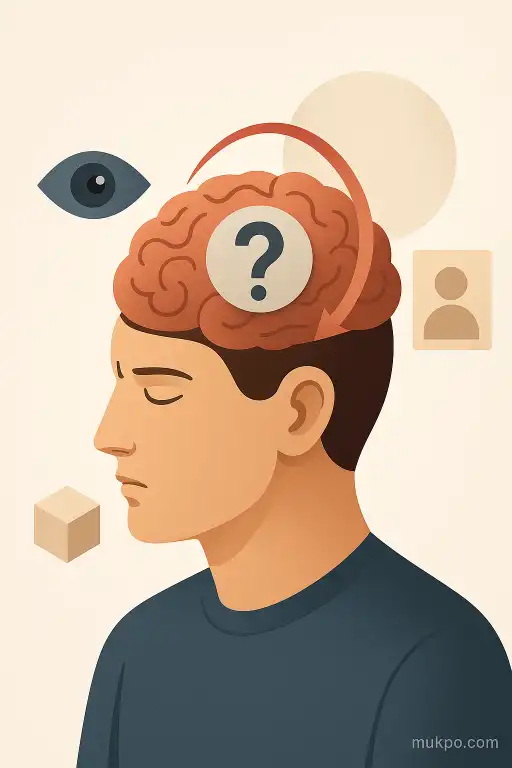
Face recognition isn’t one single “face module.” It’s a chain. Early visual areas pick up edges and contrasts. Higher areas assemble those pieces into a stable face, even if lighting or angle changes. Separate from that, the brain also attaches meaning: this is my sister, this is my coworker, this is a safe person, this person belongs in my life. That extra layer is partly emotional and partly memory, and it can be quiet until it’s missing.
One classic pattern shows the split clearly: someone can identify a familiar face accurately but insist it doesn’t feel like the real person. Clinicians call the fixed, intense form of that belief Capgras delusion. Not everyone who has a brief “wrong-feeling” moment has anything like Capgras. But the same basic architecture is relevant. Recognition can stay intact while the familiarity signal drops out or arrives late.
What can scramble the familiarity signal
The familiarity part leans on arousal and attention. If someone is seen out of context, the brain has less help. A neighbor in the hallway is easy. The same neighbor at a hospital, under fluorescent light, wearing a mask, can look subtly “off” because the brain is working from different cues. Stress and sleep loss can thin out the background feeling that usually comes for free. The face is still recognized, but it doesn’t arrive with the usual internal confirmation.
Some neurological conditions can push this further. Certain seizures, especially involving the temporal lobe, can distort familiarity in either direction: a known person feels like a stranger, or a stranger feels oddly known. Migraine aura can also change perception in brief, strange ways, though details vary a lot by person. And after some kinds of brain injury, the pathways that link visual recognition to emotional response can be disrupted, leaving the “I know the facts” track running without the “I feel it” track.
What the brain is using when it recognizes a face
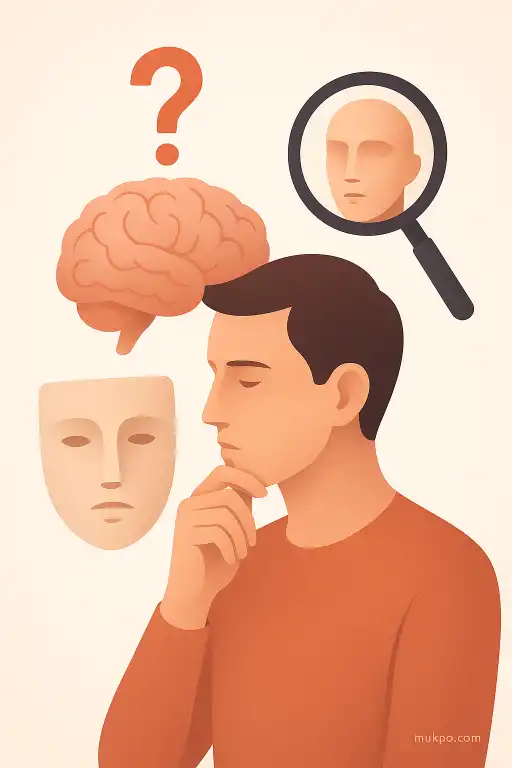
Faces are processed as configurations. The brain cares about distances and relationships: how far the eyes sit from each other, the ratio between nose and mouth, the shape of the brow line. It also uses surface cues like skin tone gradients and fine texture, which change a lot under different lighting. A specific overlooked detail is that familiarity often depends on tiny movement patterns, not just still features. The timing of a blink, the way a smile forms, the micro-pauses in speech. A face seen briefly or in stillness can fail to trigger the usual “this is them” certainty.
That’s part of why photos can be strangely unhelpful in moments like this. A person may look right in a picture and wrong in real life, or the reverse, because the brain is combining many channels at once: face, voice, gait, and expected context. If one channel is missing or noisy, the whole impression can tilt. The mind doesn’t experience those pieces separately. It experiences a single output: familiar or not.
Why the feeling can flip back so fast
These episodes often resolve quickly because the brain keeps sampling new evidence. A voice arrives from the right direction. The person turns their head and the profile matches better. A habitual phrase lands. The emotional system catches up and the mismatch disappears. It can feel sudden, like a switch, because the underlying process is threshold-based: once enough cues pile up, the “known person” state wins.
Sometimes the reverse happens for a moment. A familiar face is recognized, then a small unexpected detail breaks the pattern—new glasses, a haircut, a different posture, a bandage changing the symmetry. The brain’s prediction of what should be there doesn’t match what is there, and the familiarity signal wobbles. Then the brain updates, re-labels the face, and the ordinary feeling returns as if nothing happened.
Related reads
- Why your sense of direction blurs in repetitive city blocks
- What household biofilms in drains reveal about microbes and cleaning
- When ancient Rome’s Vestal Virgins faced scandal, trial, and ritual punishment
- Why applause rolls through a crowd in surprising waves
- How desert beetles harvest fog with bumpy shells
- Why people apologize for tiny slip ups even when they aren’t at fault