

A detail everyone “knows” but no one can source
It’s a weird moment when a group agrees on a detail, and then the detail won’t survive contact with reality. Not just “I misremembered,” but “we all remember it the same way.” This isn’t one single event or place. It shows up around the world and across decades. People argue about the Berenstain Bears spelling, whether Darth Vader says “Luke, I am your father,” or if the Monopoly mascot had a monocle. The shared part is the mechanism: memory gets rebuilt from scraps, and the rebuilding process is social. Once a version becomes the version, it can feel like it was always there.
Why the same wrong detail spreads so fast
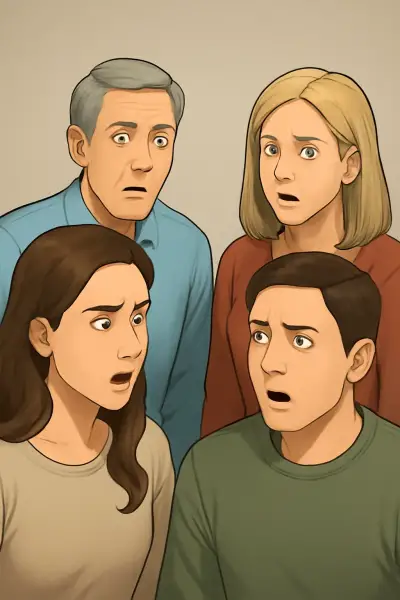
People don’t store memories like video files. They store a gist and a few anchors. Later, the brain fills in the missing parts using what seems most likely. That “most likely” part is where groups sync up. If a line sounds more natural (“Luke, I am your father”), it’s easier to retrieve than the clunkier original (“No, I am your father”). If an image matches a familiar pattern, it sticks. A rich businessman in old cartoons often has a monocle, so a monocle gets added even if it wasn’t there.
Once a detail is said out loud, it stops being private. Other people borrow it as a retrieval cue. The next time they try to remember, they don’t start from scratch. They start from the version they just heard, plus the feeling that it was their own memory. That’s why groups can converge quickly, even when the starting memories were fuzzy or different.
The overlooked part: confidence is a social signal
One detail people usually overlook is how much confidence changes the memory itself. In a group, certainty is treated like evidence. A person who says “I can picture it exactly” becomes a reference point, even if their memory is no better than anyone else’s. The group then repeats the detail with the same confidence, and that confidence becomes part of the memory trace. Later, when someone recalls it, they also recall how sure everyone sounded. That feeling of certainty can be stronger than any actual visual detail.
This can happen even without a dominant personality. A small chorus of “Yeah, that’s right” does the same job. Agreement creates the sense that verification already happened somewhere else. People stop checking, not out of laziness, but because the brain treats group consensus as a shortcut for “known fact.”
How the internet makes a memory feel historical
Online, the timeline gets scrambled. A misquote, a parody, or a recreated image can look older than it is. Search results pull up the most repeated phrasing, not the original source. A clip title on YouTube can cement a line people never actually heard in the film. Memes compress things into the most punchy version, and the punchy version becomes the one people remember. When someone later goes back to check, they’re often comparing the original to years of cleaned-up retellings, not to their own first exposure.
Even “proof” can be misleading. A screenshot might come from a remake, a different region’s packaging, or a fan edit. With the Berenstain/Berenstein example, some people point to old book listings or secondhand photos. Those can be real artifacts, but they aren’t always the same as the first-edition print in someone’s childhood hands. The messiness of versions gives the wrong detail places to hide.
A concrete scene where it happens in real life
Picture a group leaving a restaurant after a stressful meal. Someone says, “Did you see that sign? It said ‘No Refunds’ in huge red letters.” Two people agree immediately. Another person says they noticed it too, and adds that it was taped to the register. By the time the story gets told at work the next day, everyone “remembers” the same sign, the same color, the same placement. Then one person goes back a week later and there’s no sign. The register area has different notices, in small black text, and none say “No Refunds.”
The missing sign doesn’t mean anyone lied. It means the group built a plausible detail to explain the mood of the interaction, then reinforced it through repetition. The part that tends to stick isn’t the typography. It’s the emotional logic: tense service, so there must have been a hostile sign. That emotional fit can beat the thin, boring truth, and it can do it for everyone at once.
Related reads
- Why your handwriting tightens when stress creeps in
- How snails rebuild cracked shells from the inside
- The Boston molasses tsunami of 1919 that swept trains and toppled buildings
- How a Habsburg envoy went out a window and sparked Prague’s uprising
- How the solar wind sculpts comet tails into bright, streaming plumes
- The smell-triggered time machine: how odors unlock buried memories