
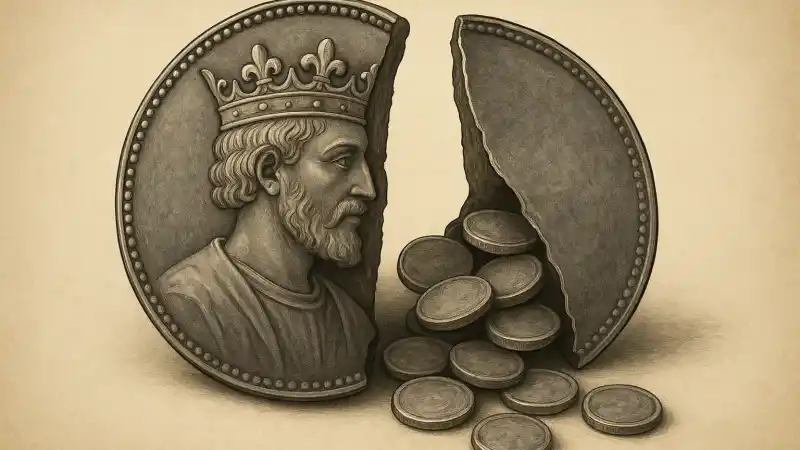
Coins looked solid, until they didn’t
A silver coin feels like a fact. It has a familiar size. It clinks the same way. But in medieval Europe the “same” coin could quietly change from one year to the next. This wasn’t one single event or one town. It happened across places and dynasties, with different rules and results. England’s Great Debasement under Henry VIII is one famous case. So is the repeated weakening of coinage in parts of the Holy Roman Empire, and the French crown’s frequent recoinages in the later Middle Ages. The basic move was simple: issue coins with less silver in them, while keeping their face value and legal status.
How you shave value without looking like you did
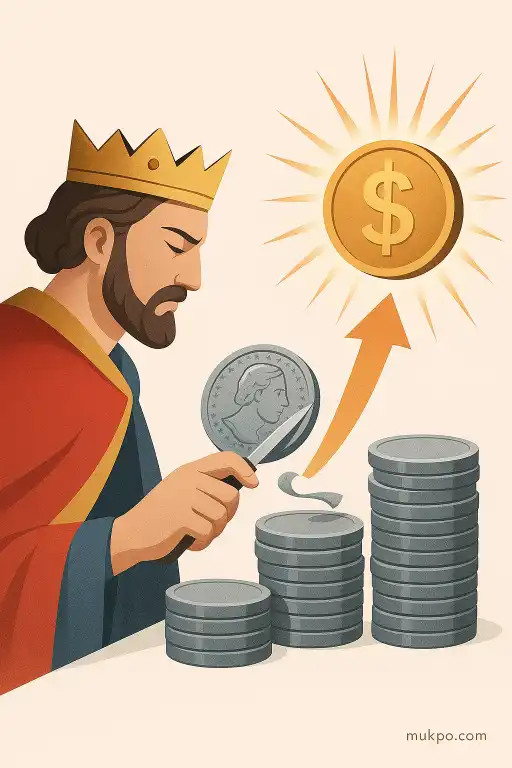
Sometimes the change was literal. Clipping meant shaving the edges of real silver coins, collecting the slivers, and spending the lighter coin anyway. That was illegal, but it worked until someone weighed it. Debasement was the official version. A mint would change the recipe. More copper in the mix, less silver in each piece, sometimes a slightly different weight standard too. The coin still carried the ruler’s stamp, so it still passed at the same number of pennies or deniers—at least at first.
A specific detail people often overlook is that mints weren’t just “making money.” They were also running a pricing system. There was a posted mint price for bullion. If the mint offered favorable terms, people brought silver to be coined. If the coin’s silver content fell enough, older, better coins stopped coming in and started disappearing into hoards, jewelry, or cross-border trade where they were valued by weight.
Why markets can feel like they “explode”
If the same loaf of bread is priced in “pennies,” and each penny suddenly contains less silver, the loaf doesn’t get cheaper. The number of pennies tends to rise. People often describe that as prices exploding, but on the ground it’s more like the unit of account is shrinking. Sellers notice quickly because they have to restock. Buyers notice when wages or rents lag behind, or when a familiar payment no longer covers the same basket of goods.
Another force adds to the turbulence: confusion. In a busy market, not every coin is checked. If multiple issues circulate—older high-silver pieces, newer pale-looking ones, foreign coins, clipped coins—then pricing becomes a moving target. People start sorting money into “good” and “bad” even if the law insists they are equal. Better coins get saved or exported. Everyday spending shifts toward the worst pieces still accepted.
What rulers got out of it, and what they risked
Debasement was a way to fund things that were hard to fund. War is the obvious one, and Henry VIII’s debasement is tied to heavy military costs and state spending. If the crown controlled the mint, it could take in silver and pay out more coins than before, keeping the difference as revenue. This is seigniorage. It could also be a way to pull scattered silver into the mint, especially if people were holding bullion or foreign coins that the government wanted to convert into local money.
The risk was trust and arithmetic. Taxes, feudal dues, and state salaries were often specified in money terms, not ounces of metal. If the coin changed, old contracts turned into arguments. Authorities sometimes responded with recoinages, calling in old issues, changing official exchange rates, or threatening penalties for refusing new coins. Those moves could steady circulation, but they could also intensify panic if people expected another change soon.
Who felt it first: traders, renters, and anyone paid in fixed sums
The first people to react tended to be the ones who handled many transactions a day. Merchants, innkeepers, and moneychangers saw the new issues immediately. They were also the ones weighing, ringing, and discounting coins—sometimes openly, sometimes quietly. In towns with active trade links, a debased coin could be treated as a local token and then marked down when used to pay for imported goods, because foreigners and wholesalers cared more about silver content than the ruler’s stamp.
People on fixed payments were boxed in. A rent set at “twelve pence” stays twelve pence even if those pence contain less silver than before. Wages could adjust, but not always quickly, and not equally across trades. That lag is part of why a monetary change can feel like a sudden social change. One day the coin still counts. The next day everyone is recalculating, and some people can’t renegotiate fast enough to keep up.

Related reads
- How splitting attention makes ordinary tasks feel strangely harder
- How Victorian salons turned arsenic into beauty and scandal
- The museum plaque that rewrote itself every morning
- How a nine-day queen became a pawn in the Tudor succession crisis
- When a streetlight began syncing its blink to residents footsteps
- A supermarket that redirected abandoned carts into a hidden community garden