

A quiet contradiction
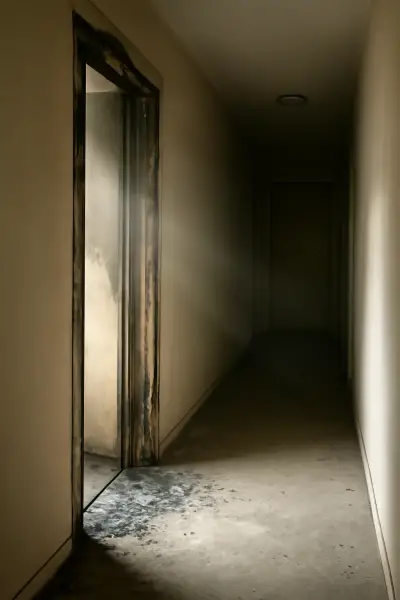
Fire usually announces itself. You smell smoke, you hear a crackle, you see flames climbing a curtain. The reports that unsettle people are the ones that skip all of that: a person found badly burned, nearby objects barely touched, and no clear ignition source. This isn’t one single event. It’s a cluster of cases spread across decades and countries, including the 1951 death of Mary Reeser in St. Petersburg, Florida, and the 1966 inquest into the death of Dr. John Irvine Bentley in Pennsylvania. The core idea behind most non-paranormal explanations is simple: a small, ordinary flame can burn a body for a long time in a way that doesn’t look like a normal house fire.
What people mean when they say “burst into flame”
Most accounts aren’t describing a person suddenly flaring up like a torch. They’re describing an aftermath that looks selective. A body is extensively burned, often in a room that isn’t destroyed. Sometimes the damage seems concentrated in one spot, like a chair or a patch of carpet, with surprisingly little scorching elsewhere. That contrast is what makes people reach for extraordinary explanations.
The overlooked detail is how slow, localized burning can be when the fuel is close and steady. A cigarette, a candle, a space heater, a fireplace ember. These aren’t dramatic ignition sources, but they are stubborn ones. If a person is asleep, ill, intoxicated, or otherwise unable to react quickly, a small flame can keep working without ever becoming a room-filling blaze. The room can stay visually “intact” while one area is ruined.
The “wick effect” and why it can look so strange
The leading mundane mechanism discussed in investigations is often called the wick effect. Clothing or a blanket can act like a wick, while body fat (once melted by an initial burn) can behave like the fuel. That combination can sustain combustion at a lower, steadier intensity than people expect. It’s closer to an oil lamp than a bonfire, and it can keep going for hours if it isn’t interrupted.
This helps explain the pattern that keeps turning up in case files: a seated or reclined person, heavy burning around the torso, and nearby items that show limited heat exposure. Heat rises, and a smoldering, low-flame burn doesn’t necessarily throw flames across a room. It can char the floor under the body, damage the chair, and leave higher shelves or distant curtains largely untouched. That doesn’t make it “normal,” but it makes it physically plausible without needing an invisible fire.
Why investigations end up unsatisfying
These cases tend to be reconstructed after the fact, and that’s a bad moment to try to answer “how did it start?” Burned scenes erase evidence. Sprinklers, firefighters, or well-meaning cleanup can remove small items that matter, like an ashtray, a dropped match, or a space heater’s position. Witness accounts, when they exist, are usually about what was found, not what happened.
There’s also a reporting bias built in. A straightforward fatal house fire doesn’t become a legend. A death where a body is badly burned and the room isn’t completely destroyed does. That selection effect can make it feel like a distinct phenomenon with a single cause, when it might be a handful of different accidents that produce a similar-looking result.
Common threads that show up in real cases
When details are available, a few situational elements show up repeatedly: the person is alone, seated or in bed, and there’s a plausible small ignition source somewhere in the environment. In the Mary Reeser case, early speculation included an unattended cigarette, and investigators discussed how a small ignition could have led to prolonged burning in one area. In the Bentley case, reports from the inquest era mention his use of a pipe and a bathroom setting, a place where hard surfaces and limited soft furnishings can change how a fire spreads and what it leaves behind.
Another thread is that the body can be the main fuel source once the fire is established, which is counterintuitive to most people. We’re used to thinking of humans as hard to burn, because we don’t ignite easily. But ignition and sustained burning are different problems. If clothing catches and heat is trapped close to the body, the fire doesn’t need to leap outward to do severe damage. It just needs time, oxygen, and a steady way to keep feeding itself in the same small zone.
If you liked this, you might also enjoy:
- Why mornings can leave you foggy for minutes after waking
- A corpse, a forged identity and the ruse that duped WWII intelligence
- A time capsule hidden in a wall that revealed a vanished life
- The city that once outlawed chewing gum
Related reads
- Why some rivers form tidal bores that rush upriver as walls of water
- How microbes dissolve concrete to access buried minerals
- Why volcanic ash plumes often produce spectacular lightning bolts
- How your brain filters out half of a crowded conversation
- When Victorian Parliament fled as the Thames reeked across London
- Why awkward silences feel physically uncomfortable