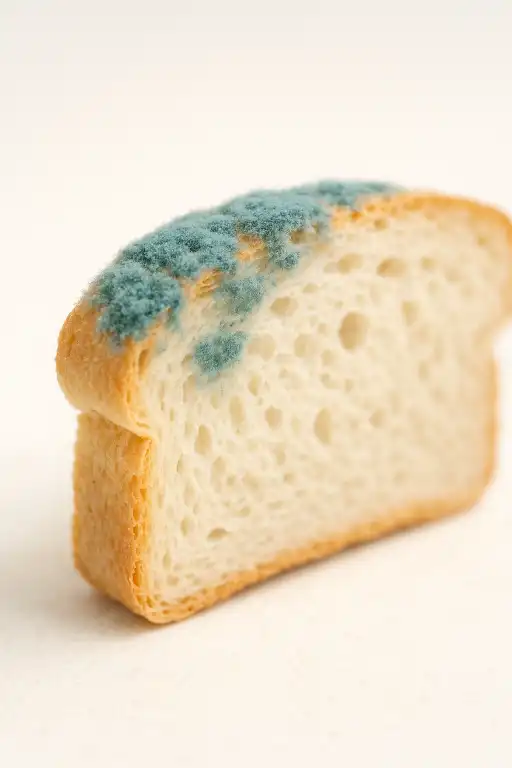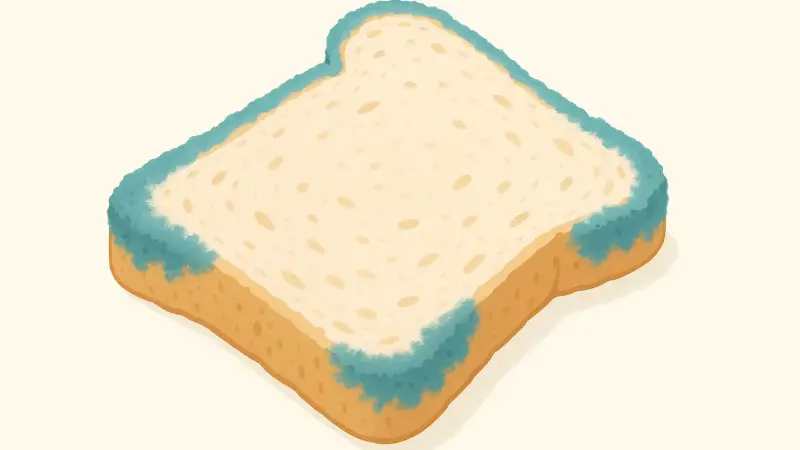
That first fuzzy spot is usually on the crust
You notice it when you pull a slice from the bag and tilt the loaf toward the window. The center still looks fine, but one corner is already dotted with that dusty blue-green fuzz. This isn’t one single place or one famous incident. It shows up in kitchens from New York to London to Tokyo, and it varies by bread type and storage. The core mechanism is simple: mold needs spores, moisture, oxygen, and time. The edges of bread tend to be the first place where those conditions line up, even though the crumb in the middle looks softer and “more food-like.”
Edges are where the air is
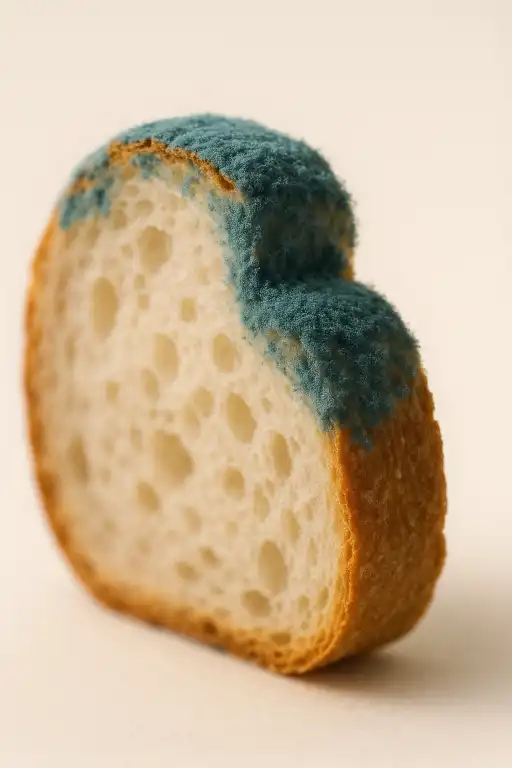
Mold is aerobic. It likes oxygen. The outer surfaces of a loaf sit right against the air in the bag, and the corners often press into little pockets of trapped air. The interior crumb has air holes too, but it is still buffered by surrounding bread. Oxygen has to diffuse inward, and that slows things down compared with an exposed edge.
There’s also a small geometry problem. A corner has more surface area per bite of bread than a flat middle slice does. More surface area means more landing spots for spores and more contact with oxygen. A single spore that lands on a crust edge has fewer barriers than one that lands in a tight interior pocket.
Moisture shifts toward the crust after baking
Right after bread is baked, moisture doesn’t stay put. Water migrates from the moist interior toward the drier outer layers. That movement continues as the loaf cools and sits. People often overlook that the crust isn’t “dry” in a stable way. It can become slightly damp again, especially inside a closed plastic bag where humidity rises.
That matters because mold doesn’t need the bread to feel wet to you. It needs enough available water at the surface. The edge of a wrapped loaf can end up with a thin, humid boundary layer where condensation is too subtle to notice. If you’ve ever seen a bag look perfectly clear but feel a little clammy, that’s the kind of micro-condition that favors early growth on surfaces and corners.
Spores arrive from the outside, not the middle
The usual blue-green molds on bread (often species in the Penicillium group, though it varies) start with airborne spores. Those spores land on the bread’s exterior during slicing, bagging, handling, and every time the bag opens. The cut faces and the heel are the most exposed parts in that process. They are touched by air, plastic, countertops, and sometimes a bread knife that has seen other foods.
A concrete example is a pre-sliced supermarket loaf. The first and last slices sit right against the bag opening and get the most air exchange. Corners and edges also pick up tiny smears of whatever is on the bag’s inner surface. That contact can concentrate spores in the same few spots, so colonies show up there first even when the rest of the loaf has spores too.
The crust is a different material than the crumb
Crust and crumb don’t just look different. They have different chemistry and structure. The crust is denser and more dehydrated from baking, and it has different sugars and proteins at the surface because of browning reactions. That can change which microbes compete well there, and how fast mold filaments can anchor and spread across the surface.
The crumb’s starch retrogrades as bread stales, which changes texture and how water is held inside. That doesn’t automatically stop mold, but it alters where the “easy” water and oxygen are. A mold colony on the edge can expand along the surface first, then push inward later, so the earliest visible spot is biased toward crust even if the interior will eventually follow.
Blue-green is just the stage you can see
What people call “blue mold” is usually the spore-producing stage becoming visible. Before that, the organism may be growing as pale, fine filaments that blend into the bread. That early growth is easier to spot on an edge because the color contrast is sharper and the surface is flatter and better lit. A faint patch on a white crumb can be missed longer.
Another overlooked detail is airflow inside the bag. A loaf doesn’t sit perfectly still. Moving it, squeezing the bag, or stacking items nearby can pump air around the edges and corners, repeatedly delivering oxygen and spores to the same spots. So the first obvious fuzz often isn’t the first place anything happened. It’s the first place where conditions, exposure, and visibility all line up.