
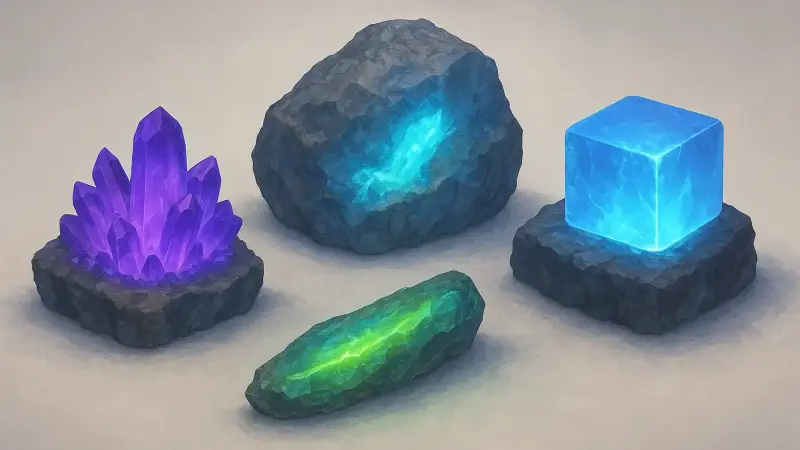
A thing you can see, and a thing you can’t
At a mineral show, someone will switch on a UV lamp and a plain rock can suddenly look electric. The same specimen can look dead again the moment the lamp goes off. This isn’t one single famous place or event. It turns up all over, including Franklin and Sterling Hill in New Jersey, parts of Greenland (like the tugtupite localities), and classic fluorite districts in England and China. The core mechanism is simple: ultraviolet light carries enough energy to bump electrons in a mineral into higher energy states. When those electrons drop back down, some minerals give off part of that energy as visible light.
Fluorescence is about energy levels, not “glowiness”
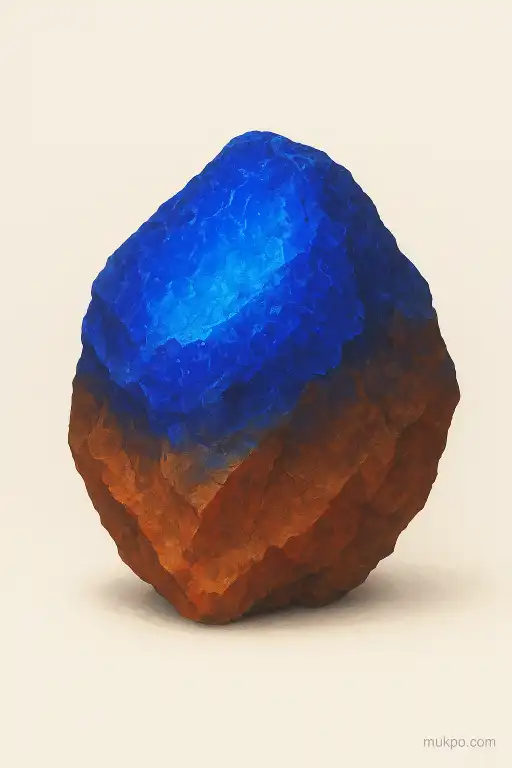
UV light is just higher-energy light than what the eye sees. When a mineral absorbs UV, it can push electrons into an excited state. Those electrons don’t stay there. They relax back toward lower energy states, and the mineral may emit a photon on the way down. Because some energy is lost as heat or vibration inside the crystal lattice, the emitted light is usually lower energy than the UV that went in, so it lands in the visible range.
Only certain minerals have the right electronic structure for this to be efficient. Many crystals absorb UV and convert it to heat with no visible emission at all. Others do fluoresce, but weakly, so it’s easy to miss unless the room is dark and the lamp is close. The “on/off” feel comes from the fact that fluorescence is fast. The light is tied to the UV source and typically stops within fractions of a second after the UV is removed.
Impurities and defects do most of the work
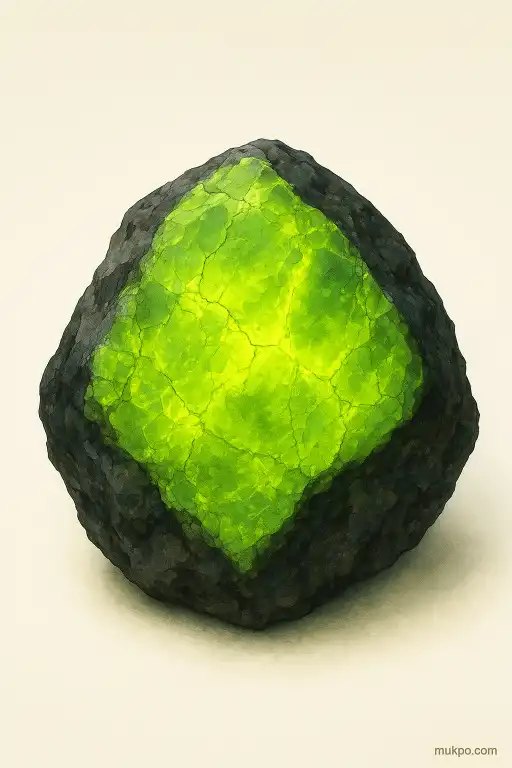
A lot of fluorescent minerals glow because of activators: small amounts of impurities that sit in the crystal structure and create energy levels that are good at absorbing UV and re-emitting visible light. Manganese is a common one. It can make calcite fluoresce red-orange, and it plays a big role in some of the famous New Jersey specimens. Rare earth elements can also act as activators, producing sharp, distinctive colors because their electron transitions are relatively specific.
Crystal defects matter too. A missing atom, a slightly misplaced ion, or damage from natural radiation can create “traps” and recombination sites that change how light is emitted. That’s why two pieces of the same named mineral can behave differently. The label on the specimen doesn’t guarantee the same impurity mix or the same defect history. The glow is often telling the story of the trace chemistry, not just the main chemical formula.
Shortwave and longwave UV can give different answers
UV lamps used on minerals are usually longwave (around 365 nm) or shortwave (around 254 nm). The difference matters because different activators and different defects absorb different UV wavelengths. A mineral might blaze under shortwave and do almost nothing under longwave, or the colors can shift. That’s not the rock “changing its mind.” It’s different parts of its electronic system being excited.
One overlooked detail is that the lamp and its filter change what you think you’re seeing. A good mineral lamp blocks most visible light from the bulb, so the fluorescence stands out. A cheap “UV” light that leaks violet visible light can make pale specimens look like they’re glowing when they’re mostly just reflecting purple. Even the glass between the lamp and the specimen can matter, because ordinary glass blocks a lot of shortwave UV.
Why the glow varies, even within one rock
Fluorescence can be patchy because the activators aren’t always evenly distributed. In a calcite vein, for example, manganese can be richer in one growth band than another, so the bands fluoresce differently. Zoning can happen as the fluid chemistry changes while the crystal grows. In some localities, a specimen can show multiple colors because it contains more than one mineral, each responding to UV in its own way.
There are also quenchers: impurities that shut fluorescence down by giving excited electrons a non-light route back to lower energy states. Iron is a common quencher. Two samples can have the same activator but different iron content, and one will look dull. Temperature can play a role as well. Warmer crystals often lose more energy to vibrations, which can reduce brightness or change how “clean” a color looks under the same lamp.
Related reads
- How wood frogs survive freezing solid
- How hermit crabs choose shells using chemical cues
- How photosynthetic bacteria thrive in boiling hot springs
- A rainforest bat that farms figs by planting seeds
- The night in 1944 when a Midwestern town awoke to an invisible assailant
- The medieval forger who persuaded Europe that three centuries were fabricated