
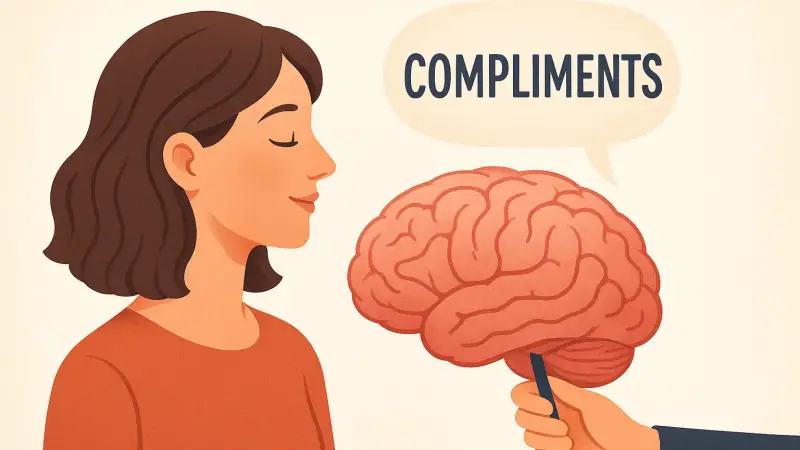
Compliments don’t fade the way other words do
Most days are full of comments that disappear fast. A cashier says “have a good one,” a coworker says “thanks,” a stranger says “excuse me.” But a single sincere “You handled that really well” can stick for years. This isn’t tied to one place or one moment. It shows up in a London office, a school in Seoul, a family kitchen in São Paulo. The basic mechanism is that social praise is treated as high-value information. The brain tags it as worth saving, partly because it helps predict whether other people will accept you.
That “tagging” doesn’t feel like a deliberate choice. It can happen even when the compliment is small, even when the person who said it barely matters. The mind treats social evaluation as data about safety and status, and those are categories it doesn’t like to lose track of.
Social value gets priority in memory
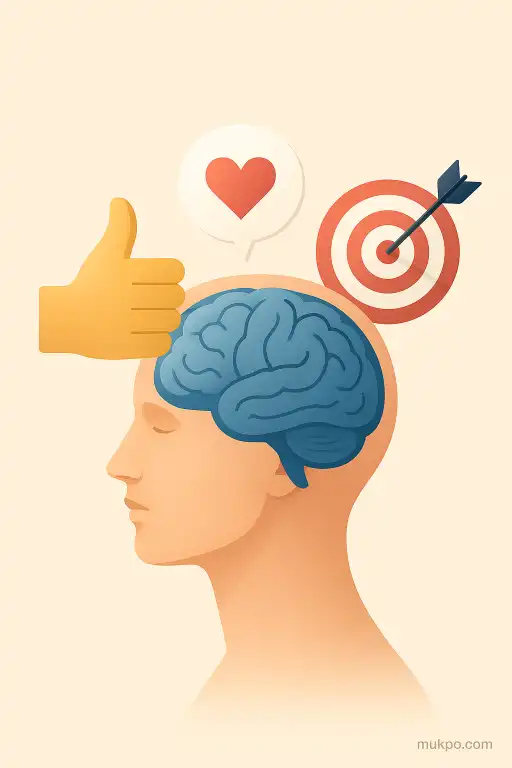
A compliment is a quick signal about where you stand with someone else. Brains are built to track that. The same way people remember a face that looked angry, they often remember a sentence that sounded approving. It’s not because compliments are magical. It’s because they are a rare kind of feedback that can change how a group treats you, and group treatment has always affected access to help, protection, and resources.
There’s also a simple numbers problem. Neutral interactions happen constantly. Praise is less frequent, and it often arrives with more emotion. Novelty plus emotion is a strong recipe for recall. A person can forget ten ordinary meetings and still remember one manager saying, “You’re the only one who caught that mistake,” because that moment carried a clear social ranking.
Compliments feel safe, so they get replayed
People rehearse compliments in their head. Not on purpose, and not always happily. The replay can be quiet: the sentence pops up while brushing teeth, or during a boring commute. Mental replay strengthens memory traces. It also makes the compliment feel even more “true” over time, because familiar thoughts can feel more credible than brand-new ones.
The overlooked detail is how often the remembered version is cleaner than what was actually said. The brain tends to store the gist and the feeling, not the exact wording. “Nice job on that slide” can later become “They said I’m great at presenting.” The emotional tag stays, and the specifics blur.
Who says it matters more than people admit
Compliments don’t land equally. Praise from someone seen as high-status, highly skilled, or hard to impress often sticks harder, because it carries more informational weight. A quick “good point” from the quiet person in the room can also hit unusually strong, because it breaks an expectation. The brain pays attention when the source is surprising or consequential.
Context can shape the stickiness, too. If the compliment arrives during uncertainty—first week at a new job, first time speaking up in a group, a tense project deadline—it can get linked to relief. That mix of social approval and stress reduction makes it easier to recall later, even if the compliment itself was brief.
A concrete scene where the bias shows up
Picture a meeting where one person presents a rough idea. The room is quiet, then someone says, “That’s a smart angle.” The speaker might remember that sentence for months. They may not remember the three follow-up questions, the agenda item before it, or who joined late. The compliment is short, positive, and socially diagnostic. It answers a question people constantly carry without saying out loud: “Am I respected here?”
What’s easy to miss is that the same meeting can produce different memories for different people. The person giving the compliment may forget they said it at all, because for them it carried little new information. For the person receiving it, it might become a mental reference point that keeps resurfacing, simply because the brain treats certain kinds of approval as too useful to misplace.
Related reads
- When a medieval abbey traded relics for grain to survive a siege
- A neighborhood that replaced street names with emoji for a month
- Why familiar places trigger sudden vivid memories
- How hammerhead sharks detect electric fields
- How three lighthouse keepers vanished from a Scottish isle in 1900
- The 17th-century Ottoman court that negotiated with a nonexistent envoy