

You notice it in places that are supposed to be “quiet,” but aren’t. A packed elevator. A courtroom gallery. A subway car between stations in Tokyo, when everyone is upright and still and nobody is talking. There isn’t one single scene where this happens, so it shows up in different settings and cultures. The strange part is that the silence can feel heavy, even louder than a normal room full of chatter. The basic mechanism is simple: your brain keeps scanning for cues in a crowd, and when it doesn’t get any, it turns up its own sensitivity. That makes tiny sounds, tiny movements, and even your own body feel amplified.
Silence in a crowd isn’t empty
In a noisy room, sound blends into a predictable blanket. In a crowded quiet room, the soundscape is jagged. One cough, one shoe shift, one swallow, then nothing. Those isolated noises stand out because there’s no steady background to mask them. The ear is good at noticing changes, not constants, so a quiet crowd produces lots of “events” instead of one continuous wash.
A specific thing people overlook is how much of “quiet” is actually masking. HVAC hum, distant traffic, and even fluorescent light buzz act like soft cover. When those are low, every small sound has a clean edge. A phone vibrating in a pocket can suddenly feel like it fills the whole space, even if it’s objectively faint.
Your brain keeps checking the room
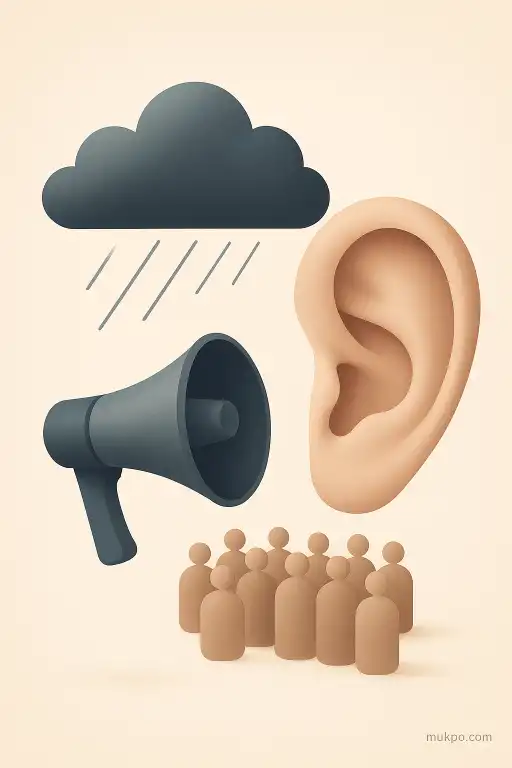
When you’re close to strangers, your brain automatically tracks social information. Where are people looking. Who is moving. Who is close. Talking normally provides a stream of intent: jokes, complaints, tone, rhythm. Silence removes that stream, so the brain has to work harder to predict what will happen next. That extra monitoring can feel like the room is “louder,” even without more sound.
There’s also the fact that silence can signal rules. In a courtroom, a memorial, or an exam hall, quiet usually means behavior is being evaluated. That changes how the same sounds land. A chair creak isn’t just a creak anymore. It’s a possible mistake that draws attention, so it carries more weight than it would in a cafeteria.
Without chatter, you hear yourself
One reason crowded quiet feels intense is that your own body becomes part of the soundtrack. Breathing, swallowing, stomach gurgles, fabric rubbing, a knee popping. Most of the time, other noise covers these or your attention ignores them. In silence, your attention has fewer places to go, so internal and near-body sounds become prominent.
That’s not just imagination. The auditory system has gain control, like a volume knob that adjusts based on expected input. When external sound drops, sensitivity can rise. It’s a useful feature in nature, but it can be uncomfortable in human-built settings where you’re pressed close to other people and can’t easily move.
Small noises become social signals
In a quiet crowd, a tiny noise isn’t only a sound. It becomes information about someone. A sniff might mean they’re sick. A foot tap might mean impatience. A plastic bag crinkle might mean someone is breaking an unspoken rule. Because everyone can hear it, everyone knows everyone can hear it, and that shared awareness raises the stakes.
This is why the same volume can feel different depending on context. A single laugh in a library reading room can feel shocking. A louder laugh in a bar can disappear into the mix. The difference isn’t the decibels. It’s whether the sound violates the group’s expected pattern.
The room itself shapes the “loudness”
Architecture and materials matter more in quiet crowds than people assume. Hard surfaces bounce high-frequency sounds, so a small click or cough carries. High ceilings can create longer reverberation, which makes isolated noises hang in the air. Carpet, curtains, and packed clothing absorb sound, which can make the overall room quieter while making individual sharp noises stand out even more.
You can hear this difference in places like a museum gallery versus an underground station corridor. In the gallery, one heel strike may be crisp and exposed. In the corridor, there may be a constant low rumble that masks it. Neither place is truly silent, but the balance between steady background and sudden peaks decides whether the quiet feels calm or unnervingly loud.
Related reads
- Why lunar dust clings to boots and instruments
- The island that outlawed high heels to protect marble floors
- How a backyard puddle led scientists to a new species of water mite
- How subterranean rivers hollow out caves through chemical weathering
- Why your mouth moves when you read silently
- A garden that sprouts coins instead of flowers every spring