
How “lucky” routines get planted
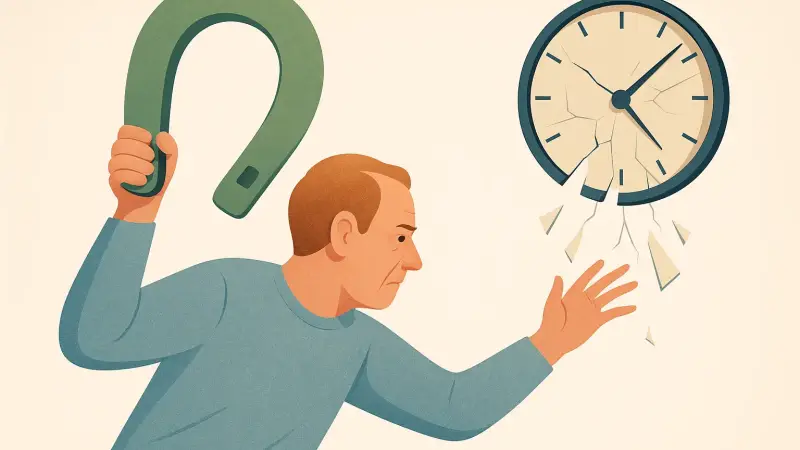
This isn’t one single story tied to one place or year. You see it in Las Vegas casinos, in locker rooms before big games, and in exam halls everywhere. A person wears the same “lucky” hoodie, taps the doorframe the same way, or plays the same song on the drive over. It starts as a small link between a routine and a good outcome. The core mechanism is simple: the brain treats coincidence like a clue. It tags the routine as part of the cause, even when the real causes were skill, chance, timing, or other people.
A concrete example is a gambler who won on a particular slot machine, then keeps returning to the same machine and repeats the same button-press rhythm. The overlooked detail is how narrow the memory gets: people often remember the routine and the win, but forget the ordinary conditions that actually changed—how busy the casino was, what they’d already lost, what their mood was, or how long they’d been playing.
Why the mind keeps the routine even when results fade
Once a routine is labeled “lucky,” it becomes sticky because it reduces uncertainty. It gives a person something they can do when the situation feels uncontrollable. That feeling matters more than the routine’s real impact. This is close to what psychology calls an illusion of control: actions that don’t influence outcomes still feel connected to them when the stakes are high and the feedback is messy.
The routine also becomes part of identity. “I’m the kind of person who always does this before a test” is easier to hold onto than “sometimes I just get lucky.” When results worsen, dropping the ritual can feel like admitting the earlier success didn’t have a special explanation. People resist that kind of rewrite, even privately.
Random rewards train habits better than steady ones
Intermittent reinforcement is a powerful teacher. If a routine is followed by a good outcome only sometimes, that unpredictability can lock the behavior in. Slot machines are the obvious example, but the same pattern shows up in ordinary life: the one time you wore a particular shirt and nailed a presentation can outweigh five times it did nothing. The occasional payoff makes the brain keep checking: “Maybe this is the time it works again.”
Bad outcomes don’t always erase the connection because the mind can explain them away. The person didn’t do the routine “exactly right,” or something “broke the streak.” A small deviation becomes a convenient reason to keep believing. That’s why rituals often accrete tiny rules—left shoe first, same pen, same seat—because more rules create more ways to protect the belief.
Memory edits the evidence after the fact
People don’t store a clean spreadsheet of tries and results. They store stories. Wins get more attention, and attention turns into stronger memory. Losses blend together, especially if they’re common or embarrassing. Over time, it can feel like the routine used to work “all the time,” even if it never did. The record in someone’s head is often a highlight reel.
There’s also a timing trap people overlook. A ritual is often adopted during a period when someone is improving anyway—starting a new training plan, gaining experience at a job, studying harder. Improvement would have happened with or without the routine, but the routine gets the credit because it arrived at the same moment the graph was already heading up.
Social life makes rituals hard to retire
Lucky routines rarely stay private. Teammates notice. Friends join in. A whole group might keep a “tradition” alive because it feels like chemistry. Once other people are involved, quitting isn’t just a personal change. It risks being blamed if things go badly, even jokingly. Nobody wants to be the person who “jinxed it,” which is a real social pressure even when everyone claims not to believe in jinxes.
And when a routine stops producing good outcomes, the easiest explanation isn’t “it never mattered.” It’s “we need to do it harder,” “we need a new version,” or “something external contaminated it.” That keeps the behavior going, but it shifts it into maintenance mode. It becomes less about expecting a miracle and more about avoiding the discomfort of stopping.
Related reads
- How forcing a smile can shift your mood in minutes
- The tiny mental skip that makes a face feel strangely familiar
- That strange moment when your hand feels like it’s not yours
- Why we say sorry for things that don’t need apologizing
- Why video calls make us miss tiny facial cues
- Why bread yeast bubbles leave honeycomb holes in dough