
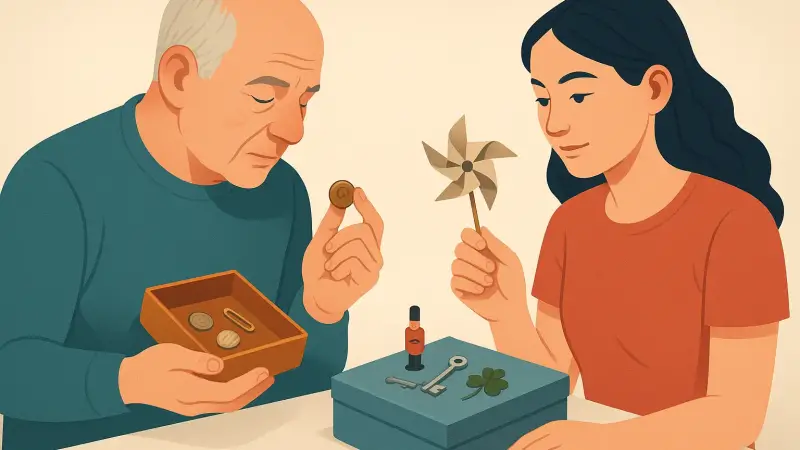
How a useless thing becomes hard to throw away
Somewhere in a drawer there’s a ticket stub that can’t scan anymore, a cracked keychain, a dried-up pen from a hotel. This isn’t one famous event in one place. It happens in Tokyo, Toronto, Lagos—anywhere people have pockets and boxes. The core mechanism is simple: the object stops being about its practical use and starts acting like a handle for a memory. It’s small enough to keep, but specific enough to pull a whole moment back into focus. That shift can happen fast. One good day, one bad day, one person, and suddenly the tiny thing feels “not throwaway” even when it obviously is.
Memory likes cues, not full recordings
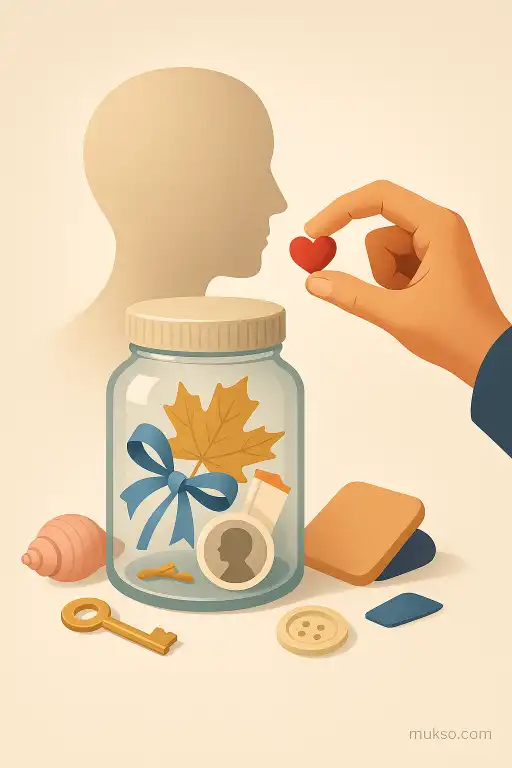
People don’t store life as clean, replayable videos. Memory is cue-based. A smell, texture, or printed logo can bring back details that feel otherwise lost. That’s why “useless” mementos work so well. They’re dense with cues. The overlooked detail is often physical: the weight of a coin, the rough edge of a torn paper wristband, the ink that bled slightly because it rained. Those tiny sensory bits can retrieve a whole scene faster than a photo, because a photo is already a summary. The object can be a more direct trigger.
It also helps that the memento usually carries context that’s hard to recreate later. A museum sticker has a date on it. A cheap lighter still smells faintly like the bar patio. A grocery receipt shows what was bought on an ordinary Tuesday that later became important for unrelated reasons. The object doesn’t have to be rare. It has to be specific.
Keeping it is a way of keeping a version of the self
These items often stick around because they anchor identity. Not in a dramatic “I am my stuff” way. More like: this is proof that a certain phase happened, and that the person who lived it was real. That’s why people keep things that seem almost embarrassing, like a lanyard from a job they hated or a stub from a concert they barely remember. The point isn’t the event’s objective importance. It’s the continuity it offers. The object can stand in for a chapter that feels far away, especially when life has changed quickly.
That identity link gets stronger when the object was present during a transition. A first apartment key that no longer fits any lock. A hospital bracelet. A nametag from a conference where someone met their future partner and then lost touch with everyone else. People may not think about those stories daily, but the object sits there as a kind of evidence file, ready if needed.
Small mementos avoid the emotional work of sorting
Big keepsakes demand decisions. A wedding dress needs storage and a story. A box of letters forces a person to reread. Tiny items can be kept without “processing” anything. That’s part of the appeal. They slip into the margin of life. No one has to explain them, even to themselves. The decision becomes: keep it in a jar, or throw it out. And “keep it” costs almost nothing in space, time, or attention.
There’s also a social factor that people miss. Small objects are easy to inherit, pass along, or discover. A child finds a parent’s old transit card and asks about it. A friend sees a faded wristband while borrowing a charger. The memento quietly creates chances for a story without requiring someone to announce that they’re feeling nostalgic.
Randomness makes some objects feel “chosen”
Many long-kept mementos weren’t picked deliberately. They were just what happened to be in a pocket that day. That randomness can make them feel strangely fated. A pebble grabbed while waiting for news. A receipt that ended up in a wallet for years. A cheap plastic token from a laundromat that later closed. Because there wasn’t a careful selection process, the object feels like it survived by chance, and people are reluctant to be the one who ends its run.
And sometimes the object holds a detail the person can’t get anywhere else. Not the “big memory,” but the small one: the exact address on a matchbook, the phone number on a business card, the handwriting on a scrap of paper. Even when the number is dead and the place is gone, the specificity feels irreplaceable. So the object stays, decade after decade, not because it’s useful, but because it’s singular.

Related reads
- Why certain gestures instantly make us trust someone
- The inflatable decoys, fake radio traffic and artists who fooled German reconnaissance in WWII
- A village that counts pets as official residents to boost its population
- Why your hands tremble before a big moment
- How tiny bedtime rituals quietly prepare your brain for sleep
- Why your recorded voice sounds like a stranger