
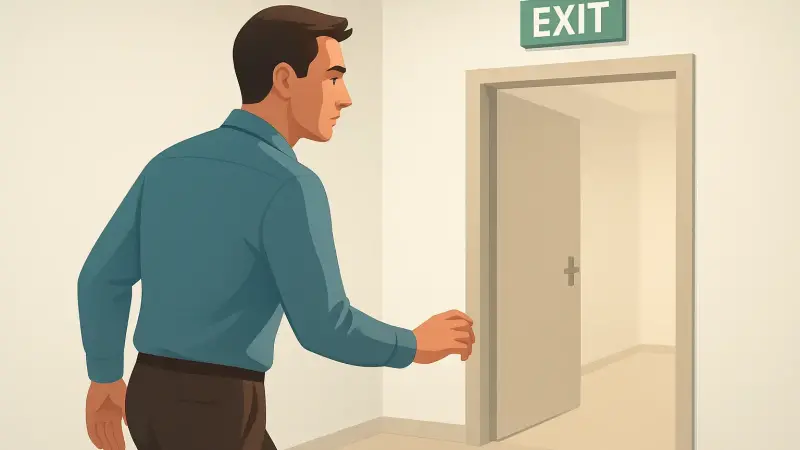
Noticing exits before anything else
Walk into a hotel ballroom, a hospital waiting room, or a new subway station and you can watch it happen. People’s eyes flick to the doors. Sometimes it’s a quick glance. Sometimes they keep tracking until they’ve located a second way out. It isn’t one single place or event that teaches this. It shows up in everyday settings, from airports in the United States to crowded cafés in Japan to office buildings in the UK. The basic mechanism is simple: unfamiliar spaces trigger fast “where can I go?” mapping, and exits are the clearest answer.
This scan can look like anxiety, but it often isn’t. It’s a default part of orienting. The brain likes a workable route plan before it invests attention in everything else.
The brain is building a quick map
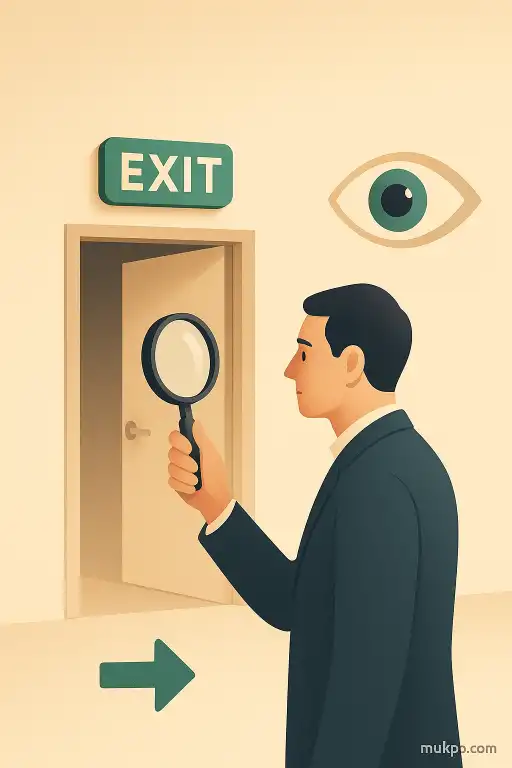
When someone enters a room they don’t know, they’re doing rapid scene processing. Vision grabs high-value features first: edges, openings, and pathways. Doors and stairwells are “affordances,” meaning they directly suggest action. A painting doesn’t tell you what you can do. A doorway does. So the eyes keep checking it until the brain feels it has a usable layout.
People also anchor themselves using stable reference points. Exits are stable. Furniture moves. Crowds shift. Signs can be blocked. A door frame stays put, so it becomes a reliable coordinate in the mental map.
Safety planning happens quietly and automatically
There’s a low-level threat system running even when a person feels calm. In an unfamiliar room, uncertainty is the signal. The body doesn’t need a specific danger to run a quick check for control and escape. That’s why the scan can happen in a calm art museum as easily as in a loud bar. It’s about reducing unknowns, not predicting a specific disaster.
One overlooked detail is that people don’t just look for a door. They often look for how a door behaves. Push bar or handle. Swing direction. Whether it looks locked. Those details matter because they change whether an exit is usable under time pressure, and the brain tags usability, not just location.
Social cues and room rules shape the scan
Exits also tell someone how to behave. In a restaurant, the entrance hints at where to wait and where staff will approach. In a lecture hall, side doors hint at whether arriving late will be disruptive. In a courtroom, the guarded door signals boundaries. People read these cues quickly because violating room “rules” is socially costly, and the entry moment is when mistakes are easiest to make.
That’s why the scan often includes the flow of other people. Someone may glance at exits, then immediately at the crowd near them, matching the room’s movement patterns to the paths they just identified.
Why some people do it more than others
The habit varies. People who’ve worked in environments where exits matter—healthcare, security, event staff, firefighting—often make the scan more obvious. Some people also have stronger sensitivity to uncertainty, or have learned to monitor space because of past experiences. Cultural norms can play a role too, since crowding, personal space, and expectations about public behavior differ across places.
The room itself changes the behavior. Low lighting, loud noise, blocked sightlines, or heavy foot traffic makes exits harder to track, so eyes return to them. Wide-open spaces with clear signage can reduce the need to re-check, because the map “sticks” faster.
Related reads
- The clock tower that loses precisely twelve minutes every year without fail
- Why a single glance can make a stranger unforgettable
- How tiny habits conserve mental energy all day
- Why a familiar melody can surface a distant memory
- What a split second of eye contact tells your brain
- How changing your posture shifts decision making