

The moment it happens
You notice it in tiny moments: someone looks up on the subway, you meet their gaze, and their eyes seem to go darker for a second. It isn’t one single event tied to one place. You can spot it anywhere people do quick, unscripted eye contact—on a New York City train, at a London café counter, or in a crowded school hallway. The basic mechanism is simple. The dark center of the eye (the pupil) changes size automatically, because the muscles in the iris respond to signals from the nervous system. When a glance suddenly matters, that system often shifts fast, and the pupil can widen before anyone has time to “decide” anything.
The pupil is a fast sensor, not a mood ring
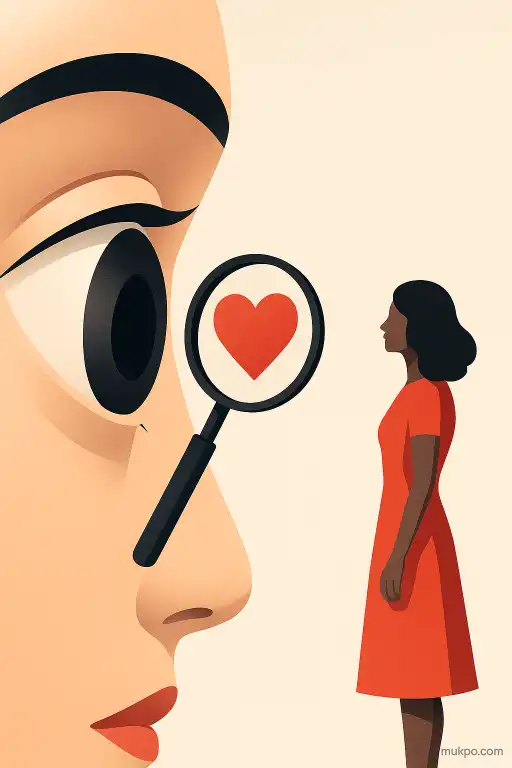
Pupils widen to let more light reach the retina. That’s their main job. But the control system for that job is tied to the same circuitry that handles alertness. When someone catches your eye, your brain may treat it as important information. Not dangerous, not romantic, just important. That “pay attention” shift can reduce the braking effect of the parasympathetic system and increase sympathetic activity, and the iris muscles respond in a fraction of a second.
A detail people usually overlook is timing. Pupil changes can start before a facial expression settles. You might see the pupil widen even if the person’s eyebrows and mouth barely move. That can make it feel extra direct, like the eyes reacted on their own, because they did.
Eye contact adds social load
Direct gaze is a social signal. It can mean “I’m checking you,” “I’m open to interaction,” “I’m guarding my space,” or nothing at all. The point is that it’s ambiguous. Ambiguity costs attention. When two people lock eyes, the brain has to guess what the other person intends and what it should do next. That extra processing often comes with a small rise in arousal, and pupil size tracks arousal more reliably than people expect.
This is why you can see dilation in situations that are not warm or friendly. A security guard scanning a crowd can show it. So can someone who’s startled because they thought they were unnoticed. The pupil isn’t announcing a single emotion. It’s reacting to the fact that the interaction suddenly matters.
Light and distance can fake the effect
Not every “bigger pupil” moment is about attention. Lighting changes are the biggest confound. When someone turns their head slightly, one eye can catch more shadow, and the pupil expands to compensate. That can happen right as eye contact occurs, so it looks like the gaze caused it. Screens do this too. If a person looks up from a bright phone to a dimmer room, their pupils widen quickly, and if you meet their eyes at that instant, you’ll connect the two events.
Distance plays a quieter role. When the eyes shift focus from far to near, pupils tend to constrict as part of the “near response” (along with focusing the lens). If two people step closer at the same time as they make eye contact, you might see a brief constriction mixed into the pattern. That can make pupil changes look inconsistent, even within a single interaction.
Why it varies so much from person to person
Baseline pupil size isn’t fixed. It varies with fatigue, caffeine, stress, age, and individual biology. Some medications also change it noticeably, and so can recreational drugs. Even without any of that, people differ in how reactive their pupils are to the same social cue. One person’s eyes may show a clear shift. Another person’s may barely change, even if they’re just as engaged.
There’s also the simple visibility problem. Dark irises can make pupil changes harder to see, while light irises make them obvious. So the “widening” can be partly about the observer’s angle, the room’s brightness, and how well the pupil edge contrasts with the iris. Sometimes you’re not seeing a bigger pupil so much as you’re finally seeing it clearly.

Related reads
- Why you cannot tickle yourself
- What happens to memories overnight when sleep seals them in
- A landlord who quietly reunites tenants with umbrellas left years ago
- A stretch of road where every car alarm triggers at the same milepost
- How decision fatigue makes small choices unravel by dinner time
- Shopkeepers who sell human teeth as good luck charms