

The tiny freeze people notice
You glance from your phone to the clock on the wall and the first tick after you look seems to hang there. It’s not one single place or one famous moment. People report it in lots of settings: checking a wristwatch on a New York subway platform, looking up at a classroom clock in London, or glancing at a kitchen timer in Tokyo. The core reason is that the brain quietly edits time when the eyes move. During a quick eye jump, it fills in a stable picture. When your gaze lands, the first instant can get stretched to feel longer than it really was.
Your eyes don’t glide, they jump
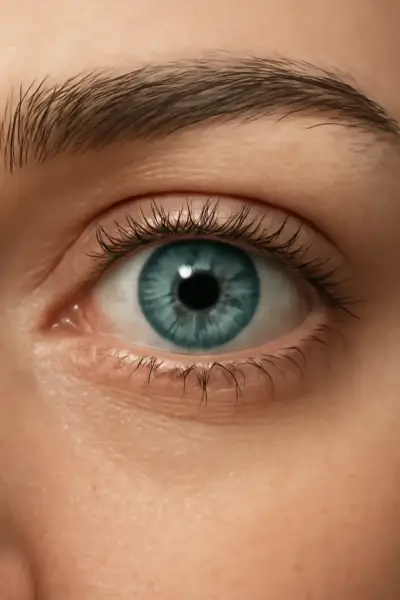
Vision feels smooth, but the eyes mostly move in saccades: fast jumps from one point to another. Those jumps are brief, but they are messy from the brain’s point of view. The image on the retina sweeps across too quickly to be useful, so the brain turns down visual sensitivity during the jump. That reduction is strong enough that you usually don’t notice the blur you’d expect from a camera doing the same move.
Then the eyes land and lock onto a target. The brain wants continuity, so it stitches the moments together into a stable scene. That stitching is where the “frozen” feeling can show up, especially with something that has clear steps in time, like the second hand of an analog clock or the changing digits of a microwave display.
The brain rewrites the moment you landed
One explanation researchers discuss is chronostasis. The idea is that the brain backdates the start of your new fixation. It takes the first clear image after the eye movement and assigns it an earlier timestamp, as if you were already looking there during the saccade. Subjectively, that makes the first slice of the new view feel longer. If the target is a clock, it can feel like the second hand waited before resuming.
This isn’t a “slow motion” effect across everything. It’s a localized correction tied to where attention snaps to after the eye movement. It also varies. Fatigue, stress, and how sudden the gaze shift is can change how strong it feels. That’s why some people notice it often and others barely ever do.
Why clocks are the perfect trigger
A clock gives you a built-in expectation: a second should be a second. So the brain’s time-editing becomes obvious. With an analog second hand, the effect can be striking because the hand’s position is a crisp marker. If your eyes arrive just after a tick, the first “still” position has a full second to be extended into. Digital clocks can do it too, but it depends on how the display updates and whether the change is sudden or smoothed by the electronics.
A detail people usually overlook is that this can happen even when the clock itself is perfectly normal. The hand didn’t stall. Your sampling did. The moment that feels too long is often the first stable frame your brain got after suppressing the messy frames during the eye jump.
It’s tied to attention, not just eyesight
The “freeze” is easier to notice when attention is already primed for a time signal. Waiting for a meeting to start, watching a countdown, or checking how late it is makes the brain treat the next second as important. That doesn’t create the effect from nothing, but it makes the mismatch stand out. If you glance at a painting, there isn’t a discrete tick to violate your expectations, so the same editing can pass unnoticed.
It can also show up with sound. People sometimes notice a steady fan or a ticking clock seeming to hesitate right as they turn their head toward it. That’s the same basic issue: the brain is aligning streams of information when you reorient. The alignment is usually helpful. You only catch it when the world offers an obvious ruler for time.

Related reads
- Why it was once illegal to die in Parliament
- The sponge that grows glass skeletons on the ocean floor
- Vending machines that sell live crabs
- How lead pipes changed ancient water chemistry—and modern corrosion science explains why
- The festival where people chase a rolling wheel of cheese
- How a beetle’s dramatic death pose fools both birds and ants
If you liked this, you might also enjoy: