
A drawer that won’t close
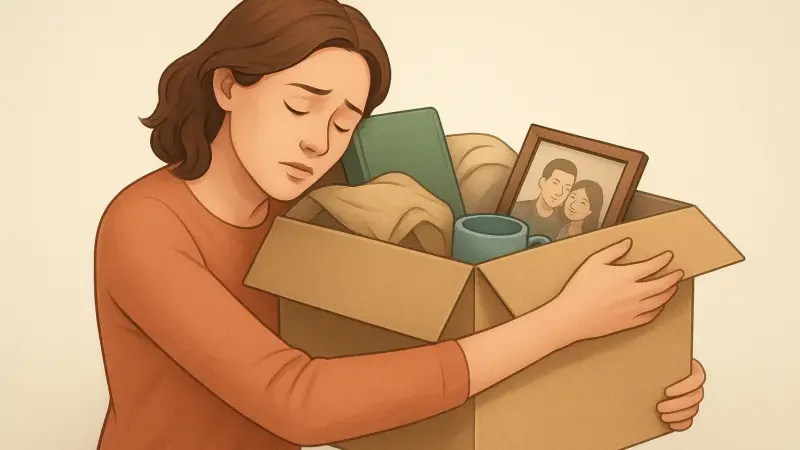
This isn’t one single story tied to one town or one famous event. It shows up everywhere, from Tokyo apartments to Midwestern U.S. basements to London flats. Someone finds an old concert wristband, a cracked phone, a tangle of cables for devices they don’t own anymore. None of it is useful. Still, the hand pauses. The core mechanism is simple and oddly physical: the object feels like a handle on a memory or a version of the self, and letting go feels like erasing something that mattered.
Memory gets outsourced to objects
People often treat belongings like external storage. Not because memory is weak, but because memory is unreliable. A ticket stub, a child’s drawing, a souvenir mug: they sit there as proof that the day happened and that the person who lived it was real. The overlooked detail is how little the object needs to be. A ripped corner of paper can carry the same emotional charge as the whole scrapbook, because the brain fills in the rest once the cue is present.
This is why “useless” clutter tends to be small and varied. It’s not only big heirlooms. It’s the lanyard from a job, the hotel keycard, the badge from a conference. Each one is a trigger, and triggers are hard to judge in advance. People can’t always predict which item will reopen a memory and which will feel like nothing, so they keep more than they need, just in case.
Letting go can feel like a moral decision
Sentimental clutter often carries a quiet sense of obligation. Gifts are the clearest example. A scarf from a relative, a handmade mug, a book with an inscription. The object isn’t just an object anymore. It becomes a stand-in for the relationship, and discarding it can feel like discarding the person’s effort. That’s why people will store things they actively dislike. The discomfort isn’t about taste. It’s about what the item represents socially.
There’s also a fairness instinct that sneaks in. If something was expensive, rare, or hard to get, keeping it can feel like “respecting” the past cost. Even when the cost is already gone. That can make a broken appliance linger in a closet, or a pile of old college textbooks sit untouched for years, because throwing them away feels like admitting the purchase or the time spent wasn’t justified.
The brain hates uncertain endings
People cling harder when an item is tied to something unfinished. Old hobby supplies are a classic case. Half-used paints, a guitar with a missing string, a language workbook with the first ten pages completed. These objects aren’t only reminders of past enjoyment. They’re also reminders of a plan that didn’t resolve. Keeping them preserves the possibility that the story could still end differently, even if nothing changes for years.
This is one reason clutter clusters around transitions: moving, breakups, graduation, retirement, a parent’s death. The belongings become a physical way to avoid choosing which identity is “over.” People might store a box labeled “someday” because the label itself delays the decision. The item doesn’t need to be meaningful on its own. It only needs to point to an open loop the mind doesn’t want to close.
Ownership changes how valuable things feel
Once something is “mine,” it tends to feel more valuable than it did in the store or the moment it was acquired. That’s not vanity. It’s a normal bias: ownership inflates perceived worth. A chipped souvenir glass can feel irreplaceable even if an identical one is sold online for a few dollars. People aren’t lying when they say it matters. Their perception has genuinely shifted because the item is linked to their personal history.
And the longer an item sits in a home, the more it blends into the mental map of the place. That’s another overlooked detail. Clutter isn’t only about the object’s meaning; it’s also about how “normal” it has become to see it there. A stack of letters on a shelf stops being noticed as a stack. It becomes part of the room. When someone finally does notice it again, removing it can feel like changing the room itself, not just clearing paper.
Why the smallest items can be the stickiest
Big sentimental objects usually come with a clear story: the piano, the wedding dress, the inherited chair. Small objects don’t. They’re more ambiguous, which makes them harder to judge quickly. A keychain from a trip might be kept because it’s “nothing,” but also because it’s the only remaining physical trace of that trip. Their size makes them easy to postpone dealing with. They slip into pockets, drawers, and “temporary” boxes and survive by being easy to ignore.
That’s how a single concrete scene happens so often: someone is packing for a move and finds a shoebox of old cables, badges, notes, and tiny keepsakes. They sit on the floor for a minute, touching each thing just long enough to get a flash of a person, a room, a year. Then the lid goes back on. The box makes it to the next home, not because the contents are needed, but because the feelings arrive faster than any practical decision can.
Related reads
- Why certain minerals glow under ultraviolet light
- How wood frogs survive freezing solid
- How hermit crabs choose shells using chemical cues
- How photosynthetic bacteria thrive in boiling hot springs
- A rainforest bat that farms figs by planting seeds
- The night in 1944 when a Midwestern town awoke to an invisible assailant